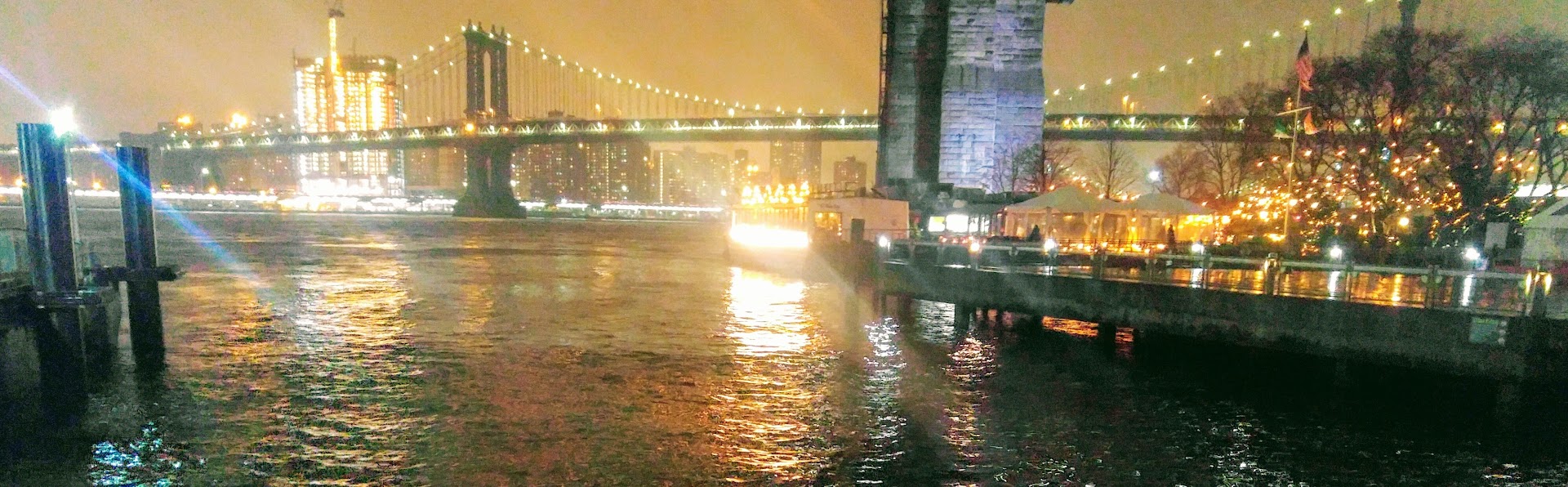
New York Transportation, Airport & Local Travel Updates.
Practical guides and dated updates for visitors, families, business travelers and guests planning movement around New York. We focus on conditions
that can change a trip: airports, traffic, major events, driving rules, private transportation and regional travel.
Guides and updates are dated individually. Event schedules, traffic rules and airport procedures can change; official sources remain the final
reference.
LATEST
New York Travel Guides & Dated Updates.
Explore practical planning guides and earlier event updates. Check article dates and official sources before relying on time-sensitive information.
Discover Seneca Village, the Black-led community that existed from 1825 to 1857, its homes and school, displacement during Central Park construction, and how to explore the history today.
Explore Lenapehoking, the Lenape homeland, Dutch contact and New Amsterdam, the often oversimplified 1626 land transaction, and the city’s Indigenous past and present.
Learn how the Brooklyn Bridge was built from 1869 to 1883, the roles of John, Washington and Emily Roebling, immigrant laborers in caissons, and how to walk the bridge today.
Discover the people, music and art of the Harlem Renaissance, from the Savoy Ballroom and Duke Ellington to the Apollo and today's cultural institutions.
The five-borough marathon will affect road access on Sunday. Plan hotel pickups, airport transfers and cross-borough travel around official closures;
daylight saving time also ends that morning.
The 2026 tournament ran August 23–September 13. This archived guide explains transportation planning around Queens, Flushing Meadows and nearby
airport corridors.
Permanent access changes affect several terminals. Confirm the terminal before leaving and follow current airport signs rather than an older saved
route.
Travel details, airport procedures, event dates and admission policies may change. Check the official links in each guide before traveling. Contact
TAKI LIMO directly to confirm transportation arrangements and rates.
TAKI LIMO BLOG | WHY WE SHARE THESE STORIES
Sharing the Many Sides of New York with the World
The Statue of Liberty, Times Square and Central Park are recognized around the world. But New York City has so much more to offer: historic streets, neighborhoods shaped by cultures from across the globe, intimate museums, music, food, changing seasons and the everyday lives of the people who call this city home.
Whether you are planning your first visit, returning to explore further, living in the city or simply curious about New York from afar, we hope these guides help you discover something meaningful. Three principles shape what we share.
1. Discover New York Beyond the Landmarks
We look beyond the familiar attractions to neighborhood corners, smaller museums, historic buildings and local places that help reveal the city's character.
2. Understand the Stories Behind the City
Who created a work of art? Why was a building constructed? How did a neighborhood evolve? Knowing the stories behind a place can make a visit more memorable.
3. Offer Useful Information to People Everywhere
We aim for clear, reliable guidance for first-time visitors, returning travelers and New Yorkers alike. For changing schedules, admission policies and travel conditions, please check official sources before your visit.
Our perspective is a little different from that of a conventional guidebook. It comes from the streets of New York, seen through the eyes of a working chauffeur: the seasons, the neighborhoods and the many people whose journeys intersect here. We try to approach every article with one question in mind: Will this genuinely help someone who reads it?
Our hope is that everyone who visits New York will come to love the city a little more.
Whether or not you ever choose to ride with TAKI LIMO, we hope you leave this website with a useful insight, a new discovery or a deeper appreciation of the city. Sharing that knowledge is worthwhile in itself.
In service of others, with a wish for happiness and peace for people everywhere.
FOR EVERYONE VISITING JAPAN
Visiting Japan: Culture, Faith & Onsen Traditions
Explore the beliefs, customs and moments of quiet reflection that make a journey through Japan memorable.
November 3, 2026 · JAPAN CULTURE
Shinto Shrines vs. Buddhist Temples in Japan: Gods, Beliefs & the Meaning of Life
When visiting Japan, you may see a torii gate at a Shinto shrine or encounter a peaceful Buddhist temple. Their differences go far beyond
architecture. They reflect different ways of understanding the sacred, the human mind, suffering, gratitude and how we live.
Shinto shrine: torii gates mark the entrance to sacred space.
Shinto: Finding the sacred in nature and everyday life
Shinto is an indigenous Japanese spiritual tradition centered on
kami
—sacred beings or presences associated with nature, ancestors, mythology and historical figures. Kami are not simply the equivalent of a single
all-powerful creator God. Shinto places great value on sincerity, purification, respect for nature, gratitude and harmony with community. It has no
single founder or universally binding scripture.
Visitors to shrines may offer thanks, pray for well-being or protection, or reflect quietly. Rituals such as washing one's hands and bowing express
respect and a desire to approach a sacred space with a clear mind.
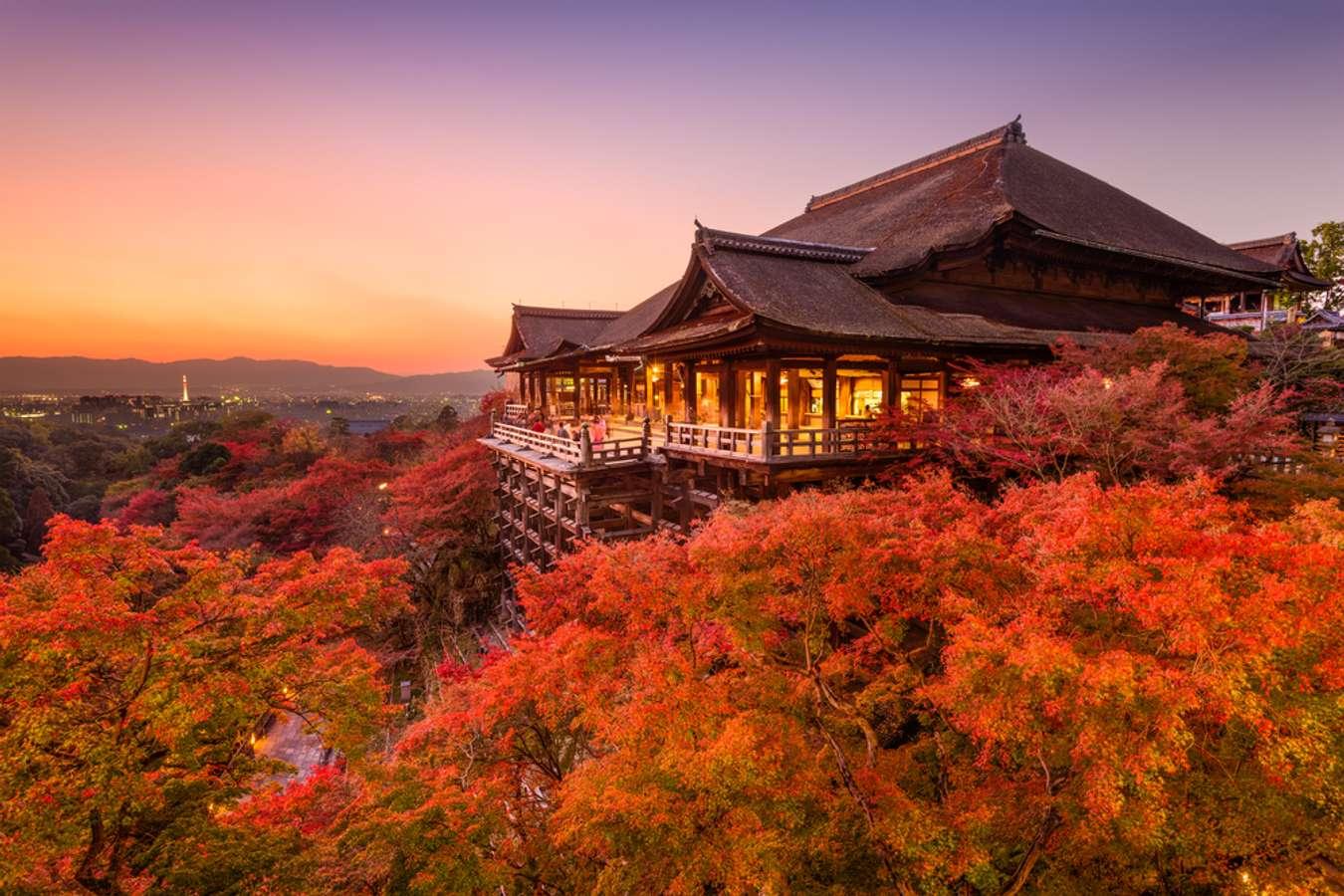
Buddhist temple: Kyoto’s Kiyomizu-dera in autumn.
Buddhism: Compassion, wisdom and the human condition
Buddhism began with Siddhartha Gautama, the historical Buddha, in India before reaching Japan in the sixth century. Its teachings explore why people
suffer, the impermanence of life, the effects of attachment and the cultivation of compassion and wisdom. The Buddha is not generally understood as a
creator god.
Japanese Buddhist practices vary widely among traditions. Visitors may encounter meditation, sutra chanting, devotion to Buddhas and bodhisattvas such
as Amida or Kannon, and memorial ceremonies honoring loved ones.
Why do many Japanese people visit both?
For centuries, Shinto and Buddhism influenced one another in Japan. A family may visit a shrine for New Year celebrations or a child's milestone and a
Buddhist temple for an ancestor's memorial service. These practices are not always seen as mutually exclusive. They can express gratitude,
remembrance, community and respect for life.
How to visit respectfully
At a shrine:
Follow the posted customs. Common practices include bowing at the torii, cleansing hands where facilities are provided, and making an offering with
bows and claps; rituals differ among shrines.
At a temple:
Speak quietly, observe any shoe and photography rules, and join your palms in respectful prayer. Clapping is generally not part of temple worship.
At either:
Remember that these are living places of worship, not merely sightseeing attractions.
A helpful way to think about it:
Shinto often draws attention to our relationship with the sacred world around us, while Buddhism invites reflection on the mind, suffering, wisdom and
compassion. This is a broad introduction, not a rigid division.
Official visitor resources — Japan National Tourism Organization (JNTO)
Planning to visit Japan? The official tourism organization provides reliable visitor guidance for sacred sites, local customs and travel planning.
Japanese Onsen: More Than a Hot Bath — Culture, Etiquette & Quiet Renewal
An
onsen
is a Japanese hot-spring bathing experience, often surrounded by mountains, forests or traditional inns. For many visitors, it is an opportunity to
slow down, appreciate the natural environment and enjoy a shared culture of cleanliness, consideration and calm.
Onsen and sento: What's the difference?
An
onsen
uses water from a natural hot spring meeting Japan's hot-spring standards. A
sento
is a public bathhouse, generally using heated water. Both can be meaningful places for relaxation and community, but they are not the same.
Onsen: an open-air hot spring surrounded by nature.
The spirit of Japanese bathing
Onsen culture is often associated with restoring a sense of calm and appreciating the seasons. The emphasis is not on entertainment or swimming, but
on bathing peacefully and showing care for other guests. Many visitors especially enjoy outdoor baths, called
rotenburo
, and overnight stays at traditional
ryokan
inns.
Essential onsen etiquette for first-time visitors
Wash thoroughly first:
Use the shower and washing area before entering the shared bath.
Keep towels and hair out of the water:
The bath is for soaking, not washing or swimming.
Respect privacy:
Speak quietly, avoid splashing, and do not take phones or cameras into bathing areas.
Check clothing rules:
Most traditional communal baths require bathing without a swimsuit. Some mixed or specially designated facilities have different policies.
Ask about tattoos in advance:
Policies differ; tattoo-friendly or private baths may be available.
Mind the temperature:
Enter slowly, stay hydrated and leave the bath if you feel dizzy or unwell.
Ryokan: a private wooden bath for a peaceful stay.
What about a private onsen?
Travelers who prefer privacy can look for a
kashikiri-buro
(reservable private bath) or a ryokan room with its own bath. Availability, fees and policies vary by property, so check before booking.
Official visitor resources — Japan National Tourism Organization (JNTO)
For current hot-spring guidance, bathing customs and travel planning, consult the Japan National Tourism Organization's official English-language
guides.
These cultural guides are shared by TAKI LIMO as general travel information. TAKI LIMO provides prearranged private chauffeured transportation in New
York, not transportation services in Japan. TAKI LIMO is not affiliated with or endorsed by JNTO.
October 30, 2026 · Travel Alert for Sunday, November 1
2026 TCS New York City Marathon | Road Closures, Airport Transfers & Travel Planning
Time-sensitive advisory (October 31, 2026): The race is scheduled for Sunday, November 1. Street closures and bridge access can change on race day.
Confirm final restrictions with NYRR and NYC before departure; do not treat this article as a live traffic report.
Official 2026 marathon street-closure notice: Verrazzano-Narrows Bridge upper level is scheduled to close in both directions from Saturday, October 31
at 11:00 p.m. until Sunday, November 1 at 4:00 p.m.; the lower level is scheduled to close Sunday, November 1 from 7:00 a.m. to 4:00 p.m. Dates and
times are subject to change at the discretion of NYPD. Check the linked City of New York closure notice immediately before travel.
The 2026 TCS New York City Marathon takes place Sunday, November 1, 2026.
The 26.2-mile race crosses all five boroughs, starting on Staten Island and finishing in Central Park. Major road closures and changes to vehicle
access may affect visitors even when they are not attending the event.
What visitors and business travelers need to know
Road closures:
Portions of the marathon course and nearby streets will be closed, with restrictions and reopening times varying by location. Do not assume a road is
open based on a normal Sunday route.
Verrazzano-Narrows Bridge:
Marathon operations require major bridge restrictions. Verify current bridge status before planning travel between Staten Island and Brooklyn.
Hotels, appointments and flights:
Access to certain Manhattan and cross-borough pickup points may be restricted. Allow extra time, especially for fixed flight departures and important
appointments.
Airport transfers:
JFK, LGA and EWR remain separate from the marathon route, but approaches to or from the city may be affected by detours and congestion. Confirm the
pickup address and meeting arrangement in advance.
Clock change:
Daylight saving time ends early on Sunday, November 1. New York clocks move back one hour at 2:00 a.m.; double-check airport departure and pickup
times.
How TAKI LIMO can help with planning
For pre-arranged chauffeur service, our dispatch team can review the itinerary, pickup point, passenger count, luggage and destination before
confirming an assignment. Marathon-day routing depends on live restrictions, so no specific journey time or curbside pickup location can be guaranteed
in advance. If a requested meeting point is inaccessible, an alternate legal pickup location may be necessary.
This update is dated October 30, 2026. Follow New York City, NYRR, MTA and police advisories for the final closures and transportation changes.
Official restrictions take precedence over saved navigation routes.
Sunday, November 1, 2026: Central Park Conservancy reports additional park access closures around the finish area during marathon weekend. Travelers
should also monitor official road-closure announcements before making pickup plans.
Central Park Conservancy alerts
Need a pre-arranged airport transfer or private chauffeur service during marathon weekend?
US Open 2026 | Transportation Planning During the Main Draw
ARCHIVE / VERIFY BEFORE TRAVEL — The 2026 US Open dates have passed. This article is retained as an archive. Check the official tournament site for
upcoming dates and transportation conditions.
Archive note: This article describes a 2026 event or period. Check the organizer and local transportation authorities for current schedules and
restrictions.
The 2026 US Open main draw took place at the USTA Billie Jean King National Tennis Center in Flushing, Queens.
The tournament concluded on September 13. For transportation planning, the important point is not predicting one exact drive time but recognizing that
match sessions, evening departures and general event activity can change local traffic conditions quickly.
Flushing Meadows is also close to major Queens highways and airport routes. A trip to or from Manhattan, JFK or LaGuardia can therefore be affected by
both ordinary New York traffic and event traffic at the same time.
For a match-day itinerary
Confirm the session and expected arrival time before choosing the hotel pickup time.
Allow margin for security, walking and venue entry after the vehicle drop-off.
For evening matches, decide in advance whether the return is to a hotel, dinner, another venue or an airport.
Keep the passenger contact method clear because post-match pickup conditions can change.
For guests who prefer one pre-arranged vehicle for a multi-part day, TAKI LIMO can review the transportation schedule as a private charter rather than
treating every movement as an unrelated trip.
JFK 2026 Roadway Changes | Know Your Terminal Before You Leave
JFK pickup advisory (checked October 31, 2026):
JFK Airport reports that passengers arriving at Terminals 5 and 7 who use a for-hire vehicle or car service must take the free on-airport AirTrain to
the designated Howard Beach Ride App & Car Services pickup lot. ADA-accessible pickups may follow separate arrangements. Airport curbsides do not
permit unattended parking. Confirm your specific chauffeur meeting plan with TAKI LIMO dispatch before arriving; the authorized procedure can vary by
service and terminal.
Official Terminal 5/7 advisory
·
Official pickup/drop-off guidance
.
JFK redevelopment continues to affect how drivers approach different terminals.
JFK's redevelopment has changed several terminal approach routes. The airport's official construction information says a permanent roadway
configuration for drivers from Long Island and points east heading to Terminals 1 and 4 took effect in January 2026. Separate permanent changes for
Terminals 5 and 7 affect drivers approaching from the Van Wyck Expressway.
The practical lesson is simple:
know the airline terminal before the vehicle enters the airport area and follow current signs.
An old map, remembered route or previous pickup pattern may no longer be the best route.
Before an airport trip
Confirm the airline, flight number and terminal.
Check whether the flight is domestic or international.
Allow additional road time when construction, weather or peak traffic overlaps.
For arrival pickup, confirm the meeting method before landing.
Why Is New York Called the Big Apple? Horse Racing, Jazz and Apple Picking
A nickname shaped by racing, music and the city’s dreams
Manhattan skyline (TAKI LIMO site image)
Why an apple?
New York City is famous as “the Big Apple,” but the nickname did not originate from the state’s apple harvest. Its story leads from horse racing to jazz and a 1970s tourism campaign.
The horse-racing connection
In the 1920s, racing journalist John J. Fitz Gerald popularized “Big Apple” as a name for New York’s major racing circuit. He credited stable hands in New Orleans who used the phrase for the city’s prestigious tracks and opportunities.
Jazz and the city of opportunity
New York became a dream destination for jazz performers, especially during the Harlem Renaissance. The nickname also circulated in jazz culture, suggesting a major stage where musicians hoped to succeed. The exact path by which it spread is not entirely certain.
A 1970s revival
In the early 1970s, New York tourism promoters revived the nickname and used bright red apple imagery in campaigns. “The Big Apple” became internationally recognizable.
Visit Big Apple Corner
At the southwest corner of Broadway and West 54th Street in Manhattan, Big Apple Corner commemorates Fitz Gerald. The intersection received its honorary designation in 1997. It is near the Theater District; check current on-site conditions before visiting.
Apple picking and fresh cider
The nickname is not about farming, but New York State really does have wonderful autumn orchards. Long Island and the Hudson Valley offer seasonal apple picking, fresh cider and cider donuts. In the U.S., “apple cider” commonly means a nonalcoholic apple drink; alcoholic cider is usually called “hard cider.” Check each farm’s season and hours.
A city of stories
From racetracks and jazz clubs to neighborhoods shaped by people from around the world, New York’s nickname carries stories of ambition, creativity and possibility. Discover the city beyond its famous skyline.
Seneca Village and Central Park: The Lives That Came Before the Landscape
Central Park is famous for its paths, lawns, wooded hills and seasons. Yet before its landscape was created, families lived on this land. Children went to school, neighbors gathered in churches and people built homes and livelihoods in a community known as Seneca Village.
Enjoying the beauty of today’s park does not require forgetting the people who lived here before it. Their stories give an ordinary walk a much deeper meaning.
Detail of an 1856 survey map showing the buildings and grounds of Seneca Village, before Central Park was developed. Egbert L. Viele / New York Public Library, via Wikimedia Commons (public domain). Image and licensing details
A community founded in 1825
Seneca Village began in 1825 when free Black New Yorkers purchased land in a sparsely developed part of Upper Manhattan. Among its early purchasers were Andrew Williams, a young Black laborer, and people associated with the African Methodist Episcopal Zion Church. Owning land offered a degree of stability that was difficult to achieve in the crowded city farther south.
New York State did not complete the abolition of slavery until 1827. Discrimination did not disappear with emancipation. Families in Seneca Village sought room to live, work, worship and build futures on their own terms.
Homes, churches, a school and everyday life
By 1855 the settlement had roughly 225 residents. Approximately two-thirds were Black, while many of the remaining residents were Irish immigrants; some residents were German. The neighborhood included more than 50 homes, three churches and a school.
Records show people making a living as gardeners, laborers, sailors, domestic workers and tradespeople. Gardens, household objects and archaeological finds remind us that this was a community of individual families rather than an empty tract awaiting a public park.
Property, citizenship and unequal rights
Property ownership held special importance because New York imposed a discriminatory property qualification on Black men seeking to vote, while removing comparable restrictions for white men. For some Black male property owners, land could help open a path to political participation, though many residents remained excluded.
This is therefore a story not only about buildings, but about education, belonging, family independence and civic rights.
1857: A public park and a community displaced
The City acquired land for Central Park, and in 1857 Seneca Village residents were forced to leave. Property owners received compensation under the land acquisition process, but payment could not recreate the homes, social networks and familiar places that the community lost.
The village faded from much of the public memory until historians and archaeologists helped recover its history in the late twentieth century and beyond.
Visiting the site today
The historic area lies along the west side of Central Park, approximately between West 82nd and West 89th Streets. Entering near West 85th Street is one way to explore the surviving hills and rocks that shaped the old village landscape. The original village buildings no longer stand.
Read the Central Park Conservancy’s maps and history before your visit. Check the Conservancy’s website for current information about interpretation, exhibitions and guided programs.
A thought to take away: A beautiful park did not rise from land that had no history. Remembering the families who lived here can change how we look at a familiar New York landscape.
Planning your visit: Visitor tip: Explore the West 85th Street side of Central Park on foot, using the Conservancy’s historic maps. This is a landscape of memory, not a preserved streetscape of original houses.
Exploring New York’s history can deepen any visit. If private transportation is useful for your plans, TAKI LIMO can help coordinate travel in advance.
The Lenape and New Amsterdam: The Land and People Before New York
Long before Manhattan became a city of skyscrapers, streets and crowded sidewalks, this area was part of Lenapehoking, the ancestral homeland of the Lenape/Lunáapeew and other Indigenous communities. Waterways, forested land and trade routes shaped daily life here long before the Dutch established New Amsterdam.
To understand the beginnings of New York, we should begin not with the arrival of European ships, but with the people whose home this already was.
The Castello Plan depicts Dutch New Amsterdam around 1660. It records the colonial town—not a map of Lenape life before colonization. Historic map based on the work of Jacques Cortelyou, via Wikimedia Commons (public domain). Image and licensing details
Lenapehoking: A homeland before the city
The region now called New York City forms part of Lenapehoking, the ancestral homeland of Lenape communities. For generations, people lived in relationship with rivers, the harbor, wetlands and forest, farming, fishing, hunting and trading across the area.
Some routes through Manhattan, including parts of what became Broadway, reflect earlier pathways and exchange networks. The Lenape are not only a people of the distant past: Lenape communities, cultural knowledge and artistic life continue today.
1609: Dutch trade and the arrival of Henry Hudson
Henry Hudson sailed into New York Bay in 1609 while working for a Dutch commercial enterprise. Europeans sought trading opportunities, particularly for valuable furs, and established relationships with Indigenous communities already living in the region.
But the story cannot be told simply as a European “discovery.” The growth of trade and settlement also brought new contests over land, political authority and everyday life for Native communities.
1626: Rethinking the famous Manhattan “purchase”
Peter Minuit and the Dutch West India Company are associated with a 1626 transaction for Manhattan. The familiar claim that the island was simply bought for “$24” compresses a difficult history into a misleading modern price tag.
European ideas of exclusive land ownership did not necessarily match Indigenous understandings of access, stewardship and agreements. The surviving record does not justify treating the entire event as a straightforward, mutually understood real-estate sale. Dutch colonization later involved conflict and Indigenous dispossession.
From New Amsterdam to New York
Dutch settlements expanded at the southern tip of Manhattan in the 1620s, becoming a commercial center tied to the wider New Netherland colony. New Amsterdam received municipal status in 1653. In 1664 the English took control and renamed it New York.
The early town was also shaped by the labor of enslaved people of African descent brought by the Dutch West India Company. Its foundations reflect overlapping histories of trade, migration, Indigenous displacement, forced labor and urban growth.
Walk the streets while listening to living history
Battery Park, Bowling Green and the streets around Wall Street offer starting points for imagining the colonial town, although modern buildings should not be mistaken for surviving seventeenth-century streetscapes.
The Museum of the City of New York offers exhibitions and resources that explore the Lenape as living communities, not merely a chapter that ended in the colonial era. Check the museum’s current exhibition information before visiting.
A thought to take away: New York’s beginning cannot be reduced to a purchase date or a colonial name. The city’s deeper history includes Indigenous people whose relationship to this land began long before New Amsterdam.
Planning your visit: Visitor tip: Pair a walk through Lower Manhattan with a museum program developed with Lenape voices. Compare the colonial Castello Plan with the geography of today’s streets.
Exploring New York’s history can deepen any visit. If private transportation is useful for your plans, TAKI LIMO can help coordinate travel in advance.
Building the Brooklyn Bridge: Immigrant Workers and the People Behind an Icon
The Gothic stone arches and sweeping cables of the Brooklyn Bridge have become symbols of New York. Yet the bridge was not created by a single celebrated designer. Behind its silhouette were the ambitions of a German immigrant engineer, a family determined to finish the work and thousands of laborers, many of them immigrants, who faced extraordinary dangers.
The bridge is a remarkable achievement of design. It is also a monument to people who dug, hauled, cut, fastened and worked far below the East River.
The Brooklyn Bridge under construction in 1878, with cable work in progress. Historic photograph, photographer unidentified / Wikimedia Commons (public domain in the United States). Image and licensing details
1869–1883: Connecting two separate cities
Construction began in 1869 and the Brooklyn Bridge opened on May 24, 1883. At that time, Brooklyn and New York City on Manhattan were separate cities. Ferries carried much of the daily movement across the East River, and an all-weather fixed crossing promised major changes in travel, business and everyday life.
When completed, the bridge was the longest suspension bridge in the world. Its steel-wire cable system was an ambitious advance in nineteenth-century engineering.
John, Washington and Emily Roebling
John A. Roebling, the designer, was an engineer who immigrated from Germany. Injured in an accident at the beginning of the project, he died in 1869. His son Washington became chief engineer but suffered serious health problems associated with work on the bridge foundations.
Washington’s wife Emily Warren Roebling learned the engineering details and became vital to communication, coordination and the work’s continuation. Her contribution reminds us how often the history of major projects has understated the work of women.
Inside the caissons: The workers beneath the river
To prepare the tower foundations, laborers entered caissons—huge boxlike chambers in which compressed air kept river water from flooding the workplace. They dug through mud and stone in hot, difficult conditions. Returning too quickly from high pressure could cause decompression sickness, sometimes known as caisson disease or “the bends,” resulting in severe pain, paralysis or death.
Many workers were immigrants from Ireland, Germany and Italy. Workers protested wages and conditions, and some went on strike. Historical accounts differ in the total number of construction deaths, and not every worker’s story was preserved. Their labor deserves attention alongside that of the project’s chief engineers.
The bridge and the making of greater New York
The bridge opened fifteen years before Brooklyn became part of Greater New York in 1898. Linking the two shores helped change how people thought of the growing metropolitan region.
Every famous view of the stone towers also points to the work of carpenters, masons, metalworkers, cable crews and the men who labored beneath the river. The city was built by many hands.
Walking the Brooklyn Bridge today
The elevated pedestrian promenade offers views of Lower Manhattan, the East River and the harbor. A separated protected bicycle path is also provided, so pay attention to signs and use the intended pedestrian route.
Expect wind and busy conditions, especially near popular photo spots. Allow more time than a map’s short distance might suggest, and check NYC DOT information for current closures or route changes before visiting.
A thought to take away: When you photograph the great stone arches, remember the workers as well as the designers. New York’s most familiar landmarks were made possible by the effort, skill and sacrifice of countless people.
Planning your visit: Visitor tip: Enjoy the elevated pedestrian route at an unhurried pace. Keep clear of bicycle facilities and check NYC DOT for the latest access and safety information.
Exploring New York’s history can deepen any visit. If private transportation is useful for your plans, TAKI LIMO can help coordinate travel in advance.
Harlem: The Neighborhood That Helped Carry Jazz to the World
NEW YORK HISTORY · November 10, 2026
Harlem and the History of Jazz: Music, Culture, and the People Who Changed New York
In Upper Manhattan, Harlem's theaters, storefronts, churches, apartment buildings and ordinary streets hold an extraordinary cultural history. Its story is not simply a list of famous jazz musicians. It is also about people seeking work and dignity, building communities, confronting racial barriers, and using art to express their lives on their own terms.
A useful distinction: Jazz did not suddenly originate in Harlem. African American musical traditions, including blues and ragtime, helped shape the music in places such as New Orleans before it traveled and evolved through Chicago, New York and beyond. Harlem became one of the great centers in which jazz grew, found audiences and reached the wider world.
1. The Great Migration: Why Harlem became a cultural center
During the first half of the twentieth century, many African Americans moved from the South to northern and western cities in what became known as the Great Migration. They sought jobs, education, family connections and relief from the racial segregation and violence of Jim Crow. Harlem also attracted people from the Caribbean and elsewhere. New arrivals built institutions, businesses, newspapers, churches and social networks amid continuing discrimination and difficult living conditions.
These communities were not merely the backdrop for the arts. Their everyday work, celebrations, debates and ambitions helped make artistic experimentation possible.
2. The Harlem Renaissance: More than a musical movement
During the 1920s and into the 1930s, the Harlem Renaissance brought remarkable expression in poetry, fiction, painting, sculpture, theater, dance and music. Writers such as Langston Hughes and Zora Neale Hurston, visual artists such as Aaron Douglas and Augusta Savage, and many others explored Black identities, experiences, beauty and possibilities. The movement had connections beyond Harlem, but the neighborhood became its best-known center.
Jazz was one part of this wider creative world. Its energy spread through recordings, radio, dances and collaborations among musicians from different cities.
3. The Savoy Ballroom: Where the dance floor mattered
The Savoy Ballroom opened on Lenox Avenue near West 140th Street in 1926. Its dance floor became associated with swing bands, bandleaders such as Chick Webb, and the development of the Lindy Hop. Crucially, Black and white New Yorkers could dance together there at a time when many venues enforced segregation.
The contrast with the nearby Cotton Club is revealing. Its famous stage featured predominantly Black performers, including Duke Ellington's orchestra, yet its audience was restricted to white patrons for years. Harlem's musical brilliance did not erase the inequalities of the society in which it flourished. The original Savoy building no longer stands.
4. Duke Ellington and Louis Armstrong: Jazz moved between cities
Duke Ellington, born in Washington, D.C., led the Cotton Club orchestra from 1927 to 1931. Radio broadcasts helped carry the band's distinctive arrangements far beyond Harlem. Ellington demonstrated how jazz could be complex, expressive and deeply individual as well as danceable.
Duke Ellington at New York's Paramount Theater, 1946. William P. Gottlieb / Library of Congress, public-domain collection. This is a later New York photograph, not a 1920s Harlem scene.Source and rights information.
Louis Armstrong was a leading figure in jazz's development, especially through his New Orleans roots and later work in other cities. His story is another reminder that Harlem's musical heritage was part of a wider network of Black American creativity, not the work of one neighborhood alone.
5. The Apollo: A stage for emerging talent
On West 125th Street, The Apollo began a transformative chapter in 1934, becoming a major platform for Black performers. Its celebrated Amateur Night gave young artists a chance to face a famously outspoken audience. Ella Fitzgerald was among the talents who gained attention there before building an international career.
Ella Fitzgerald, New York, 1946. William P. Gottlieb / Library of Congress, public-domain collection. This is not a photograph from her 1934 Apollo appearance.Source and rights information.
The Apollo's importance reaches across jazz, gospel, blues, R&B, soul and many later styles. It remains a living cultural organization, rather than simply a building from the past.
6. From swing to bebop: The story continued
The Great Depression disrupted the peak of the Harlem Renaissance, but artistic life did not stop. In the 1940s, musicians including Thelonious Monk and Dizzy Gillespie helped develop bebop in New York's musical circles, including Harlem's club scene. Improvisation grew into new, intricate forms. Jazz kept changing, and it continues to do so.
7. Exploring Harlem with respect and curiosity
The Apollo — Historic Theater, 253 West 125th Street, New York, NY 10027. As of the organization's November 2026 visitor guidance, the historic theater is closed for renovation and is expected to reopen later in 2026. Check for performances at The Apollo Stages at The Victoria, 233 West 125th Street, and verify each event's actual venue. Official visitor information.
The National Jazz Museum in Harlem — 58 West 129th Street, New York, NY 10027. A compact museum and educational space devoted to jazz as both history and living music. Verify hours, suggested admission and programming before visiting. Official visitor information.
Schomburg Center for Research in Black Culture — 515 Malcolm X Boulevard, New York, NY 10037. Part of the New York Public Library, with collections and changing exhibitions on African and African American history, literature and culture. Exhibition and research-room access vary. Official visitor information.
Harlem is a living neighborhood, not an open-air museum. Respect residents, houses of worship and local businesses. Subway routes serve the area; private vehicles must follow current curbside, parking and traffic rules. Confirm accessibility needs, schedules and ticket policies with each institution.
For families and younger readers: Listen to a jazz performance and try to identify a rhythm, an instrument or a moment when one musician answers another. How can music communicate feelings when people do not speak the same language? Ask questions and explore together; imagined feelings are not the same as documented historical facts.
8. The people behind the city's sound
New York is often described through skyscrapers and famous landmarks. Yet the city's history also belongs to families, workers, teachers, artists, dancers and young performers who shaped everyday life and passed culture to the next generation.
If Ellis Island tells a story of people entering New York through its harbor, Harlem tells another story: how communities made new cultural worlds inside the city and shared them internationally. The next time you travel along 125th Street, the buildings may look familiar. The people behind their stories can make the whole neighborhood feel new.
Ellis Island: A Gateway of Hope, Uncertainty & New Beginnings
NEW YORK HISTORY · November 10, 2026
Ellis Island and the Immigrants Who Shaped New York: Stories of Hope, Family and Change
New York becomes more remarkable the longer we learn about it. A familiar waterfront, a brick building, even an ordinary neighborhood street may hold the stories of families who arrived with little more than luggage, determination and hope. Just across the harbor from the Statue of Liberty, Ellis Island preserves one of the most moving chapters of that history.
Today it is home to the Ellis Island National Museum of Immigration. But from 1892 to 1954, the island served as a federal immigration station through which more than 12 million immigrants were processed. Its busiest period was before the immigration restrictions of the 1920s. Each statistic represents individual people whose lives went far beyond the moment they arrived.
Immigrants arriving at Ellis Island, around 1900. Historical photograph from the U.S. National Archives / Public Health Service records, public domain. Image record and attribution.
1. Across the ocean toward a new life
In the late nineteenth and early twentieth centuries, people traveled to the United States from many parts of Europe and elsewhere. Their reasons varied: scarce work, poverty, political or religious persecution, family reunification, and the hope of making a different future. Ocean crossings could be long, crowded and physically difficult, particularly for those traveling in steerage.
Imagine a child trying to sleep in an unfamiliar ship, or parents wondering whether their savings will last until they find work. The Statue of Liberty could be a welcome sight on entering New York Harbor. Yet the sight of the statue did not mean that permission to enter the country was guaranteed.
2. Inside the Great Hall: hope and uncertainty
At Ellis Island, arrivals underwent medical and legal inspection. Officials consulted ship passenger lists and asked about destinations, work and family connections. The large Registry Room, often called the Great Hall, became the setting for these anxious encounters. According to the National Park Service, inspections during the island's busiest years often took about three to seven hours; most arrivals were admitted, while some faced additional examination, detention or refusal.
For those admitted, the island became an Island of Hope. For people separated from family members or turned away, it could also be an Island of Tears. Both experiences belong in the history of New York. The original wooden immigration station burned in 1897; the main building visitors see today opened in 1900.
3. Annie Moore: a seventeen-year-old at the beginning of the story
On January 1, 1892, Annie Moore, a seventeen-year-old girl from County Cork, Ireland, became the first immigrant formally processed at the new Ellis Island station. Her name has survived as a human face for a history sometimes told only in millions.
We cannot know everything Annie felt that day. But we can ask a simple question: What would it be like to arrive in a strange city as a teenager, hoping for a new beginning? For young readers, her story is a gentle introduction to the choices and courage of immigrant families, without pretending that every immigrant shared the same experience.
For young explorers: Look at an old photograph of people waiting in the Great Hall. What do you notice about their clothes or luggage? What would you want to ask someone arriving in a new country? Remember that each face represents a person with a different story.
4. After the island: the Lower East Side and everyday life
Passing inspection was only the beginning. New arrivals still needed homes, jobs, schools and community. Many settled in dense Manhattan neighborhoods, including the Lower East Side. People worked in garment shops, factories, stores and many other occupations, often facing long hours and crowded housing. Neighbors also formed mutual-aid networks, religious communities and small businesses.
The Tenement Museum on Orchard Street tells the histories of real immigrant, migrant and working-class families through reconstructed apartments and neighborhood tours. Its stories remind us that New York was built not only by prominent leaders and architects but also by parents, children, workers and shopkeepers who are rarely named in conventional histories.
Languages, food traditions, music and religious life from many communities became part of New York's everyday culture. Those traditions changed over time, just as the city itself continues to change.
5. Immigration history was never a single simple story
Ellis Island did not receive every person who immigrated to the United States. Many entered at other ports, while first- and second-class passengers were often examined aboard ship. The island's busiest years came before national-origin restrictions and other policies greatly reduced migration. In the 1920s, immigration laws and overseas visa procedures altered the station's role; it was also used for detention in later decades, before closing in 1954.
Immigration laws did not treat every nationality or community equally, and families encountered different barriers depending on when and where they traveled. The island therefore represents both the possibilities of migration and the limits that governments placed upon it.
A small historical clarification: the familiar story that immigration officers routinely changed immigrants' surnames at Ellis Island is misleading. Ship manifests were usually prepared before departure, and the National Archives cautions against treating the popular name-change story as established practice.
6. How to visit Ellis Island today
Where: Ellis Island in New York Harbor, near Liberty Island.
Official ferry access: Ferries depart from The Battery at the southern tip of Manhattan or Liberty State Park in Jersey City, New Jersey.
Buy from the authorized operator: The National Park Service identifies Statue City Cruises as its official ferry ticket seller. Beware of misleading third-party ticket offers near The Battery.
What general admission includes: Ferry access to both islands and the museums on Liberty Island and Ellis Island. Entering the Statue of Liberty's pedestal or crown requires separately reserved access.
Time planning: Leave time for security screening, boat queues and museum exhibits. An early departure is a good idea if visiting both islands on the same day.
Another worthwhile stop: For a deeper look at life after arrival, explore an official guided experience at the Tenement Museum on Manhattan's Lower East Side. Tours have their own tickets and accessibility requirements.
A vehicle can take you to an appropriate street-access point near the Manhattan ferry departure, but Ellis Island itself is reached by ferry, not by car. Check official schedules, holidays, ticket rules and weather conditions before traveling.
New York's history was not made by famous politicians and wealthy industrialists alone. It was shaped by countless people whose names never entered a history textbook: workers who built streets and buildings, parents who raised children, neighbors who supported one another, and families who carried memories of distant homes into a new city.
To learn about New York is also to learn about the lives of people from around the world. The next time you look toward the Statue of Liberty, look a little farther across the water to Ellis Island. The story of the city may feel closer than before.
Historical background and visitor information reviewed November 10, 2026 using the U.S. National Park Service, U.S. National Archives and Tenement Museum. The photo is an archival image, not an illustration or a representation of Annie Moore herself. Check official visitor information before your trip.
Visiting Lower Manhattan or planning another day of sightseeing? TAKI LIMO can help arrange advance-booked ground transportation in New York. The island ferry must be booked separately with the authorized operator.
Discover New York Beyond the Landmarks — 53 New Guides
Following our stories of Ellis Island, Harlem, Seneca Village, the Lenape and the Brooklyn Bridge, explore the city's everyday lives, neighborhoods, museums, architecture and natural spaces. These guides are written for anyone who loves New York, whether or not they book transportation with us.
Each article offers historical context, a thoughtful visitor tip and an institutional resource. Always check current hours, access rules and travel information with the official source.
People, Migration & Rights (8)
Learn how families, reformers and community movements changed the city.
November 11, 2026 · New York Heritage Series, Chapter 6
Tenement Museum: The Families After Ellis Island
People, Migration & Rights · A TAKI LIMO guide for curious visitors
The story behind the place
On the Lower East Side, tenement apartments served as homes and sometimes workspaces for immigrant and migrant families. Their stories reveal the daily labor behind the city's growth, beyond the moment of arrival at Ellis Island.
How to experience it thoughtfully
The historic apartments at 97 and 103 Orchard Street are experienced on guided tours. Choose a family story and, if practical, add a neighborhood walking tour. Check accessibility, language and tickets before your visit.
A place becomes more meaningful when we learn about the ordinary lives, diverse communities and difficult choices behind its familiar name. Visitor access, transport and ticket arrangements can change; consult the relevant official resource before traveling.
November 11, 2026 · New York Heritage Series, Chapter 7
Five Points: Immigration, Poverty and a Vanished Neighborhood
People, Migration & Rights · A TAKI LIMO guide for curious visitors
The story behind the place
Five Points was a nineteenth-century Lower Manhattan neighborhood associated with immigration, overcrowding, work and reform. Period accounts often carried class and ethnic prejudice, so reading the history requires attention to who described the neighborhood and whose voice was omitted.
How to experience it thoughtfully
Many original streets and buildings have changed. Compare a historic map with the streets around the Civic Center rather than expecting a preserved 'old town.' This is a place for thoughtful urban-history walking.
A place becomes more meaningful when we learn about the ordinary lives, diverse communities and difficult choices behind its familiar name. Visitor access, transport and ticket arrangements can change; consult the relevant official resource before traveling.
November 11, 2026 · New York Heritage Series, Chapter 8
African Burial Ground: Remembering Early Black New Yorkers
People, Migration & Rights · A TAKI LIMO guide for curious visitors
The story behind the place
The African Burial Ground in Lower Manhattan preserves the memory of enslaved and free Africans in colonial New York. The site challenges narratives that discuss the city's early prosperity without acknowledging the labor, families and lives of Black New Yorkers.
How to experience it thoughtfully
Approach the memorial as a place of remembrance, not merely a photo stop. Check National Park Service information for the visitor center, programs and any current access arrangements.
A place becomes more meaningful when we learn about the ordinary lives, diverse communities and difficult choices behind its familiar name. Visitor access, transport and ticket arrangements can change; consult the relevant official resource before traveling.
November 11, 2026 · New York Heritage Series, Chapter 9
Triangle Shirtwaist Fire: Lessons in Worker Safety
People, Migration & Rights · A TAKI LIMO guide for curious visitors
The story behind the place
The 1911 Triangle Shirtwaist Factory fire killed 146 workers, many of them young women. It remains a defining event in the history of workplace safety, garment labor and the push for stronger fire and labor protections.
How to experience it thoughtfully
Near Washington Place, consider the memorial and the workers' names before moving on. Cornell University's historical collection offers documents that help connect the tragedy to the lives behind it.
A place becomes more meaningful when we learn about the ordinary lives, diverse communities and difficult choices behind its familiar name. Visitor access, transport and ticket arrangements can change; consult the relevant official resource before traveling.
November 11, 2026 · New York Heritage Series, Chapter 10
Jewish Heritage on the Lower East Side
People, Migration & Rights · A TAKI LIMO guide for curious visitors
The story behind the place
From the late nineteenth into the early twentieth century, Jewish immigrants helped shape the Lower East Side through synagogues, small businesses, trade unions, newspapers and food traditions. The neighborhood's history is both cultural and deeply personal.
How to experience it thoughtfully
Sites such as the historic Eldridge Street synagogue offer a window into architecture and faith. Treat active religious spaces respectfully and check whether tours, worship or special events affect access.
A place becomes more meaningful when we learn about the ordinary lives, diverse communities and difficult choices behind its familiar name. Visitor access, transport and ticket arrangements can change; consult the relevant official resource before traveling.
November 11, 2026 · New York Heritage Series, Chapter 11
New York Abolitionists and the Path to Freedom
People, Migration & Rights · A TAKI LIMO guide for curious visitors
The story behind the place
New York's history includes slavery as well as the Black residents, organizers, congregations and allies who resisted it. The struggle for freedom is best understood as sustained community work, not as a story of a single heroic individual.
How to experience it thoughtfully
The city's Landmarks Preservation Commission has a Path to Freedom story map. Use it to connect places with the people who worked for abolition, while respecting buildings that remain private or in active use.
A place becomes more meaningful when we learn about the ordinary lives, diverse communities and difficult choices behind its familiar name. Visitor access, transport and ticket arrangements can change; consult the relevant official resource before traveling.
November 11, 2026 · New York Heritage Series, Chapter 12
Women's Suffrage in New York: The City and the Vote
People, Migration & Rights · A TAKI LIMO guide for curious visitors
The story behind the place
The campaign for women's voting rights reached New York through meetings, education, writing and local organizations. It is important to recognize that women of different races and classes did not have equal access to the movement or its benefits.
How to experience it thoughtfully
Historic maps and city landmark accounts can connect everyday buildings with major civic changes. Read about the achievements and exclusions of the movement before choosing sites to visit.
A place becomes more meaningful when we learn about the ordinary lives, diverse communities and difficult choices behind its familiar name. Visitor access, transport and ticket arrangements can change; consult the relevant official resource before traveling.
November 11, 2026 · New York Heritage Series, Chapter 13
Stonewall and Civil Rights in Greenwich Village
People, Migration & Rights · A TAKI LIMO guide for curious visitors
The story behind the place
The 1969 Stonewall uprising became a landmark in LGBTQ civil-rights history. It did not emerge in isolation: decades of organizing, discrimination and community resistance came before and after the events in Greenwich Village.
How to experience it thoughtfully
Stonewall is a lived-in neighborhood as well as a memorial landscape. Respect local residents and community spaces, and consult the National Park Service for the monument's story and visitor information.
A place becomes more meaningful when we learn about the ordinary lives, diverse communities and difficult choices behind its familiar name. Visitor access, transport and ticket arrangements can change; consult the relevant official resource before traveling.
November 11, 2026 · New York Heritage Series, Chapter 14
Manhattan Chinatown: Community and Change
Neighborhoods & Living Cultures · A TAKI LIMO guide for curious visitors
The story behind the place
Chinatown is more than a dining destination. Its restaurants, groceries, associations and places of worship reflect generations of Chinese immigration and the community's response to changing laws, economics and development.
How to experience it thoughtfully
Support local businesses respectfully, avoid blocking residential streets and learn about the community before photographing it. Museum of Chinese in America resources can provide historical context.
A place becomes more meaningful when we learn about the ordinary lives, diverse communities and difficult choices behind its familiar name. Visitor access, transport and ticket arrangements can change; consult the relevant official resource before traveling.
November 11, 2026 · New York Heritage Series, Chapter 15
East Harlem and El Barrio: Puerto Rican New York
Neighborhoods & Living Cultures · A TAKI LIMO guide for curious visitors
The story behind the place
East Harlem, also known as El Barrio, is strongly associated with Puerto Rican New York and the communities that shaped its music, visual art, food and civic life. Its history goes well beyond a single neighborhood label.
How to experience it thoughtfully
El Museo del Barrio offers a useful starting point for exploring the neighborhood's cultural history. Check exhibition information and remember that El Barrio is a living community, not an outdoor museum.
A place becomes more meaningful when we learn about the ordinary lives, diverse communities and difficult choices behind its familiar name. Visitor access, transport and ticket arrangements can change; consult the relevant official resource before traveling.
November 11, 2026 · New York Heritage Series, Chapter 16
Jackson Heights: Languages of the World in Queens
Neighborhoods & Living Cultures · A TAKI LIMO guide for curious visitors
The story behind the place
Jackson Heights is home to overlapping immigrant communities whose languages, shops, restaurants and religious institutions make the neighborhood unusually diverse. There is no single cuisine or identity that captures the whole area.
How to experience it thoughtfully
Around the subway stations, take time for a meal or a few shops instead of trying to 'cover' every culture in an hour. Be considerate of religious places and family businesses.
A place becomes more meaningful when we learn about the ordinary lives, diverse communities and difficult choices behind its familiar name. Visitor access, transport and ticket arrangements can change; consult the relevant official resource before traveling.
November 11, 2026 · New York Heritage Series, Chapter 17
Flushing: Asian American Community and a Changing City
Neighborhoods & Living Cultures · A TAKI LIMO guide for curious visitors
The story behind the place
Flushing is an important center for Chinese, Korean and other Asian American communities. The mix of food, shopping, religious sites and transit provides a vivid look at Queens as an international borough.
How to experience it thoughtfully
The transit and shopping district can be busy. Agree on a meeting point in advance and consider combining a meal with an unhurried visit to nearby parks or historical sites.
A place becomes more meaningful when we learn about the ordinary lives, diverse communities and difficult choices behind its familiar name. Visitor access, transport and ticket arrangements can change; consult the relevant official resource before traveling.
November 11, 2026 · New York Heritage Series, Chapter 18
Astoria: From Greek Heritage to a Diverse Queens
Neighborhoods & Living Cultures · A TAKI LIMO guide for curious visitors
The story behind the place
Astoria is often associated with Greek restaurants and community institutions, but its history and present include many other immigrant cultures. The neighborhood rewards visitors who look beyond its best-known identity.
How to experience it thoughtfully
Pair a neighborhood meal with a visit to the Museum of the Moving Image if its program interests you. Use transit or plan pickup points carefully on busy commercial streets.
A place becomes more meaningful when we learn about the ordinary lives, diverse communities and difficult choices behind its familiar name. Visitor access, transport and ticket arrangements can change; consult the relevant official resource before traveling.
November 11, 2026 · New York Heritage Series, Chapter 19
Arthur Avenue: Italian American Food Heritage in the Bronx
Neighborhoods & Living Cultures · A TAKI LIMO guide for curious visitors
The story behind the place
The Arthur Avenue area is associated with Italian American food traditions in the Bronx. Markets, bakeries and family businesses reveal how immigrant enterprise helped shape the neighborhood over generations.
How to experience it thoughtfully
Check individual shop hours and respect the pace of working markets. A food-focused visit can be paired with nearby cultural attractions rather than rushed into a short photo stop.
A place becomes more meaningful when we learn about the ordinary lives, diverse communities and difficult choices behind its familiar name. Visitor access, transport and ticket arrangements can change; consult the relevant official resource before traveling.
November 11, 2026 · New York Heritage Series, Chapter 20
Sunset Park: Multiple Communities in Brooklyn
Neighborhoods & Living Cultures · A TAKI LIMO guide for curious visitors
The story behind the place
Sunset Park brings together diverse communities, including Latin American and Asian residents. Commercial streets, family-run businesses and the neighborhood park reflect layers of migration and change in Brooklyn.
How to experience it thoughtfully
Consider both the commercial streets and the park's views. Avoid treating residential blocks as photo sets; travel respectfully and be mindful of children, schools and local parking rules.
A place becomes more meaningful when we learn about the ordinary lives, diverse communities and difficult choices behind its familiar name. Visitor access, transport and ticket arrangements can change; consult the relevant official resource before traveling.
November 11, 2026 · New York Heritage Series, Chapter 21
Washington Heights: Upper Manhattan's Living Cultures
Neighborhoods & Living Cultures · A TAKI LIMO guide for curious visitors
The story behind the place
Washington Heights is closely linked to Dominican New York and to the layered immigrant history of Upper Manhattan. Music, food, family businesses and historic buildings share the same streets.
How to experience it thoughtfully
Upper Manhattan has hills and varied transit access. Allow time between stops, and combine local cultural interests with a park or a historical site rather than treating the area as a quick detour.
A place becomes more meaningful when we learn about the ordinary lives, diverse communities and difficult choices behind its familiar name. Visitor access, transport and ticket arrangements can change; consult the relevant official resource before traveling.
November 11, 2026 · New York Heritage Series, Chapter 22
Little Caribbean: Culture in Brooklyn
Neighborhoods & Living Cultures · A TAKI LIMO guide for curious visitors
The story behind the place
Little Caribbean in the Flatbush area reflects the food, music, businesses and celebrations of people with roots across the Caribbean. The region is diverse, and each island tradition has its own history.
How to experience it thoughtfully
Look for community-led cultural events and support local restaurants and shops. Festival days can change traffic and pedestrian patterns, so check plans before traveling.
A place becomes more meaningful when we learn about the ordinary lives, diverse communities and difficult choices behind its familiar name. Visitor access, transport and ticket arrangements can change; consult the relevant official resource before traveling.
November 11, 2026 · New York Heritage Series, Chapter 23
Grand Central Terminal: A City Within a Station
Architecture, Transit & Infrastructure · A TAKI LIMO guide for curious visitors
The story behind the place
Grand Central is more than a train terminal. Its early twentieth-century architecture and planning show how transportation infrastructure also created a monumental public space in Midtown Manhattan.
How to experience it thoughtfully
Enjoy the architecture without blocking commuters. Check the terminal's official visitor information, and remember that its primary function remains transportation.
A place becomes more meaningful when we learn about the ordinary lives, diverse communities and difficult choices behind its familiar name. Visitor access, transport and ticket arrangements can change; consult the relevant official resource before traveling.
November 11, 2026 · New York Heritage Series, Chapter 24
The Original Penn Station and the Preservation Movement
Architecture, Transit & Infrastructure · A TAKI LIMO guide for curious visitors
The story behind the place
The demolition of the original Pennsylvania Station helped energize the historic preservation movement in New York. Its story asks a lasting question: what should a changing city protect even as it grows?
How to experience it thoughtfully
Compare the present station with Moynihan Train Hall and look for historical photographs of the original building. The old station is gone, so a visit is an exercise in comparison rather than reconstruction.
A place becomes more meaningful when we learn about the ordinary lives, diverse communities and difficult choices behind its familiar name. Visitor access, transport and ticket arrangements can change; consult the relevant official resource before traveling.
November 11, 2026 · New York Heritage Series, Chapter 25
New York Subway History: Moving Millions of Daily Lives
Architecture, Transit & Infrastructure · A TAKI LIMO guide for curious visitors
The story behind the place
The subway helped shape where New Yorkers lived, worked and spent time. Its development is inseparable from the expansion of neighborhoods across the boroughs and the everyday journeys of residents.
How to experience it thoughtfully
The New York Transit Museum offers historical context. For present-day trips, consult the MTA for service changes, accessibility and the route that actually operates on your travel date.
A place becomes more meaningful when we learn about the ordinary lives, diverse communities and difficult choices behind its familiar name. Visitor access, transport and ticket arrangements can change; consult the relevant official resource before traveling.
November 11, 2026 · New York Heritage Series, Chapter 26
New York Transit Museum: The City's Moving Past
Architecture, Transit & Infrastructure · A TAKI LIMO guide for curious visitors
The story behind the place
The New York Transit Museum uses historic vehicles and exhibits to explain how transit shaped everyday urban life. Old interiors and advertisements can be as revealing as maps and technical equipment.
How to experience it thoughtfully
The museum occupies a former subway station, which adds atmosphere but may affect access. Check entry directions, ticket arrangements and accessibility before visiting.
A place becomes more meaningful when we learn about the ordinary lives, diverse communities and difficult choices behind its familiar name. Visitor access, transport and ticket arrangements can change; consult the relevant official resource before traveling.
November 11, 2026 · New York Heritage Series, Chapter 27
New York City's Water Supply: A Hidden Engineering Story
Architecture, Transit & Infrastructure · A TAKI LIMO guide for curious visitors
The story behind the place
As New York grew, providing dependable water became a major engineering and public-health challenge. The Croton system and later infrastructure reveal how the city's development depended on work largely unseen by most visitors.
How to experience it thoughtfully
Study the system through city environmental resources and museum exhibits. Many operational facilities are not public attractions; never enter restricted infrastructure sites.
A place becomes more meaningful when we learn about the ordinary lives, diverse communities and difficult choices behind its familiar name. Visitor access, transport and ticket arrangements can change; consult the relevant official resource before traveling.
November 11, 2026 · New York Heritage Series, Chapter 28
The 1811 Street Grid: How Manhattan Was Planned
Architecture, Transit & Infrastructure · A TAKI LIMO guide for curious visitors
The story behind the place
Manhattan's numbered streets and avenues emerged from a plan to organize urban expansion. The grid makes navigation easier, but it also transformed older landscapes and relationships between neighborhoods and topography.
How to experience it thoughtfully
Compare the irregular streets of Lower Manhattan with the Midtown grid. The contrast makes planning history visible without a museum ticket; allow time for traffic signals and weather.
A place becomes more meaningful when we learn about the ordinary lives, diverse communities and difficult choices behind its familiar name. Visitor access, transport and ticket arrangements can change; consult the relevant official resource before traveling.
November 11, 2026 · New York Heritage Series, Chapter 29
Brooklyn Navy Yard: Industry and Working New York
Architecture, Transit & Infrastructure · A TAKI LIMO guide for curious visitors
The story behind the place
The Brooklyn Navy Yard tells a story of shipbuilding, skilled work, industrial change and wartime labor. Its significance extends beyond ships to the people and technologies that supported the city.
How to experience it thoughtfully
Parts of the Navy Yard remain working spaces. Check the official visitor and tour information and stay within public access areas rather than wandering into active businesses.
A place becomes more meaningful when we learn about the ordinary lives, diverse communities and difficult choices behind its familiar name. Visitor access, transport and ticket arrangements can change; consult the relevant official resource before traveling.
November 11, 2026 · New York Heritage Series, Chapter 30
Staten Island Ferry: A Working Harbor Crossing
Architecture, Transit & Infrastructure · A TAKI LIMO guide for curious visitors
The story behind the place
The Staten Island Ferry is often enjoyed for harbor views, yet it remains essential public transportation. Its route offers a perspective on New York as a working port and a city connected by water.
How to experience it thoughtfully
Allow commuters to pass and use caution on outdoor decks in wind or poor weather. Check the city's current service information rather than assuming a specific departure interval.
A place becomes more meaningful when we learn about the ordinary lives, diverse communities and difficult choices behind its familiar name. Visitor access, transport and ticket arrangements can change; consult the relevant official resource before traveling.
November 11, 2026 · New York Heritage Series, Chapter 31
Reading Historic Districts: An Official NYC Map Guide
Architecture, Transit & Infrastructure · A TAKI LIMO guide for curious visitors
The story behind the place
Historic districts preserve more than decorative facades. Building uses, residents, businesses and neighborhood struggles all contribute to the meaning of a streetscape.
How to experience it thoughtfully
The Landmarks Preservation Commission provides maps and designation reports. Most historic buildings are not open museums, so observe private-property boundaries and visit respectfully.
A place becomes more meaningful when we learn about the ordinary lives, diverse communities and difficult choices behind its familiar name. Visitor access, transport and ticket arrangements can change; consult the relevant official resource before traveling.
November 11, 2026 · New York Heritage Series, Chapter 32
The Metropolitan Museum of Art: A World of Stories
Museums, Art & Research · A TAKI LIMO guide for curious visitors
The story behind the place
The Metropolitan Museum of Art brings together objects and artworks from many cultures and eras. Choosing a few rooms or traditions is often more rewarding than rushing through the entire collection.
How to experience it thoughtfully
Check which Met location holds the work you want to see. Collections and installations change, so confirm the gallery and visitor information before planning the day.
A place becomes more meaningful when we learn about the ordinary lives, diverse communities and difficult choices behind its familiar name. Visitor access, transport and ticket arrangements can change; consult the relevant official resource before traveling.
November 11, 2026 · New York Heritage Series, Chapter 33
MoMA: How Modern Art Changed the Conversation
Museums, Art & Research · A TAKI LIMO guide for curious visitors
The story behind the place
MoMA explores modern and contemporary expression across painting, photography, design and film. A useful question is not only whether you like a work, but what it challenged at the time it was made.
How to experience it thoughtfully
Give yourself time to read labels and explore quieter rooms rather than rushing between famous works. Verify special exhibitions and admission arrangements ahead of time.
A place becomes more meaningful when we learn about the ordinary lives, diverse communities and difficult choices behind its familiar name. Visitor access, transport and ticket arrangements can change; consult the relevant official resource before traveling.
November 11, 2026 · New York Heritage Series, Chapter 34
Whitney Museum: American Art and Its Many Voices
Museums, Art & Research · A TAKI LIMO guide for curious visitors
The story behind the place
The Whitney focuses on American art and the changing ways artists respond to identity, society and urban life. Works can be read as personal expression and as records of their time.
How to experience it thoughtfully
Exhibitions rotate. Check the museum's current program and consider pairing a visit with a nearby waterfront walk, allowing enough time for both.
A place becomes more meaningful when we learn about the ordinary lives, diverse communities and difficult choices behind its familiar name. Visitor access, transport and ticket arrangements can change; consult the relevant official resource before traveling.
November 11, 2026 · New York Heritage Series, Chapter 35
The Frick Collection: Art in a Historic Setting
Museums, Art & Research · A TAKI LIMO guide for curious visitors
The story behind the place
The Frick Collection offers a chance to encounter works of art in a setting connected with historic collecting and domestic architecture. The rooms themselves contribute to the experience.
How to experience it thoughtfully
Check the current visitor arrangements and available spaces. A calm, unhurried visit suits this collection better than an overfilled sightseeing schedule.
A place becomes more meaningful when we learn about the ordinary lives, diverse communities and difficult choices behind its familiar name. Visitor access, transport and ticket arrangements can change; consult the relevant official resource before traveling.
November 11, 2026 · New York Heritage Series, Chapter 36
Brooklyn Museum: Art, Communities and a Borough
Museums, Art & Research · A TAKI LIMO guide for curious visitors
The story behind the place
The Brooklyn Museum combines wide-ranging collections with an ongoing conversation about communities, histories and contemporary culture. It can introduce visitors to art beyond the traditional Midtown museum route.
How to experience it thoughtfully
Nearby park and garden destinations can complement the visit, but admissions and schedules are separate. Check each institution before building an itinerary.
A place becomes more meaningful when we learn about the ordinary lives, diverse communities and difficult choices behind its familiar name. Visitor access, transport and ticket arrangements can change; consult the relevant official resource before traveling.
November 11, 2026 · New York Heritage Series, Chapter 37
Queens Museum Panorama: Seeing All Five Boroughs
Museums, Art & Research · A TAKI LIMO guide for curious visitors
The story behind the place
The Panorama of the City of New York at Queens Museum offers a model-scale way to understand the five boroughs. It helps visitors visualize waterways, bridges and neighborhoods as parts of one city.
How to experience it thoughtfully
Look for neighborhoods you have visited and compare them with the model's geography. Verify current exhibition access and travel directions before going.
A place becomes more meaningful when we learn about the ordinary lives, diverse communities and difficult choices behind its familiar name. Visitor access, transport and ticket arrangements can change; consult the relevant official resource before traveling.
November 11, 2026 · New York Heritage Series, Chapter 38
Museum of the Moving Image: Film, Television and Games
Museums, Art & Research · A TAKI LIMO guide for curious visitors
The story behind the place
The Museum of the Moving Image explores how film, television and digital media are made and experienced. Production tools, design and changing technology reveal the work behind what audiences see on screen.
How to experience it thoughtfully
Screenings and interactive programs vary, so check the calendar first. Astoria restaurants and neighborhood streets can make a complementary second stop.
A place becomes more meaningful when we learn about the ordinary lives, diverse communities and difficult choices behind its familiar name. Visitor access, transport and ticket arrangements can change; consult the relevant official resource before traveling.
November 11, 2026 · New York Heritage Series, Chapter 39
Museum of the City of New York: Understanding a Changing City
Museums, Art & Research · A TAKI LIMO guide for curious visitors
The story behind the place
The Museum of the City of New York examines the city's growth, people, housing and cultural life. Its exhibitions can provide context for the streets visitors encounter every day.
How to experience it thoughtfully
Check current exhibitions and consider connecting what you learn with a walk near Central Park or Harlem, without assuming every nearby site will be open.
A place becomes more meaningful when we learn about the ordinary lives, diverse communities and difficult choices behind its familiar name. Visitor access, transport and ticket arrangements can change; consult the relevant official resource before traveling.
November 11, 2026 · New York Heritage Series, Chapter 40
New-York Historical: Artifacts and the City's Memory
Museums, Art & Research · A TAKI LIMO guide for curious visitors
The story behind the place
New-York Historical uses artifacts, art and documents to explore American and New York history. It invites visitors to ask whose experiences were recorded and which stories need further investigation.
How to experience it thoughtfully
Exhibitions and programs change. Choose a subject of interest beforehand and leave enough time for the interpretation rather than seeing the institution only as a quick stop.
A place becomes more meaningful when we learn about the ordinary lives, diverse communities and difficult choices behind its familiar name. Visitor access, transport and ticket arrangements can change; consult the relevant official resource before traveling.
November 11, 2026 · New York Heritage Series, Chapter 41
Prospect Park: Nature Designed for City Life
Parks, Harbor & Nature · A TAKI LIMO guide for curious visitors
The story behind the place
Prospect Park is a designed landscape intended to offer city residents access to open space and nature. Its history reflects the idea that public parks are essential parts of urban life.
How to experience it thoughtfully
The park is large. Choose a manageable route rather than attempting every attraction and check park advisories, events and seasonal conditions.
A place becomes more meaningful when we learn about the ordinary lives, diverse communities and difficult choices behind its familiar name. Visitor access, transport and ticket arrangements can change; consult the relevant official resource before traveling.
November 11, 2026 · New York Heritage Series, Chapter 42
Green-Wood Cemetery: History in a Living Landscape
Parks, Harbor & Nature · A TAKI LIMO guide for curious visitors
The story behind the place
Green-Wood Cemetery is both a historic landscape and an active place of remembrance. Monuments and paths can illuminate lives that shaped New York in politics, art, labor and everyday society.
How to experience it thoughtfully
Check permitted paths, programs and photography policies. Keep your visit quiet and respectful of mourners and the cemetery's ongoing purpose.
A place becomes more meaningful when we learn about the ordinary lives, diverse communities and difficult choices behind its familiar name. Visitor access, transport and ticket arrangements can change; consult the relevant official resource before traveling.
November 11, 2026 · New York Heritage Series, Chapter 43
Jamaica Bay: Wetlands and Urban Wildlife
Parks, Harbor & Nature · A TAKI LIMO guide for curious visitors
The story behind the place
Jamaica Bay's wetlands support birds and other wildlife, showing that New York is also an ecological landscape. The refuge invites observation of migration, tides and conservation work.
How to experience it thoughtfully
Wildlife changes with the seasons and tides. Follow refuge rules, stay on authorized trails and consider binoculars. Check National Park Service conditions before travel.
A place becomes more meaningful when we learn about the ordinary lives, diverse communities and difficult choices behind its familiar name. Visitor access, transport and ticket arrangements can change; consult the relevant official resource before traveling.
November 11, 2026 · New York Heritage Series, Chapter 44
Governors Island: From Military Use to Public Space
Parks, Harbor & Nature · A TAKI LIMO guide for curious visitors
The story behind the place
Governors Island evolved from military use into a place for recreation, art and public gatherings. Its transformation shows how the waterfront's role in New York has changed.
How to experience it thoughtfully
Ferry routes, facilities and programs may vary by season. Check the official island website and weather, and plan the amount of walking you want to do.
A place becomes more meaningful when we learn about the ordinary lives, diverse communities and difficult choices behind its familiar name. Visitor access, transport and ticket arrangements can change; consult the relevant official resource before traveling.
November 11, 2026 · New York Heritage Series, Chapter 45
Roosevelt Island: Changing Uses of an Island
Parks, Harbor & Nature · A TAKI LIMO guide for curious visitors
The story behind the place
Roosevelt Island has histories tied to medical and social institutions as well as present-day homes and parks. The island offers a distinct view of how New York repurposes space over time.
How to experience it thoughtfully
The tram and subway offer different approaches. Some historic structures are not open for casual entry, so respect access boundaries and check transport status.
A place becomes more meaningful when we learn about the ordinary lives, diverse communities and difficult choices behind its familiar name. Visitor access, transport and ticket arrangements can change; consult the relevant official resource before traveling.
November 11, 2026 · New York Heritage Series, Chapter 46
Coney Island: The City's Seaside Playground
Parks, Harbor & Nature · A TAKI LIMO guide for curious visitors
The story behind the place
Coney Island's amusements, beach and boardwalk tell the story of leisure in a working city. It is both a historic entertainment district and a contemporary Brooklyn neighborhood.
How to experience it thoughtfully
Beach conditions and amusement operations change seasonally. In colder periods, focus on the district's history and boardwalk rather than assuming rides will operate.
A place becomes more meaningful when we learn about the ordinary lives, diverse communities and difficult choices behind its familiar name. Visitor access, transport and ticket arrangements can change; consult the relevant official resource before traveling.
November 11, 2026 · New York Heritage Series, Chapter 47
Bronx River: A Story of Urban Restoration
Parks, Harbor & Nature · A TAKI LIMO guide for curious visitors
The story behind the place
Restoration efforts on the Bronx River show how an urban waterway can change through local action, conservation and long-term stewardship. The river's story is as much about communities as ecology.
How to experience it thoughtfully
Check conditions and permitted access before exploring the river corridor. Community organizations offer educational resources and stewardship opportunities.
A place becomes more meaningful when we learn about the ordinary lives, diverse communities and difficult choices behind its familiar name. Visitor access, transport and ticket arrangements can change; consult the relevant official resource before traveling.
November 11, 2026 · New York Heritage Series, Chapter 48
Pelham Bay Park: The Bronx Beyond the Skyline
Parks, Harbor & Nature · A TAKI LIMO guide for curious visitors
The story behind the place
Pelham Bay Park includes varied coastal and woodland landscapes in the Bronx. Its scale challenges the idea that New York parks are only small green spaces between buildings.
How to experience it thoughtfully
Distances inside the park can be substantial. Identify your intended entrance and destination, and check seasonal notices instead of assuming all attractions are close together.
A place becomes more meaningful when we learn about the ordinary lives, diverse communities and difficult choices behind its familiar name. Visitor access, transport and ticket arrangements can change; consult the relevant official resource before traveling.
November 11, 2026 · New York Heritage Series, Chapter 49
Schomburg Center: Preserving Black History and Culture
Music, Food & Civic Life · A TAKI LIMO guide for curious visitors
The story behind the place
The Schomburg Center in Harlem preserves and shares materials related to Black history and culture across many fields. Literature, photographs and archives extend the story well beyond jazz alone.
How to experience it thoughtfully
Public exhibitions and research collections have different access procedures. Check which division you want to visit and whether an appointment is required.
A place becomes more meaningful when we learn about the ordinary lives, diverse communities and difficult choices behind its familiar name. Visitor access, transport and ticket arrangements can change; consult the relevant official resource before traveling.
November 11, 2026 · New York Heritage Series, Chapter 50
The Bronx and Hip-Hop: Creativity From the Neighborhood
Music, Food & Civic Life · A TAKI LIMO guide for curious visitors
The story behind the place
Hip-hop developed through music, DJ culture, dance and other forms of creativity in Bronx communities. Its history is not just a genre timeline; it includes young people making cultural space amid difficult urban conditions.
How to experience it thoughtfully
Many historic locations remain ordinary neighborhoods. Begin with community-led cultural organizations or museum resources and avoid treating residential streets as performance sets.
A place becomes more meaningful when we learn about the ordinary lives, diverse communities and difficult choices behind its familiar name. Visitor access, transport and ticket arrangements can change; consult the relevant official resource before traveling.
November 11, 2026 · New York Heritage Series, Chapter 51
Greenwich Village and Folk Music
Music, Food & Civic Life · A TAKI LIMO guide for curious visitors
The story behind the place
Greenwich Village became a meeting place for musicians, writers and activists. Folk performance there helped connect song, social concern and a broader public conversation.
How to experience it thoughtfully
Many historic venues have moved or closed. Distinguish a former address from a current business before visiting, and check live performance schedules through the venue itself.
A place becomes more meaningful when we learn about the ordinary lives, diverse communities and difficult choices behind its familiar name. Visitor access, transport and ticket arrangements can change; consult the relevant official resource before traveling.
November 11, 2026 · New York Heritage Series, Chapter 52
Broadway and the Theater District: A Living Tradition
Music, Food & Civic Life · A TAKI LIMO guide for curious visitors
The story behind the place
Broadway's Theater District reflects the work of performers, writers, technicians and audiences across generations. The theaters themselves are part of New York's architectural and entertainment history.
How to experience it thoughtfully
Show times, entrances and bag policies vary. Buy from reliable ticket channels and allow a buffer for theater-area traffic before curtain time.
A place becomes more meaningful when we learn about the ordinary lives, diverse communities and difficult choices behind its familiar name. Visitor access, transport and ticket arrangements can change; consult the relevant official resource before traveling.
November 11, 2026 · New York Heritage Series, Chapter 53
New York Bagels: A Taste of Immigrant History
Music, Food & Civic Life · A TAKI LIMO guide for curious visitors
The story behind the place
The New York bagel is linked to Jewish immigrant food traditions and became part of everyday city life. Its history is about more than taste: bakeries, work and neighborhood businesses all played a part.
How to experience it thoughtfully
Try a local bakery as well as famous shops, and ask about preparation or ingredients if you have dietary needs. A simple breakfast can become a small encounter with neighborhood culture.
A place becomes more meaningful when we learn about the ordinary lives, diverse communities and difficult choices behind its familiar name. Visitor access, transport and ticket arrangements can change; consult the relevant official resource before traveling.
November 11, 2026 · New York Heritage Series, Chapter 54
The Jewish Deli: Sandwiches and City Memory
Music, Food & Civic Life · A TAKI LIMO guide for curious visitors
The story behind the place
New York's deli traditions reflect Jewish immigrant communities, family enterprise and changing neighborhood life. Foods such as pastrami and pickles carry stories of adaptation and continuity.
How to experience it thoughtfully
Menus, ordering systems and hours differ by shop. Be considerate of sidewalk lines and check ingredients when dietary restrictions matter.
A place becomes more meaningful when we learn about the ordinary lives, diverse communities and difficult choices behind its familiar name. Visitor access, transport and ticket arrangements can change; consult the relevant official resource before traveling.
November 11, 2026 · New York Heritage Series, Chapter 55
Oysters and New York Harbor: Food and Ecology
Music, Food & Civic Life · A TAKI LIMO guide for curious visitors
The story behind the place
Oysters once played a major role in the ecology and food culture of New York Harbor. Their story connects waterfront commerce with environmental change, water quality and restoration efforts.
How to experience it thoughtfully
Harbor restoration oysters are not the same as oysters served for dining. Read about conservation efforts separately from restaurant seafood and never harvest shellfish without official guidance.
A place becomes more meaningful when we learn about the ordinary lives, diverse communities and difficult choices behind its familiar name. Visitor access, transport and ticket arrangements can change; consult the relevant official resource before traveling.
November 11, 2026 · New York Heritage Series, Chapter 56
Essex Market: A Neighborhood Food Institution
Music, Food & Civic Life · A TAKI LIMO guide for curious visitors
The story behind the place
Essex Market reflects the relationship between food, small business and the Lower East Side's changing communities. Public markets are part of the city's everyday social infrastructure, not simply tourist food halls.
How to experience it thoughtfully
Individual vendors may keep different hours. Visit as a respectful customer and take an interest in the people and businesses that sustain the market.
A place becomes more meaningful when we learn about the ordinary lives, diverse communities and difficult choices behind its familiar name. Visitor access, transport and ticket arrangements can change; consult the relevant official resource before traveling.
November 11, 2026 · New York Heritage Series, Chapter 57
New York's Public Libraries: Knowledge for Everyone
Music, Food & Civic Life · A TAKI LIMO guide for curious visitors
The story behind the place
Public libraries support learning, research and community life, including multilingual resources and access to information. They are civic institutions, not merely architectural attractions.
How to experience it thoughtfully
Research buildings and neighborhood branches offer different services. Check visitor access, reading-room rules and any exhibitions before entering.
A place becomes more meaningful when we learn about the ordinary lives, diverse communities and difficult choices behind its familiar name. Visitor access, transport and ticket arrangements can change; consult the relevant official resource before traveling.
November 11, 2026 · New York Heritage Series, Chapter 58
NYC 311 and Official City Information for Visitors
Music, Food & Civic Life · A TAKI LIMO guide for curious visitors
The story behind the place
City information helps residents and visitors navigate everyday concerns, from public spaces to street conditions. Knowing the official source can prevent confusion caused by outdated online advice.
How to experience it thoughtfully
311 is for non-emergency city services and information, not an alternative to 911 in an emergency. For immediate danger or an urgent medical crisis, use emergency services.
A place becomes more meaningful when we learn about the ordinary lives, diverse communities and difficult choices behind its familiar name. Visitor access, transport and ticket arrangements can change; consult the relevant official resource before traveling.
AMERICAN HISTORY · LEARNING TOGETHER · NOVEMBER 8, 2026
How America Became America: Indigenous Encounters, Black History, the Boston Tea Party & the Civil War
New York's skyscrapers tell one story of America's future. To understand the country around them, we also need to know about the Indigenous peoples who lived on this land long before European settlement, the experiences and contributions of people of African descent, the struggle for independence, and the Civil War over slavery.
This feature is written for curious readers in the United States and around the world. Families can explore its illustrations and questions together, while adults will find the historical qualifications and museum references that help avoid oversimplified stories. The purpose is understanding—not blaming today's individuals for the actions of past generations or reducing entire peoples to a single experience.
Original illustrative artwork representing four themes. This is not a historical photograph, eyewitness record, or exact reconstruction of people or events.
Chapter 1 — Where did Europeans first meet Indigenous people in the Americas?
First, a crucial point: the Americas were not empty when Europeans arrived. Indigenous nations had their own languages, social and political systems, farming practices, trade networks, and knowledge. Their cultures remain alive and evolving today.
Around AD 1000: Norse voyages to what is now Canada
At L'Anse aux Meadows on Newfoundland's northern peninsula, archaeologists have found an early Norse settlement. It is direct physical evidence of Europeans in North America centuries before Columbus. Historical accounts indicate that Norse travelers encountered Indigenous peoples elsewhere in the region, but there is no direct evidence that such a meeting happened at this particular archaeological site. The exact location of the earliest encounter is unknown. See Parks Canada.
1492: Guanahani in the Bahamas and the Taíno people
Christopher Columbus reached Guanahani, an island in today's Bahamas, in 1492 and encountered Taíno people. They already possessed rich cultural, agricultural, and navigational traditions. The term “discovery” describes an event from a European perspective; it does not mean these lands lacked inhabitants. The conquest, forced labor, and introduced diseases that followed devastated Indigenous communities. See Library of Congress.
1607: Jamestown, Virginia, and the Powhatan paramount chiefdom
English settlers established Jamestown in an area inhabited by the Paspahegh, within the wider Powhatan political network. Relations with neighboring Indigenous nations included trade, diplomacy, dependency, and conflict. Pocahontas is widely known, but films and simplified legends should not replace historical sources about her life and community. See National Park Service.
1620–1621: Plymouth, Massachusetts, and the Wampanoag
The Mayflower settlers first landed within Nauset Wampanoag territory on Cape Cod before moving to Patuxet, an Indigenous village whose population had been devastated by an epidemic. In March 1621, Samoset visited the Plymouth settlers; diplomacy involving Ousamequin (Massasoit), Tisquantum and others followed. These events were not the first meeting between Europeans and Indigenous people. The Wampanoag had their own history and interests, rather than existing merely to assist English settlers. See Smithsonian National Museum of the American Indian and National Park Service research.
A useful distinction: The first documented Norse presence, Columbus's Caribbean arrival, early English settlement at Jamestown, and the Plymouth encounters refer to different peoples, places, and centuries. There is no single simple answer to “Where did they first meet?” without defining who “they” means.
Chapter 2 — Black history before and after 1619
It is inaccurate to say that 1619 was the first appearance of Black people anywhere in what is now the United States. Free and enslaved Africans accompanied earlier Spanish voyages and settlements. In 1526, enslaved Africans were brought to the short-lived Spanish settlement of San Miguel de Gualdape; its precise location has not been identified. See Museum of Florida History.
August 1619 is nevertheless a pivotal date in the history of English North America. Captured Africans from the region of present-day Angola were transported by force to Old Point Comfort, present-day Hampton, Virginia, aboard an English privateer after an attack on a Spanish slave ship. They were traded to English colonists and deprived of their liberty. Their arrival is a defining event in the development of slavery within England's mainland colonies. See National Park Service.
Slavery treated human beings as property, denied personal freedom, subjected families to separation, and exploited their labor. Yet the histories of people of African descent are not only histories of suffering. Enslaved and free Black Americans built families and communities, sustained religious and cultural traditions, and profoundly shaped agriculture, craftsmanship, scholarship, music, food, literature and public life.
New York City has its own history of slavery
The African Burial Ground in Lower Manhattan was used to bury free and enslaved Africans and their descendants. Rediscovered during construction in 1991, it is now a national monument. It reminds us that slavery and the contributions of African-descended people were part of the history of Northern cities, too. See National Park Service.
Chapter 3 — The Boston Tea Party: a protest, not an afternoon tea
On December 16, 1773, protesters boarded three East India Company ships in Boston Harbor and dumped 342 chests of tea into the water near Griffin's Wharf. Their action protested a system of taxation and trade governed by a British Parliament in which the colonists had no elected representation. The Tea Act did not create a new tea tax; an existing tax and preferential trading arrangements were part of the dispute. Britain answered with punitive measures, contributing to the road toward the American Revolution. See National Park Service and National Archives.
An important point about Indigenous history: Some of the tea destroyers disguised themselves in ways intended to evoke Mohawk Indians. This does not mean Mohawk people organized or led the protest. Disguise and symbolic claims about American identity were part of the event, and it is worth reflecting on how colonial demands for liberty coexisted with Indigenous dispossession and slavery. See Colonial Williamsburg.
Chapter 4 — The American Civil War, 1861–1865
The central underlying cause of the Civil War was the conflict over the existence and expansion of slavery. Other political and economic disagreements existed, but the future of slavery was fundamental to secession. War began on April 12, 1861, when Confederate forces attacked Fort Sumter in Charleston Harbor, South Carolina. The Union fought against states that had formed the Confederacy. See National Park Service: Causes of the Civil War and Fort Sumter history.
President Abraham Lincoln's Emancipation Proclamation, effective January 1, 1863, declared freedom for enslaved people in areas then in rebellion, but it did not itself abolish slavery everywhere. Major Confederate armies surrendered during 1865. The 13th Amendment, ratified in December 1865, abolished slavery nationwide, subject to the exception for punishment for a crime that remains in its wording. See National Park Service and National Archives.
Black Americans fought for their own freedom
Approximately 180,000 Black soldiers served in the Union Army, including formerly enslaved men and men who had been free. They were active participants in changing their nation's history. Black women and civilians contributed through nursing, relief work, intelligence and resistance. See National Park Service: U.S. Colored Troops.
Historical photograph: soldiers of the 4th United States Colored Infantry (National Park Service). Unlike the illustration above, this is an archival photograph. 出典 / Source
Legal abolition did not create immediate equality. After Reconstruction, discriminatory laws, violence and suppression of voting rights continued. Generations of organizers and ordinary citizens struggled for civil rights, including the landmark legislation of 1964 and 1965. See National Archives: Voting Rights Act of 1965.
Chapter 5 — Living cultures, continuing questions
Indigenous nations are not relics of the past. They continue to maintain and renew languages, government, artistic traditions, scholarship, and community life while addressing contemporary issues. African American history likewise encompasses extraordinary ongoing achievements in music, science, literature, education, business, arts and civic leadership—not simply enslavement and discrimination. See Smithsonian: Essential Understandings about Indigenous Peoples.
The principles of liberty and equality did not become realities for everyone the moment they were written down. Many generations of people worked, debated, organized and sacrificed to make those ideals more inclusive. Good history allows us to recognize both past injustice and human courage without reducing today's people to historical stereotypes.
Explore history with children and curious adultsQ1. Did people live in the Americas before Columbus arrived?
Yes. Diverse Indigenous nations had lived there for thousands of years, with distinct cultures and knowledge.
Q2. Was the Boston Tea Party actually a tea party?
No. It was a political protest in which colonists destroyed tea aboard British trading ships.
Q3. Did the Emancipation Proclamation immediately end slavery nationwide?
No. It applied to specified areas in rebellion; nationwide legal abolition came with the 13th Amendment in 1865.
Q4. Are Indigenous cultures only part of America's distant past?
No. Indigenous peoples live in communities across the Americas today, maintaining and evolving their cultures.
Places that give this history a setting: New York City's African Burial Ground, Boston's Tea Party historic area, Jamestown and Fort Monroe in Virginia, and Plymouth in Massachusetts illuminate different chapters. Check each institution's current visitor guidance. Indigenous sacred places and private lands are not automatically tourist destinations.
Explore primary sources and trustworthy institutions
Sources reviewed November 8, 2026. Historical events are simplified where appropriate for family reading but differentiated where precision matters. The watercolor image is illustrative art, not documentary evidence. No individual or contemporary community should be stereotyped or held personally responsible for historical acts. We share this history as a public-interest guide for everyone, whether or not they use TAKI LIMO.
FILM & CULTURE
An American Story of Community, Peace & Horses
FILM, CULTURE & AMERICAN HISTORY · November 8, 2026
Discovering Amish Life Through Witness (1985): Peace, Horses & the Limits of What a Film Can Show
A team of powerful horses moves across a Pennsylvania field. A horse-drawn buggy travels a country road. These images help make Peter Weir's 1985 film Witness memorable long after its thriller plot ends. For viewers in the United States and around the world, the film can also open a door to learning about Amish communities, their values, and the care with which we should approach unfamiliar ways of life.
The film is a starting point for curiosity—not a complete portrait of a living culture. In a country famous for speed and technological innovation, Witness also invites us to notice different ideas about community, faith, work, and peace.
Draft horses working in Lancaster County. An actual documentary photograph—not a frame from the film. Photo: Carol M. Highsmith / Library of Congress, image / 画像出典. Photographed between 1980 and 2006; not a current view.
The film: a detective story with a different cultural setting
Directed by Peter Weir and starring Harrison Ford and Kelly McGillis, Witness follows Philadelphia police detective John Book as he tries to protect a young Amish boy who has witnessed a murder, along with the boy's mother. The story contrasts the violence of an urban criminal investigation with the values of an Amish community in rural Pennsylvania.
Released in 1985, the film runs 112 minutes and is rated R in the United States because of adult material and violence. This is a cultural recommendation for age-appropriate audiences, not a film for young children. It is also a fictional drama rather than a documentary or an authoritative account of every Amish person's life.
Who are the Amish?
The Amish are Christian communities rooted in the Anabaptist movement of the sixteenth-century European Reformation. Amish families migrated to North America in the eighteenth and nineteenth centuries. Communities live today in Pennsylvania, Ohio, Indiana, and many other areas.
Faith, family, humility, mutual aid, and a strong sense of community are important traditions. Yet there is no single Amish rulebook that applies everywhere. Local congregations and affiliations differ in their dress, occupations, horse-and-buggy traditions, and use of technology. Understanding those differences is more respectful than treating the Amish as a single, unchanging group.
Nonresistance: a commitment to peace
One of the film's most compelling themes is the Amish tradition of nonresistance: refusing to answer wrong with retaliation and emphasizing peace. The broader Anabaptist tradition includes opposition to participation in warfare. In Witness, that principle comes into sharp focus when a police officer accustomed to confronting violence enters a community guided by different convictions.
But fictional characters should never be assumed to speak for every actual Amish individual. A movie can dramatize a moral question without revealing every complexity of real life.
Why the working horses are so unforgettable
Watching large draft horses pull farm equipment reveals strength, coordination, and a close relationship between people, animals, and the land. Their movement can be astonishing, especially to anyone more familiar with engines than with working animals. Horses are not merely picturesque accessories; for some communities they remain essential to transportation, farming, and work.
Yet the beauty of a rural scene does not tell the whole story. Farm labor, unpredictable weather, animal care, and the needs of families and businesses can be demanding. Unless we share in a community's everyday life, we should be careful about declaring it either idyllic or difficult based on what we see from outside.
Do Amish communities reject all technology?
No. That common description is misleading. While many Old Order Amish communities use horse-drawn transportation and limit connections to the public electric grid, their choices about machinery, batteries, power equipment, and business technology vary. As Amish scholars have shown, the question is often not whether something is new, but how it might influence family life, social ties, religious values, and independence.
The Amish are not a museum of the past. Their communities are living, changing societies whose members make practical choices within particular traditions.
Where Witness was filmed
The movie was filmed in and around Philadelphia and Lancaster County, Pennsylvania. Philadelphia's 30th Street Station is among its recognizable locations, while Lancaster County provides much of the rural landscape associated with the story. Some farms and locations connected with the film are private property and are not open to casual visitors.
Anyone interested in learning more can visit established cultural exhibits, organized farm tours, local markets, and designated visitor attractions. Today's Lancaster County is a real community, not a movie set. A respectful visit should begin with that understanding.
Visiting Amish Country with respect
People live here; they are not performers in a tourist attraction.
Do not take recognizable photographs of Amish individuals without consent, and avoid close-up or posed portraits.
Do not enter private homes, farm lanes, fields, or driveways without permission.
Slow down around horse-drawn buggies, allow room, and avoid sounding the horn unnecessarily near horses.
Many Amish-owned businesses close on Sundays; check hours before traveling.
Smaller farm stands may prefer cash. Support local businesses respectfully when appropriate.
What might a film like this teach us?
What makes a life meaningful—convenience, freedom, peace, belonging, or something else? Different people will answer differently. Witness is worth watching not because a film can explain the Amish completely, but because it encourages questions that continue after the credits. Recognizing the limits of our own understanding is part of learning to respect another community.
Sources reviewed November 8, 2026. The article distinguishes a fictional movie from lived community experience. The historical photograph is not a movie still and does not depict current conditions. Opening hours and visitor rules may change. We hope the story is useful to everyone, whether or not they ever use TAKI LIMO's transportation services.
EXPLORE NEW YORK
Architecture, Art & Family Discovery Guides
NEW YORK ARCHITECTURE & ART · November 8, 2026
New York's Changing Skyline: JPMorganChase, One Vanderbilt, Hudson Yards & the High Line
New York is a city that keeps reinventing itself. In this photo-and-comic guide, we explore why some of Manhattan's newest towers look so different, how a railroad yard became a neighborhood, and where contemporary art meets the streets. The photographs show real places; the comic is an original illustration made to spark children's curiosity.
Comic: (1) Looking up at JPMorganChase’s striking columns (2) Grand Central and One Vanderbilt (3) Hudson Yards and a gallery window. Original illustration.
1. JPMorganChase's new global headquarters — 270 Park Avenue
270 Park Avenue, a landmark addition to East Midtown. Photograph from 2025. Photo: Kidfly182 / Wikimedia Commons, CC BY 4.0. Original photograph; not an illustration.
Address: 270 Park Avenue, near East 47th–48th Streets. Official opening: October 21, 2025. Architect: Foster + Partners. With 60 stories, a height of about 1,388 feet (423 meters), 2.5 million square feet of space, and capacity for approximately 10,000 employees, the new headquarters is a significant investment in Midtown Manhattan.
The most surprising feature may be at street level. Huge fan-shaped columns and diagonal braces carry the tower above, creating more room for people below. The company says the project provides roughly 2.5 times the outdoor public space of its predecessor, including a Madison Avenue public plaza and wider sidewalks. It is a reminder that skyscraper design shapes the street, not just the skyline.
JPMorganChase describes it as New York City's largest all-electric skyscraper, powered by renewable hydropower for net-zero operational emissions. It reports that 97% of demolition materials from the old building were recycled, reused or upcycled. Operational net zero does not mean that construction and all lifetime emissions are zero.
Public art is another attraction. Maya Lin's A Parallel Nature is in the public plaza; Leo Villareal's Celestial Passage illuminates the tower's crown; works by Gerhard Richter, Norman Foster, and Refik Anadol are part of the building's art program. This is primarily a working office headquarters—not a general-admission museum—so visitors should focus on the exterior, public plaza, and art visible from permitted public areas.
Little explorer question: Can you find the fan-shaped columns at the base of the building? How do you think they help hold up so many floors?
2. One Vanderbilt: a new tower beside an old landmark
One Vanderbilt opened in 2020 near Grand Central Terminal. Photo: Wobbanight / Wikimedia Commons, CC0 1.0. Original photograph; not an illustration.
Just south of the new headquarters, One Vanderbilt rises about 1,401 feet (427 meters) above East Midtown. The 77-story tower opened in September 2020. Designed by Kohn Pedersen Fox (KPF), it works alongside Grand Central Terminal and its transit connections. Compare the historic terminal's stonework and grand windows with the clean lines of this glass skyscraper.
At the top, SUMMIT One Vanderbilt combines panoramic city views with immersive mirrored and light-filled spaces. Entry is ticketed, and visitors sensitive to bright or flashing effects should read the official guidance first. You can still enjoy the architectural contrast from the street without buying a ticket.
Look closer: What materials can you spot on the older station and the newer tower? How do buildings tell stories about the time in which they were built?
3. Hudson Yards: a neighborhood above the railroad
The stair-filled Vessel structure is a striking landmark at Hudson Yards. Photo: Kidfly182 / Wikimedia Commons, CC BY 4.0. Original photograph; not an illustration.
On Manhattan's West Side, Hudson Yards was built in part over active rail yards. The neighborhood brings together offices, homes, shops, gardens, and performance spaces. Vessel, designed by Heatherwick Studio, resembles an enormous interconnected staircase. Nearby, Edge is a paid observation deck, while The Shed presents changing arts performances and exhibitions.
There is plenty to see at ground level without buying every attraction ticket. If you want to enter Vessel, Edge, or The Shed, check the current official rules, admissions, accessibility information, and opening schedules.
Imagine this: How would you build a neighborhood over a train yard without stopping the trains? Look for the different levels of the city.
4. The High Line and Chelsea: a railroad turned into art and greenery
The High Line reuses a former freight railroad as a green public walking space. Photo: Jakub Hałun / Wikimedia Commons, CC BY 4.0. Original photograph; not an illustration.
The High Line was once an elevated freight railroad that carried goods through Manhattan's industrial West Side. After trains stopped running, residents and preservationists advocated reusing the structure; its first park section opened in 2009. The result combines landscaping, remnants of rails, views of older buildings, and contemporary art.
In nearby Chelsea, especially along West 20th to 28th Streets near Tenth and Eleventh Avenues, independent and major contemporary-art galleries present changing exhibitions. Many gallery spaces are free to enter, but hours and shows vary. An afternoon can move from a former industrial railway to a painting or sculpture discovered just around the corner.
Discovery game: Can you spot an old rail track between the plants? Why might saving an old structure be better than removing every trace of the past?
Making a comfortable visit
JPMorganChase and One Vanderbilt are in East Midtown, while Hudson Yards, the High Line, and Chelsea are on Manhattan's West Side. You do not have to see everything in a single outing. Consider walking ability, weather, accessibility, restrooms, and time for children to pause. Business buildings are workplaces, so visitors should respect access restrictions and keep entrances and sidewalks clear.
Practical tip: Separate free outdoor architecture viewing from ticketed attractions. Before visiting with a stroller or wheelchair, consult each attraction's current accessibility information.
Information checked November 8, 2026. Opening hours, exhibitions, tickets and street conditions may change. Photos are real scenes from their stated capture dates, while comics are illustrative. We hope this guide is useful whether or not you use TAKI LIMO.
A FAMILY PHOTO & COMIC GUIDE · November 8, 2026
New York with Children: Three Stories Behind Central Park, Lady Liberty & Times Square
Some of New York's most famous sights are also full of questions that children love to ask. Why does the city have such a big park? Why is the Statue of Liberty green? And why is Times Square so bright at night? Follow these stories together—with real photographs and an original comic made for curious young explorers.
Comic: (1) Spotting birds in Central Park (2) Seeing Lady Liberty from the water (3) Discovering Times Square lights. Original illustration.
1. Central Park: a forest in the middle of Manhattan
Bow Bridge, one of Central Park’s much-loved places to pause and look around. Photo: Son of Groucho / Wikimedia Commons, CC BY 2.0. Original photograph; not an illustration.
Central Park stretches across 843 acres—around 3.4 square kilometers—in the middle of Manhattan. It first opened to the public in 1858, and Frederick Law Olmsted and Calvert Vaux played central roles in its design. They imagined a place where people from many backgrounds could escape busy streets and enjoy nature.
Today, families come to watch birds, notice changing leaves, visit playgrounds, admire bridges, and relax beside the water. Bow Bridge, the Alice in Wonderland sculpture, and seasonal gardens are wonderful starting points. Spring buds, summer shade, autumn color, and winter branches mean the same place can feel different every time you return.
Explorer challenge: Listen for three kinds of bird calls. Can you find a different leaf shape? Observe wildlife from a distance, and help keep the park clean.
For families: This is a very large park. Plan entry points, restroom stops, benches, and a manageable route, especially with younger children or guests with limited mobility.
2. The Statue of Liberty: a gift that welcomes the world
Lady Liberty on Liberty Island, reached by the authorized ferry service. Photo: J2M4W / Wikimedia Commons, CC BY-SA 4.0. Original photograph; not an illustration.
Dedicated on October 28, 1886, the Statue of Liberty was a gift from France to the United States. Sculptor Frédéric-Auguste Bartholdi designed the figure, and Eiffel's engineering company helped create the internal framework. Including the pedestal, it stands about 305 feet (93 meters) high. The raised torch represents enlightenment, while the tablet carries the date of American independence.
Why green? Lady Liberty's outer skin is copper, which gradually developed a protective green patina over time. Her story also offers a starting point for learning about liberty, migration, and the people who have shaped New York. A visit can include the Statue of Liberty Museum and Ellis Island's immigration museum.
Explorer challenge: What is Lady Liberty holding? Why is she green instead of copper-colored? What does freedom mean to your family?
Ferry planning: Official ferries depart from The Battery in Manhattan and Liberty State Park in New Jersey. General admission includes the island museums, but not inside-the-statue access; pedestal and crown tickets have separate, limited reservations. The crown requires stairs. If a ferry trip is not possible, you can still admire the statue from several waterfront viewpoints.
Times Square, around Broadway and 42nd Street, used to be called Longacre Square. It was renamed in 1904 as The New York Times prepared its new headquarters nearby. With Broadway theaters, electric signs, and the famous New Year's Eve celebrations, the district became one of the world's most recognizable city scenes.
Children may enjoy counting colors on the enormous signs or spotting different theater marquees. The area can also be noisy and crowded. Agree on a meeting point, keep younger children close, and take photographs without blocking other pedestrians. Costumed street characters may expect tips for photos—ask before posing.
Explorer challenge: Which color appears most often on the screens? Can you find a Broadway show sign? Remember: staying together matters more than getting the perfect photo.
The meaning behind the postcard
New York is more than its famous skyline. Its parks, monuments, and bright streets have stories about nature, hopes, immigration, entertainment, and community. Whether or not you book transportation with us, we hope something here helps your family see the city with fresh eyes.
Information checked November 8, 2026. Tickets, opening hours and visitor rules may change. Images labeled as photographs show real places from their photography dates; the comic is an original illustration.
2026 HOLIDAY SEASON
Christmas in New York: Rockefeller Center & Brooklyn Lights
LATEST UPDATE · November 8, 2026
Christmas in New York City 2026: The Rockefeller Tree Has Arrived — Dates, Traditions & Visitor Tips
The 2026 Rockefeller Center Christmas Tree arrived in Manhattan on Saturday, November 7. Its arrival marks an unmistakable turn toward New York's holiday season. But the magic of December is not limited to one tree: neighborhood decorations, winter markets, stage performances and beloved community traditions invite residents and guests from around the world to explore the city.
Updated November 8, 2026: the Rockefeller tree has arrived but has not yet been lit. The dates below reflect organizer announcements available on this date. Event hours, admission rules, weather conditions and traffic restrictions can change, so please check official sources before traveling. We hope these tips are useful whether or not you use a private car service.
Holiday-season image for illustration; this does not depict the 2026 tree's November 7 arrival.
1. Rockefeller Center: The 2026 Tree and Lighting Ceremony
Arrival: Saturday, November 7, 2026 — confirmed.
Tree lighting: Wednesday, December 2, 2026, with the ceremony scheduled for 7–10 p.m.
Tree: A 76-foot Norway spruce, approximately 75 years old, brought from West Edmeston in upstate New York.
Decorations: More than 50,000 multicolored LED lights, topped by a Swarovski star.
Viewing: Visitors can ordinarily admire the illuminated tree from public spaces after the ceremony, without buying a sightseeing ticket.
Important: Rockefeller Center says the lighting ceremony itself is not open to the general public. Do not plan on walking up to the ceremony for guaranteed access. NBC's broadcast or a regular visit after December 2 are practical alternatives. The tree is expected to remain on view into January 2027; check the official page for updated daily lighting hours.
The tradition began in 1931 when construction workers at the developing Rockefeller Center decorated a small tree. The first formal lighting ceremony followed in 1933. Today, the tree is one of the city's most widely shared seasonal symbols; afterward, the wood is used to support Habitat for Humanity's home-building work.
2. Saks Fifth Avenue: Holiday Windows and Light Show from November 23
Across Fifth Avenue from the tree, Saks Fifth Avenue plans to unveil its 2026 holiday windows and building-front light show on Monday, November 23. This is one of Midtown's accessible, no-ticket-needed holiday sights, especially when combined with a walk past Fifth Avenue's decorated storefronts. The precise nightly show schedule had not been announced as of this update; confirm timings before making a special trip.
Bank of America Winter Village at Bryant Park opened October 28, 2026. The European-inspired Holiday Shops run through January 3, 2027, while The Rink runs through February 28, 2027, weather permitting. Browsing the market is free; admission to skate is free, but skate rentals and some services cost extra. The market brings local and international makers together, offering another side of New York's holiday season.
4. The Radio City Rockettes: A New York Stage Tradition
Christmas Spectacular Starring the Radio City Rockettes runs from November 4, 2026 through January 4, 2027 at Radio City Music Hall. The show dates back to 1933, combining precision dance, music and large-scale theater. Admission is ticketed; choose a performance and review the theater's official accessibility, seating and arrival guidance before booking.
5. Dyker Heights: Christmas Lights Made by Brooklyn Neighbors
Dyker Heights is a real residential neighborhood, not a ticketed attraction with one official opening date or daily schedule. Homeowners decide when and how to decorate. Displays usually grow after Thanksgiving, with many neighborhoods at their brightest by mid-December. Visitors should stay on public sidewalks, keep noise down, avoid blocking driveways and respect private property. Some of the best views require a short walk; a drive-by alone cannot guarantee a good view.
6. Family Favorites: Holiday Train Show and Macy's Santaland
The New York Botanical Garden Holiday Train Show in the Bronx runs November 14, 2026–January 10, 2027, featuring miniature trains and nearly 200 New York landmark models built using plant materials. Admission requires a ticket. The garden also lists sensory-friendly viewing sessions for visitors who may prefer a calmer experience.
At Macy's Herald Square, Santaland opens November 27. Free general reservations are scheduled to open November 20; reservations are required, and optional photo packages or VIP experiences cost extra. Check the official site for reservation details and accessibility guidance.
7. Travel Comfort: Crowds, Road Closures and Winter Weather
December 2 is an official NYC Gridlock Alert Day. The city has also listed December 3–4 and several days in mid-December. Expect slower travel in Midtown and check official updates before heading out.
Walk between close-by Midtown attractions. Rockefeller Center, Saks and Radio City are near one another; walking or public transit may be easier than making short vehicle trips through closures.
Plan lawful pickup points. Security barriers, pedestrian-only areas and no-stopping rules can change; never assume a chauffeur can collect guests directly beside the tree.
Allow for different mobility needs. Families with young children, older visitors and wheelchair users may benefit from shorter stops, accessible venue information and a plan for waiting comfortably.
Dress for winter. Gloves, a warm coat and comfortable slip-resistant shoes make an evening of city walking more enjoyable.
Information checked November 8, 2026. The official event organizers are the final source for tickets, availability, opening hours and access. The illustrative photograph above is not a current-day image of the 2026 tree.
New York's holiday charm belongs to everyone: to local neighbors, returning visitors, and people discovering the city for the first time. We hope this guide helps you experience the season safely and thoughtfully, whether or not you ever book with TAKI LIMO.
Need coordinated airport, hotel or holiday sightseeing transportation? We can review your route and guest needs before you travel, with clear expectations about traffic and safe pickup locations.
Christmas in New York 2026: Rockefeller Center's Tree & the Dyker Heights Lights in Brooklyn
New York City takes on a special glow during the holiday season. The towering Christmas tree at Rockefeller Center is a classic Manhattan tradition,
while the remarkable decorations in Brooklyn's Dyker Heights neighborhood offer a completely different experience: entire residential blocks lit up by
the creativity and generosity of local homeowners. For residents and visitors from across the United States and overseas, both are memorable ways to
enjoy Christmas in New York.
Rockefeller Center’s Christmas tree is a New York holiday tradition.
Rockefeller Center Christmas Tree: Important Dates for 2026
The
2026 Rockefeller Center Christmas Tree
is a 76-foot Norway spruce from West Edmeston, New York. According to Rockefeller Center, the tree arrived on
Saturday, November 7, 2026
; the annual lighting ceremony is planned for
Wednesday, December 2, 2026, from 7:00 to 10:00 p.m.
The tree is expected to remain on display into January 2027. Check the official website for updates and public viewing hours.
Rockefeller Center is in Midtown Manhattan, close to Fifth Avenue, St. Patrick's Cathedral and other festive city sights. Expect especially large
crowds around the lighting ceremony and busy December evenings. Road closures, security arrangements and legal pickup locations can change.
Festive lights on a Brooklyn home illustrate the neighborhood holiday atmosphere.
In Dyker Heights, southwest Brooklyn, many homeowners decorate their houses and gardens with colorful lights, illuminated figures and elaborate
holiday displays. Unlike Rockefeller Center, this is
not a single ticketed attraction or an officially scheduled public show
. Individual residents decide when to decorate and switch on their lights, so displays vary from block to block and year to year.
Where to explore:
The best-known area is around
83rd to 86th Streets between 11th and 13th Avenues
. Visitors often explore the area near 84th Street on foot, taking time to see the houses from the public sidewalk.
When to visit:
Decorations commonly begin appearing around Thanksgiving weekend, which follows
Thursday, November 26, 2026
. More homes are typically decorated by mid-December. Evenings after dusk, often around
5:30 to 9:00 p.m.
, are popular, but these are customary visiting times—not guaranteed operating hours. Some displays remain after Christmas; others come down sooner.
Weekday evenings early in December may be less crowded than peak holiday weekends.
Holiday decorations turn residential streets into an evening attraction.
A Respectful Visit to a Residential Neighborhood
Keep to public sidewalks, respect residents' driveways and do not enter private property.
Keep noise down, particularly later in the evening.
Take photographs without blocking traffic, sidewalks or entrances.
Expect traffic congestion, limited parking and areas where vehicles cannot legally stop or wait.
Dress warmly and wear comfortable shoes.
The best way to experience the lights is usually to walk several blocks.
Can You See Both Rockefeller Center and Dyker Heights in One Evening?
Yes, with realistic scheduling. A holiday evening might start with Midtown Manhattan's decorated streets and Rockefeller Center, followed by a trip to
Dyker Heights. Allow extra time for holiday traffic and crowds. A chauffeur can coordinate lawful drop-off and pickup points, but
a drive-by cannot guarantee close-up views of individual houses
; walking is normally needed. The itinerary and total service time depend on your starting point, traffic, guests and mobility needs.
TAKI LIMO offers advance-reservation private chauffeur transportation in New York City and surrounding areas. If you're planning a family outing,
holiday sightseeing or transportation for visiting guests, share your preferred dates, number of passengers, pickup address and desired stops. We'll
review a practical route and provide a quotation with applicable charges explained.
2026 planning note:
Rockefeller Center has an announced tree-lighting date, but Dyker Heights does not have a neighborhood-wide opening date or guaranteed lighting
schedule. Check event updates and weather before traveling. Holiday traffic restrictions may affect drop-off and pickup locations.
First New York Arrival | Terminal, Luggage & Meeting-Point Basics
For a first visit to New York, the airport itself can be the most confusing part of the day. JFK, LaGuardia and Newark have different terminal
layouts, road approaches and pickup procedures, and those details can change over time.
Information worth confirming before the flight
Airline and flight number
Arrival airport and terminal
Passenger name and working contact method
Number of passengers and approximate luggage amount
Hotel, residence or next destination
Whether a pre-arranged meeting / Meet & Greet plan is needed
For elderly guests, first-time travelers, guests without reliable phone service or important visitors, a clearer meeting plan can reduce uncertainty
after landing. For ordinary arrivals, the most important point is that the passenger and transportation provider know exactly how they will connect.
Airport Transfer + Sightseeing | Using Arrival or Departure Day Wisely
An arrival or departure day can sometimes include more than the airport. A guest may want lunch, a short city visit, a hotel stop or sightseeing
before check-in or before an evening flight.
The important planning question is not how many attractions fit on a list. It is whether the luggage, passenger energy, airport timing, traffic and
final destination allow the day to stay comfortable.
A practical combination works best when
the flight time is confirmed;
the luggage can remain safely with the assigned vehicle during planned stops;
the itinerary has enough margin for New York traffic;
the guest is comfortable after a long flight; and
the final airport or hotel arrival time remains protected.
For sightseeing routes, keep the detailed destination planning on the Tours page.
Driving in New York | Posted Speed Limits and Current Street Conditions
Drivers who remember New York City's general 25 mph limit should also know that lower posted limits are becoming more common. NYC DOT continues to
implement 20 mph zones and additional 15 mph school slow zones. The safest rule for a visitor or new resident is straightforward:
read the posted sign on the street you are actually driving.
New York City also has extensive bus lanes, bicycle lanes, loading restrictions, camera enforcement and curb rules that can vary by block and time of
day. A legal movement on one avenue may not be legal a few blocks away.
Basic habits that reduce mistakes
Follow the posted speed limit rather than memory or the speed of surrounding traffic.
Program navigation before moving and avoid holding a phone while driving.
Check mirrors and blind areas carefully around protected bike lanes.
Read every curb sign before stopping, standing or parking.
Use appropriate occupant restraints and child restraints.
Allow extra room in rain, snow, heavy traffic and unfamiliar areas.
This is general travel information, not legal advice. Traffic laws, enforcement and posted limits can change. Current government information and
posted signs are the final reference.
Planning airport transportation, a private day trip or executive travel in New York?
Manhattan Timing | Why Distance Is Only Part of the Trip
A hotel and a restaurant may look close on a map, but New York travel time depends on much more than distance. A major event, temporary closure,
security activity, rain, tunnel queue or heavy curb activity can change the trip quickly.
For airport departures, theater, weddings, important dinner reservations and business appointments, the useful question is not “What is the fastest
possible time?” but “How much margin protects the schedule if normal New York delays appear?”
Conditions worth checking before departure
current traffic on the planned bridge, tunnel or highway;
large events near the pickup or destination;
weather and flooding risk;
airport construction or terminal road changes;
street closures, demonstrations or security zones; and
pickup access at hotels, theaters and venues.
The dedicated NY Travel Info page keeps the most practical official links and driving notes in one place.
From Reservation to Day-of Service | Why Details Matter Before the Vehicle Moves
A private chauffeur assignment begins before pickup. Flight information, passenger count, luggage, addresses, timing, contact method and special
requests can all affect the operating plan.
TAKI LIMO reviews transportation requests directly and coordinates the reservation and operating details around the client's itinerary. That matters
when a trip includes an airport, several stops, a fixed meeting, an event or a passenger who needs a clear meeting arrangement.
Full-Size Luxury SUV | When Extra Passenger and Luggage Space Helps
A full-size luxury SUV can be useful when an airport arrival includes several passengers, more luggage, a longer regional drive or a day with multiple
stops. The value is not simply vehicle size; it is choosing a vehicle that fits the actual group and baggage before service begins.
TAKI LIMO's GMC Yukon Denali XL is presented in detail on the Fleet page, including current passenger and luggage guidance. Rather than repeating
every specification here, we recommend checking the Fleet page when deciding between vehicle classes.
Private Aviation / FBO | Ground Transportation Planning Around the Flight
Private aviation ground transportation is different from an ordinary commercial-airport pickup. The correct FBO, aircraft timing, passenger contact,
onward destination and any schedule changes need to be understood before the vehicle arrives.
For executive and business guests, the ground itinerary may continue directly to Manhattan, a hotel, a residence, meetings or another airport. The
transportation plan should therefore match the flight rather than rely on a generic airport-pickup assumption.
JFK, LaGuardia or Newark? A Practical Airport Pickup Checklist
New York City is served by three major airports: John F. Kennedy International Airport (JFK), LaGuardia Airport (LGA) and Newark Liberty International
Airport (EWR). A smooth pickup begins with an accurate flight number, not just the airline name or an expected arrival time.
Before you submit your reservation
Check the airport and flight number.
Connecting flights and airline codeshares can create confusion. Supply the flight actually arriving in New York.
Confirm the date and local arrival time.
Overnight flights may arrive on a different calendar day than they depart.
List your party and luggage.
Large suitcases, carry-ons, strollers and golf bags can affect vehicle choice and loading time.
Provide a reachable day-of-travel phone number.
Explain whether you can receive calls or texts once the plane lands.
Agree on the meeting procedure.
Terminal access, construction and curb regulations vary. Ask whether your arrangement includes a staffed meet-and-greet or another designated meeting
point.
What may change after landing?
Customs and immigration, baggage delivery, terminal construction and traffic can affect the actual pickup. International and domestic arrivals may
require different amounts of time. A terminal or roadway location shown in an older online guide may no longer be valid.
When requesting a TAKI LIMO transfer, explain any special timing needs, including a tight onward appointment or a group arriving on separate flights.
Dispatch can review your itinerary and advise on a pickup plan, subject to the rules in force on the travel day.
Airport traffic patterns and terminal pickup rules change. Follow the airport's current instructions and the pickup details confirmed by your
transportation provider. Travel time is not guaranteed.
Airport Transfer or Hourly Chauffeur? Choosing the Right New York Car Service
Not every New York trip needs the same transportation arrangement. A point-to-point transfer works well when you know the pickup and destination. An
hourly private chauffeur may be more practical when several stops, meetings or changing schedules are involved.
Choose a point-to-point transfer for a clear route
Typical examples include an airport-to-hotel transfer, a hotel-to-airport departure or travel between a hotel and one appointment. Provide the exact
pickup and destination, passenger count, luggage and planned time. Additional stops or waiting may change the scope and price.
Consider hourly service when plans may change
Business meetings:
Multiple appointments across Midtown, Lower Manhattan or nearby cities may require coordinated waiting and pickup arrangements.
Sightseeing:
Build a flexible day around neighborhoods, museums, restaurants and photographic stops.
Shopping or family travel:
Multiple destinations and luggage can make prearranged transportation easier to plan.
Executive itineraries:
Confirm the order of stops, event timing, contact information and any passenger changes in advance.
Questions to ask before booking
Confirm the service minimum, what counts as billable time, garage-to-garage travel where applicable, tolls, parking, taxes, gratuity, airport fees and
any meet-and-greet charge. Compare written estimates using the same itinerary and assumptions rather than comparing hourly figures alone.
TAKI LIMO offers prearranged transfers and charter service. The appropriate vehicle and timing depend on the group size, luggage, route and operating
conditions. A quote should describe the requested service rather than promising that a complex route can be completed in a fixed amount of time.
Planning a Multi-Stop New York Day: Hotels, Museums, Dining and Meetings
A good New York itinerary is not simply a list of addresses. It also accounts for opening times, reservations, one-way streets, restricted stopping,
walking distances and the time needed to enter and leave busy buildings.
Build the day around fixed commitments
Start by identifying appointments that cannot move: a meeting, timed museum ticket, restaurant booking or flight departure. Then group flexible stops
geographically. Two nearby attractions may be easier to combine than destinations that look close on a map but require crossing a busy river or
Midtown corridor.
Practical details for a smoother day
Provide complete addresses:
Include entrance names or side-street information when different from a building's mailing address.
Leave room between stops:
Traffic, building security and crowds can all delay an itinerary.
Confirm a legal pickup:
A preferred front door may be on a bus lane, bike lane or no-standing block; your chauffeur may propose a safer nearby location.
Discuss walking needs:
If someone prefers minimal walking, mention this before the route is finalized.
Share a reliable contact:
For multi-passenger schedules, designate one person to communicate changes.
Be realistic about luggage:
If shopping bags or suitcases will remain in the vehicle, include them in vehicle selection.
Allow time for the unplanned
Weather, major events and road restrictions can transform a routine cross-town trip. A thoughtfully paced itinerary is often more enjoyable than one
packed with too many short stops. TAKI LIMO can discuss private transportation for hotel pickups, business meetings, sightseeing and dining, while
specific curb access and driving times remain subject to conditions.
A Giant Tuna in Montauk: A Personal Look at Long Island’s Fishing Culture
Montauk, at the eastern tip of Long Island, offers an entirely different side of New York. On October 14, 2026, a visit to the harbor brought an
unforgettable sight: a huge tuna on display, its size especially striking next to the people standing nearby.
This was not a fish caught by the author. It was an unexpected encounter that captured what makes a fishing harbor exciting: the boats, the ocean, the
energy of returning crews, and the possibility of seeing something extraordinary.
A fishing trip is shaped by tides, wind, water temperatures, bait and season. Even without a catch, the coast can reward visitors with remarkable
scenery and experiences. Check local access rules and weather before planning a visit.
Aquariums, Zoos and Botanical Gardens: A Gentler Day Around New York
New York has more to offer than famous museums and skyscrapers. Aquariums, zoos and botanical gardens make appealing destinations for families,
photographers and visitors who prefer a relaxed day.
The New York Aquarium in Coney Island pairs well with time by the ocean, while the Long Island Aquarium in Riverhead can fit a North Fork outing. The
Bronx Zoo is a major destination; Central Park Zoo is convenient for a shorter Manhattan visit.
For gardens, consider the New York Botanical Garden, Brooklyn Botanic Garden, Untermyer Gardens or Longwood Gardens. Bloom seasons, admission policies
and opening schedules vary, so confirm details with each attraction.
Beyond Manhattan: Beaches and Coastal Drives Around New York
New York in summer can mean Atlantic breezes, wide sandy beaches and a welcome change from the city. The right beach depends on whether you want to
swim, stroll, take photographs or enjoy a meal by the water.
Jones Beach State Park is known for its broad shoreline, boardwalk and concerts. Robert Moses State Park, on the western end of Fire Island, offers an
expansive coastal setting. Other possibilities include Long Beach, Rockaway Beach, Coney Island, the Hamptons and Montauk.
Weekend traffic and parking can change significantly. Before entering the water, check lifeguard coverage, rip-current warnings, weather and beach
regulations. A flexible itinerary can combine a coastal visit with nearby dining.
New York Sports Venues: Planning a Game Day Without the Rush
Baseball, tennis and football are part of the New York experience. A game can also mean larger crowds, road restrictions and a very different journey
home from the one you took to the stadium.
Consider the venue, start time, gates, expected finish and likely post-event demand when planning transportation. Allow room for security screening
and the walk between the permitted vehicle stop and your entrance.
For guests attending a game as part of a business trip or family visit, a planned pickup point and clear passenger contact arrangements are especially
helpful. Always check the venue’s official transport instructions.
Fishing Around Long Island: Captree, Montauk and the North Shore
From Long Island Sound to the Atlantic Ocean, the greater New York area offers an impressive range of fishing opportunities. Conditions and target
species differ across bays, beaches, piers and offshore waters.
Captree State Park is closely associated with Long Island’s charter and party-boat fishing culture. Montauk is famous for surf fishing and striped
bass. The Jones Beach, Robert Moses and Fire Island areas offer coastal scenery and fishing opportunities where access is permitted. On the North
Shore, Glen Cove, Port Washington and Oyster Bay bring another character to the experience.
Check New York fishing registration or license requirements, species limits, seasons, night access rules and local parking restrictions before
leaving. Tides and wind deserve just as much attention as the destination.
Bethpage Black: A Legendary Public Golf Course on Long Island
Bethpage Black, part of Bethpage State Park, has hosted major international golf tournaments while remaining a public course. Its reputation makes it
an appealing stop for serious golf enthusiasts visiting New York.
The course hosted the Ryder Cup in 2025. The source article also notes the planned 2028 KPMG Women’s PGA Championship and 2033 PGA Championship;
future-event plans should be verified with organizers before travel.
A golf outing involves more than a tee time. Think about early departures, golf bags, post-round timing and possible hotel, dining or airport stops.
Confirm reservations and course-access requirements with the official operators.
Understanding TAKI LIMO Rates: Airport Transfers and Hourly Charters
A clear estimate begins with knowing whether your trip is a direct airport transfer or an hourly charter with multiple stops. Airport, vehicle,
passenger count, luggage and route all affect the plan.
TAKI LIMO published an August 2026 rate guide explaining airport transfers, hourly charters and how garage-out and garage-in time may affect a
booking. For current figures, please use our dedicated Rates page rather than treating a dated blog article as an active quotation.
Parking, tolls, taxes, gratuity and other applicable charges should be reviewed in the estimate. For business travel, a clear itinerary helps the
dispatch team recommend the appropriate arrangement.
Meet the TAKI LIMO Chauffeur Team | Executive Transportation in New York
Private transportation is a people-centered service. Language support, clear communication and practical New York driving experience all shape the
journey.
The Japanese guide introduces Etsuji Takahashi, Kaiji Takahashi and the wider driver network serving Japanese-speaking and English-speaking guests.
The team coordinates corporate travel, family transportation and executive assignments.
For an important guest or a multi-stop day, tell the reservations team about language preferences and any special meeting or coordination needs before
the trip.
Driving and Mobile Phones: Safety Matters for New York Chauffeurs
A driver’s attention should remain on the road. New York, New Jersey and Connecticut have rules restricting device use while driving, and professional
for-hire drivers may face additional requirements.
NYC TLC rules for licensed for-hire drivers are more restrictive than ordinary motorists’ rules.
The TLC prohibits the use of handheld and hands-free phones, Bluetooth earpieces and other portable electronic devices while operating the vehicle. A
driver must be legally standing or parked before using such a device. The TLC describes a narrow exception for eligible black-car, community-livery
and luxury-limousine drivers receiving brief, business-related dispatch information through an approved mounted device or FCC-licensed two-way radio.
Do not treat this exception as permission for ordinary phone calls while driving.
State driving rules and TLC regulations are not interchangeable. Before a trip, passengers and coordinators should provide necessary details to
dispatch rather than expecting a chauffeur to answer calls while driving. Consult the
NYC TLC official distracted-driving guidance
for the applicable rules.
This is general background rather than legal advice. Consult current NY, NJ and CT rules and NYC TLC guidance for the applicable requirements.
Drinking and Driving in New York: Plan a Safe Ride Home
New York uses legal categories including DWI and DWAI. Alcohol, drugs and some medications can impair driving, and the consequences may be especially
serious when children are passengers.
For visitors attending dinner, a celebration or a business event, planning the return trip before the evening begins removes one avoidable source of
risk.
The original article also describes TAKI LIMO’s own emphasis on sober, safety-focused professional driving. Laws and enforcement can change; check
current official guidance for legal specifics.
New York Event Days: Why Transportation Needs Extra Planning
Concerts, international conferences, parades, sporting events and street closures can transform traffic patterns from one day to the next. A map
distance alone is not enough to predict a reliable journey.
Check the event location and timing, nearby street restrictions and the likely pickup area. A guest may need extra time for security, walking or
crowds after a large event.
For a time-sensitive itinerary, build in margins and choose one clear meeting point. Refer to the event organizer and official city traffic notices
for current information.
Javits Center Business Travel: Exhibitions, Conferences and Chauffeur Planning
The Javits Center attracts exhibition visitors, corporate teams and international delegates. Trade-show schedules often include early arrivals, late
departures and meetings elsewhere in Manhattan.
Organize the itinerary around entrance and exit locations, exhibit times, luggage or samples, and the following appointment. Midtown traffic and curb
restrictions can make short distances unexpectedly slow.
For a corporate group, one clear itinerary and one designated point of contact help with changes during the day.
UN General Assembly Week: Expect Security and Traffic Changes
ARCHIVE / VERIFY BEFORE TRAVEL — This article discusses the 2026 UN General Assembly period. Security closures and curb access are dynamic; check
current NYC DOT and NYPD advisories.
During United Nations General Assembly meetings, parts of Midtown East may face security checkpoints, motorcades, temporary street closures and
reduced vehicle access.
Travelers with meetings, restaurant reservations or flights should avoid assuming that their usual route or curbside pickup will be available. Hotel
entrances and pickup plans may also change.
Consult current NYPD and city notices close to the travel date and allow extra time. Security arrangements can change with little notice.
Broadway, Concerts and Cultural Events: Getting There and Back
An evening in New York might include Broadway, a concert, a gallery event or dinner. The experience is better when the transportation plan accounts
for the venue’s departure rush.
Theater districts and major concert venues can see heavy pedestrian traffic and changing pickup restrictions. Agree on the post-show meeting point
ahead of time and allow room for the crowd to clear.
For a multi-stop evening, consider the entire sequence rather than planning each leg in isolation.
America at 250: Reflecting on the Nation’s Story in 2026
The year 2026 marks 250 years since the Declaration of Independence in 1776. Across the country, the anniversary creates an occasion to revisit
American history and the many communities that have shaped the nation.
For international visitors, historic sites, museums and cultural programs offer ways to explore that story firsthand. The original Japanese article
approaches the anniversary as a moment for reflection as well as celebration.
Event dates and public access vary by location. Check organizers’ information before planning an outing.
New York’s Landmark Hotels: Arrival, Dining and Executive Travel
Hotels such as The Plaza and other internationally known New York properties are destinations in their own right. Their entrances, loading areas and
event schedules vary, which matters when arriving with luggage or on a tight timetable.
A good hotel transfer plan identifies the correct entrance and passenger meeting method, not just the hotel name. Restaurant reservations, theater
departures and business appointments should be factored into the day.
Share the hotel address and preferred entrance where known, especially for VIP guests and groups.
Local Guide · English adaptation of the Japanese article
Wedding Venues in New York | Elegant Settings and Thoughtful Transportation
New York and the surrounding region offer celebrated wedding and reception venues, each with its own character. Options include OHEKA CASTLE, The
Plaza, The Pierre, Rainbow Room, Cipriani, The Foundry, Brooklyn Botanic Garden, New York Botanical Garden and the historic mansions of Long Island’s
Gold Coast.
Wedding-day travel often involves several moving parts: the couple, relatives, VIP guests, photography, hotel transfers, the ceremony and reception,
an after-party, and airport transportation. Timing matters. In Midtown Manhattan and at Long Island estate venues especially, it helps to check the
vehicle entrance, waiting arrangements, photography stops and return-trip traffic in advance.
When relatives or important guests are arriving from Japan, consider the trip as one connected itinerary—from airport arrival and hotel check-in to
the wedding, dinner and sightseeing the following day. Planning the transitions together can reduce unnecessary stress.
TAKI LIMO is not an official agent of any venue or event organizer. Confirm venue agreements, catering, flowers, photography, admission policies and
event arrangements directly with the venue or organizer.
Local Guide · English adaptation of the Japanese article
New York Through the Seasons | Where to Go in Spring, Summer, Fall and Winter
One of the pleasures of New York is how dramatically the region changes through the year. Spring brings blossoms and gardens; summer opens up the
beaches and Long Island; fall is ideal for foliage in the Hudson Valley; and winter brings holiday displays and mountain getaways.
Spring:
Brooklyn Botanic Garden, New York Botanical Garden, Central Park and gardens across Long Island.
Summer:
Jones Beach, Long Beach, the Hamptons, North Fork and Coney Island.
Fall:
Hudson Valley, Cold Spring, Bear Mountain, Storm King and nearby winery country.
Winter:
Rockefeller Center, Fifth Avenue, Dyker Heights, Lincoln Center and ski destinations in the Catskills.
Seasonal outings are sensitive to weather, event schedules, road restrictions, parking and curbside access. A comfortable trip takes account of both
the departure and the return, not just the places on the itinerary.
Flowering seasons, foliage, beach access, holiday events and ski operations vary from year to year. Check current information with the relevant venue,
park or local authority.
Planning a private car itinerary in New York or the surrounding region?
Local Guide · English adaptation of the Japanese article
Ski Getaways Near New York | Planning a Comfortable Winter Trip
Seasonal planning note (October 31, 2026): Lift tickets, winter operating days, and access conditions vary. Verify current information directly with
each resort before traveling.
For a winter day trip or overnight escape, the New York region offers several ski destinations. Hunter Mountain, Belleayre Mountain, Windham Mountain,
Mountain Creek and Catamount are among the well-known options, alongside mountain areas around the Catskills and Mohonk.
For skiing or snowboarding, transportation planning should account for weather, road conditions, the number of travelers, skis, boots, winter
clothing, departure times and possible return traffic. Weekends, holidays and the days immediately after snowfall call for extra flexibility.
Families, student groups and corporate outings benefit from confirming the desired arrival time, rental pickup window, lift tickets and the group
meeting place before departure.
Opening dates, snow conditions, lift operations, equipment rentals, tickets and road conditions can change. TAKI LIMO is not an official agent of the
ski areas; verify current arrangements directly with each resort.
Local Guide · English adaptation of the Japanese article
Beyond Hotels | B&Bs, Summer Houses and Weekend Rentals Around New York
Not every New York getaway starts with a hotel. Bed-and-breakfasts, inns, vacation rentals and private homes near the water or in the mountains offer
another way to explore the region. Popular areas include the Hamptons, North Fork, Shelter Island, Fire Island, Hudson Valley, Catskills and
Berkshires.
These destinations can work well for summer breaks, family holidays, wedding weekends, winery visits, fishing, golf or a quiet escape. Travel planning
differs from a hotel stay: you may need transportation from the airport to the property, a grocery stop, restaurant rides, beach or winery outings,
and a return airport transfer.
Short-term rental rules vary by location. Before booking, confirm the property address, parking, check-in procedure, key collection, management
contact, guest capacity and luggage needs.
TAKI LIMO does not arrange vacation rentals or lodging. Confirm property availability, local rental rules, cancellation policies, keys and amenities
with the booking platform, manager or property owner.
Planning a private car itinerary in New York or the surrounding region?
From Inquiry to Dispatch: Why TAKI LIMO Coordinates Service Directly
TAKI LIMO receives transportation requests directly from companies, securities firms, coordinators and passengers—not simply as assignments passed
down by another limousine company. We confirm reservations, arrange vehicles and drivers, coordinate itineraries, and handle operational communication
directly on the day of service.
In New York, no two “airport transfers” are exactly alike. Preparations depend on the arrival terminal, flight, passenger count, luggage, whether Meet
& Greet is requested, the hotel, and what comes next. For corporate journeys, the order of meetings, waiting arrangements, dinner reservations,
number of vehicles and communication with the organizer may all need to be settled in advance.
Direct coordination reduces misunderstandings
Reservation details:
We confirm the date, time, flight, terminal, number of passengers, luggage and destination.
Dispatch planning:
We prepare the itinerary, suitable vehicle, driver assignment and traffic considerations.
Day-of communication:
When needed, we contact passengers ahead of pickup and confirm the meeting arrangement.
Changes:
When flight details or itineraries change, we review the transportation arrangements as soon as the new information is available.
Our priority is not to appear larger than we are. It is to make sure that what the customer requests reaches the actual driver and operating team
accurately. When information is unclear, we verify it rather than making assumptions.
From airport transfers and family travel to corporate VIP and investor-relations roadshows, our team works directly with clients to organize the
details.
Discuss your New York transportation plans with TAKI LIMO.
Private aviation pickups require different preparation from transfers at the regular passenger terminals of JFK, LaGuardia or Newark. The arrival
location and communication arrangements should be confirmed before the journey.
With a fixed-base operator (FBO), it is important to establish the facility name, expected arrival, appropriate aircraft-side or passenger contact,
number of travelers, luggage and onward destination. These details help make the meeting arrangement clear.
What to confirm before an FBO transfer
Airport and FBO name:
Facilities and entrances can differ even within the same airport area. Please provide the precise facility name.
Scheduled arrival or departure:
Private flight schedules may change, so an effective contact method is essential.
Passengers and luggage:
We assess whether a full-size SUV is appropriate or whether multiple vehicles may be needed.
Onward itinerary:
A hotel transfer, Manhattan meeting, business dinner or investor-relations roadshow may create additional timing requirements.
TAKI LIMO welcomes inquiries about private aviation and FBO ground transportation at Teterboro and other airports around New York. For executive and
VIP travel, discreet service, punctual coordination, a clean vehicle and clear communication are just as important as the drive itself.
Important:
Vehicle access, waiting locations, security procedures and FBO rules vary by airport, facility and daily operations. Please share the details
available when you make your request.
New York Fashion Week 2026 | Getting Between Shows, Hotels and Meetings
ARCHIVE / VERIFY BEFORE TRAVEL — This article describes 2026 Fashion Week travel. Please confirm current show invitations, dates and addresses with
organizers.
New York Fashion Week was scheduled for September 10–15, 2026. Shows and presentations take place at multiple locations across the city rather than at
one central venue, making transportation planning especially important.
Transportation needs during Fashion Week
Airport transfers for designers, buyers, brand representatives and media teams.
Hotel-to-show transportation.
Half-day or full-day private charters covering several venues.
Travel to exhibitions, business meetings, dinners, receptions and after-parties.
Individual arrangements for corporate VIPs, invited guests and international visitors.
Show times and locations can change. TAKI LIMO's reservation and dispatch team coordinates the itinerary with the assigned chauffeur so that changes
can be considered in advance. If you are traveling with garment cases or bulky luggage, please share the number and approximate dimensions before the
trip.
Vehicle demand can increase during Fashion Week. You are welcome to discuss transportation before every part of your schedule is finalized.
Archived September 2026 event information. Check the CFDA's official calendar for current show dates and venues.
New York Game-Day Transportation | Basketball, Hockey and Football
Greater New York offers opportunities to see the Knicks, Nets, Rangers, Islanders, Devils, Giants and Jets. A live game can make a memorable evening
for families and groups, as well as clients and corporate VIP guests.
Major venues
Madison Square Garden:
New York Knicks and New York Rangers.
Barclays Center:
Brooklyn Nets.
UBS Arena:
New York Islanders.
Prudential Center:
New Jersey Devils.
MetLife Stadium:
New York Giants, New York Jets and special events.
When a game ends, thousands of people may leave at once. A chauffeur may not be permitted to pull up immediately outside the venue, so guests might
need to walk to a designated pickup point. If you are combining the game with dinner, consider traffic before the event as well as after it.
Once you know your ticket details, hotel and party size, TAKI LIMO can discuss transportation before and after the game.
Marathons and Parades in NYC | How Street Closures Change a Travel Day
New York hosts major events throughout the year that take over large sections of the street network. Examples include the New York City Marathon,
Macy's Thanksgiving Day Parade, the NYC Pride March and the St. Patrick's Day Parade.
On these dates, a destination may look close on the map while a vehicle must travel a long way around the route. Normal access to hotels, restaurants,
theaters and airports may be unavailable.
What to check ahead of time
When road closures are expected to begin and end.
Which side of a hotel or venue can still be reached by vehicle.
Whether any part of the journey requires walking to a legal pickup point.
How much additional departure time may be needed for an airport trip.
These disruptions affect more than spectators. Visitors going sightseeing, meeting friends for dinner or traveling to the airport may encounter the
same restrictions. When a major event overlaps your itinerary, TAKI LIMO may recommend an earlier departure or an alternate meeting location.
Always check current city and event-organizer traffic advisories; exact restrictions vary by event and year.
Norman Rockwell Museum | A More Personal Side of American Art
There is another side of American culture beyond Manhattan's landmark museums. In Stockbridge, Massachusetts, the Norman Rockwell Museum invites
visitors to slow down and discover the humor, warmth, contradictions and everyday details of American life through the work of one of the nation's
best-known illustrators.
A quiet day in the Berkshires
Location:
9 Glendale Road / Route 183, Stockbridge, MA 01262. Depending on current programming, highlights can include works by Rockwell, American illustration,
temporary exhibitions and opportunities to learn about his studio.
TAKI LIMO shares destinations like this because a rewarding New York visit does not need to end at the city limits. We can discuss pre-arranged
longer-distance transportation for guests who prefer to focus on the art and surroundings rather than the driving.
OHEKA CASTLE | Long Island’s Gilded Age, Just Beyond New York City
Visitor planning note (reviewed October 31, 2026): OHEKA mansion tours require advance reservations, and access is limited to designated areas.
Confirm the tour calendar and availability on OHEKA’s official website before planning ground transportation.
Long Island's North Shore offers a striking contrast to the skyline of Manhattan. At OHEKA CASTLE in Huntington, visitors encounter a
French-château-style estate associated with the extraordinary wealth, architecture and social history of America's Gilded Age.
What makes the Gold Coast special?
Today, the estate is associated with hospitality, weddings, events and, subject to current arrangements, tours of designated areas. This is more than
a photo opportunity: it is a chance to understand a distinctive chapter of New York-area history.
Who might enjoy it:
Travelers interested in architecture, historic homes, the Gilded Age, gardens or the quieter side of Long Island.
TAKI LIMO can discuss private transportation for a North Shore itinerary. We are an independent transportation provider, not the estate's operator or
official representative.
From JFK to Manhattan | Planning a Comfortable Airport Pickup
For many travelers, the first impression of New York begins with the journey from JFK Airport to the hotel. After a long flight, immigration, baggage
claim and customs, the last thing most guests want is uncertainty about where to meet their ride.
What pre-arranged service changes
A planned pickup does not eliminate immigration delays, construction or traffic, but it does make the next steps clearer. Depending on availability
and the confirmed service plan, a Meet & Greet arrangement may include assistance with meeting the guest in an agreed airport arrival area.
New York offers several airport transportation choices, including licensed taxis, rideshare services, rail connections and pre-arranged private cars.
The best option depends on your priorities. A pre-arranged chauffeur is especially useful when communication, luggage capacity, coordinated pickup and
a known itinerary matter more than finding transportation on arrival.
Arrival date, airline and flight number
Airport and terminal, if known
Passenger count and luggage quantity
Full destination address
Working phone number or preferred contact method
Any Meet & Greet or accessibility requests
Because terminal operations and pickup rules can change, confirm the final meeting instructions before travel.
DUMBO & Gleason’s Gym | Brooklyn for Boxing and Film Fans
Brooklyn’s DUMBO neighborhood brings together cobblestone streets, bridge views and the waterfront. For visitors interested in boxing and film
history, Gleason’s Gym adds another point of interest to a walk through the area.
A legendary New York boxing gym
Founded in 1937, Gleason’s has welcomed generations of boxers, including Muhammad Ali. The gym’s official training manual lists the first
Rocky
among the films shot at Gleason’s.
The current DUMBO premises are not the location used at the time of the original film.
Today’s gym carries on that boxing tradition at
130 Water Street, Brooklyn, NY 11201
, near the Manhattan Bridge.
Planning a DUMBO visit
An exterior stop can be combined with Washington Street, Brooklyn Bridge Park and views of the Brooklyn Bridge. Allow time for walking and agree on a
pickup point with your driver.
Gleason’s is an active training facility. If you would like to go inside or take photographs, contact the gym in advance to confirm access, fees and
photography conditions.
TAKI LIMO provides private sightseeing transportation between Manhattan, DUMBO, Brooklyn Heights and other New York destinations. Tell us which places
you would like to include.
Cooperstown & the Baseball Hall of Fame — Celebrating Ichiro’s Legacy
For baseball fans, Cooperstown is a place to connect the names in the record books with the people and moments behind them. This village in central
New York is home to the National Baseball Hall of Fame and Museum. Ichiro Suzuki’s induction in 2025 gives visitors from Japan, and fans around the
world, another meaningful reason to explore its galleries.
Where is the Baseball Hall of Fame?
National Baseball Hall of Fame and Museum
25 Main Street, Cooperstown, NY 13326
Cooperstown is in New York State, well outside New York City. Plan it as a separate destination in your itinerary, with time for both the museum and
the village. The museum’s Main Street location makes it a natural starting point for exploring the town.
Ichiro: a historic induction in 2025
Ichiro was elected on
January 21, 2025
, receiving 393 of 394 votes, or 99.7 percent, in his first year on the writers’ ballot. He became the first Japanese-born player elected to the
National Baseball Hall of Fame. His induction ceremony took place in Cooperstown on
July 27, 2025
.
His career combined precise hitting, speed, outstanding defense and remarkable consistency. Highlights include:
3,089 MLB hits
over 19 seasons.
262 hits in 2004
, setting the MLB single-season record.
Ten consecutive seasons with at least 200 hits.
American League MVP and Rookie of the Year in 2001.
Ten Gold Glove Awards
and 509 stolen bases.
Best known for his years with the Seattle Mariners, Ichiro also played for the New York Yankees from 2012 to 2014 and the Miami Marlins before
returning to Seattle. His Hall of Fame plaque depicts him wearing a Mariners cap.
The Plaque Gallery: take time with the legends
The first-floor Plaque Gallery displays the bronze plaques honoring Hall of Fame members. Each combines a portrait with a summary of the honoree’s
achievements. Look for Ichiro among the Class of 2025, then take time to discover the players, managers and other figures who shaped different eras of
the game.
This is a place to read slowly, remember favorite games and share stories across generations. The gallery’s benches offer a welcome pause during a
museum visit. Check the museum’s visitor notices before arriving, as special events can affect gallery access.
What to explore inside the museum
Three floors of exhibitions tell baseball’s story through artifacts, photographs, film and personal histories. The experience extends beyond
statistics to the game’s place in American life.
Generations of the Game:
the introductory film in the Grandstand Theater provides a starting point for the visit.
Baseball’s history and records:
explore the changing game and the achievements that fans remember across generations.
Art, movies and storytelling:
discover baseball’s connections with artists, filmmakers, writers and broadcasters.
The wider baseball community:
exhibits also explore the contributions of women and the game’s international reach.
Exhibits and individual artifacts can change. Use the current museum guide to choose your priorities rather than expecting every item associated with
a particular player to be on display.
A walk through Cooperstown
After the museum, leave time to explore Main Street and its shops, stop for a meal, and visit nearby Doubleday Field. For a change of scenery, include
Lakefront Park and the views of Otsego Lake. These stops add a village walk and a lakeside break to a day centered on baseball.
A relaxed visit might begin with the museum, continue with lunch and a walk around the village, and finish by the lake. Consider an overnight stay if
you prefer to explore without rushing. Check local event calendars when choosing dates, particularly around Hall of Fame Weekend.
Before you visit
Allow several hours for the museum as a planning starting point, and longer if you enjoy reading exhibits closely. Confirm current admission prices,
opening hours, accessibility information and any exhibit closures through the official visitor page. Seasonal schedules and special events may affect
your plans.
Long Island Day Trips | Gold Coast, Golf, Wineries & Private Visits
Long Island offers a different side of the New York area: historic Gold Coast estates, waterfront communities, golf, shopping, wineries and private
destinations that may be difficult to combine efficiently without a vehicle.
A day trip works best when the stops are chosen by geography rather than simply adding as many destinations as possible. North Shore, North Fork and
East End travel can involve substantial distance, so the return time to Manhattan or an airport should remain part of the plan.
Common planning questions
How many stops are realistic?
Will the day return to Manhattan or continue to an airport?
Is luggage traveling with the passengers?
Are there reservations with fixed arrival times?
Would a private charter be easier than separate transfers?
Detailed sightseeing ideas belong on the Tours page.
Family & Senior-Friendly New York Transportation | Fewer Unnecessary Transitions
For families, older guests or visitors carrying luggage, the easiest transportation plan is often the one with fewer changes and a clear pickup point.
That can be especially useful after a long flight, during bad weather or when the day includes several destinations.
Pre-arranged private transportation does not remove every New York delay, but it can reduce uncertainty about where the vehicle will meet the group,
where luggage will go and how the next stop fits into the day.
DUMBO, Brooklyn | Bridges, Cobblestones and Waterfront Views
DUMBO—short for “Down Under the Manhattan Bridge Overpass”—is one of Brooklyn’s most popular places to explore on foot. Between the Manhattan Bridge
and Brooklyn Bridge, former warehouse blocks have developed into a lively neighborhood of cobblestone streets, cafés, restaurants, shops, art
galleries and waterfront parks. It offers a different feeling from Midtown Manhattan.
What makes DUMBO memorable is the combination of industrial architecture, the two bridges and the Manhattan skyline across the East River. The
cobblestone view of the Manhattan Bridge is a favorite photo location; the waterfront is especially atmospheric in late afternoon and after dark.
Expect crowds on weekends and during peak visitor periods.
Highlights worth planning around
The Manhattan Bridge photo view:
Look for the well-known perspective along the cobblestone streets. Watch for traffic and other pedestrians, especially when photographing near a
roadway.
Brooklyn Bridge:
The bridge is nearby and can be incorporated into a longer walk. Consider weather, wind, the distance you wish to walk and where your group will meet
afterward.
Brooklyn Bridge Park:
Enjoy the riverside, the skyline and a place to pause between sightseeing stops. It works well for families, photography and evening views.
Warehouse architecture:
Renovated industrial buildings and old paving give DUMBO a character very different from Manhattan’s commercial avenues.
Gleason’s Gym:
Boxing enthusiasts may know this historic gym, founded in 1937, associated with great fighters including Muhammad Ali. The gym’s materials also
discuss its connection with the original
Rocky
film. Its present DUMBO premises are not the filming location used in that era. The address in the original guide is 130 Water Street, Brooklyn, NY
11201. This is an active training facility; contact the gym before expecting a visit, tour or photography access.
Food and shops:
Restaurants, bakeries and cafés make it convenient to add a break, though popular venues can have long waits.
Different times of day:
Daytime brings clear bridge and street views, dusk changes the color of the sky, and evening offers illuminated views of Manhattan. Arrange your
return trip before setting out at night.
How to make the visit comfortable
Although DUMBO is easy to include on a first trip to New York, its popularity means busy sidewalks and photo areas, particularly on weekends, holidays
and summer evenings. Wear comfortable shoes for uneven cobblestones. If traveling with young children, older guests or substantial luggage, agree on a
legal drop-off and meeting point instead of assuming a vehicle can wait beside a photo spot.
You can combine DUMBO with Brooklyn Bridge Park, Brooklyn Heights, Williamsburg, Lower Manhattan or a scenic stop near the Brooklyn Bridge. It can be
a short outing or part of a longer Brooklyn half-day itinerary.
Getting there with TAKI LIMO
For a pre-arranged private car itinerary, TAKI LIMO can help plan travel between your hotel, DUMBO, Brooklyn Bridge Park, nearby dining, other
Brooklyn neighborhoods and your return destination. Pickup points are subject to legal stopping rules, crowds and current street conditions. We
provide transportation rather than operating any of the attractions.
Travel information is a planning guide, not an assurance of access. Shops, roads, facilities, filming references, gym visitor policies and park
arrangements can change. Verify current details with the relevant operators. Exercise care near traffic, cyclists and uneven paving.
Planning a private sightseeing trip or transportation around New York?
Dia Beacon | Contemporary Art and a Hudson Valley Day Trip
Visitor information checked against Dia’s official page (October 31, 2026): typically Friday–Monday, 10 a.m.–5 p.m., with seasonal changes; advance
reservations are suggested, not required. Please confirm opening days and holiday exceptions before visiting.
If you would like a quieter day away from Manhattan, consider Dia Beacon in Beacon, New York. Operated by the Dia Art Foundation, this
contemporary-art museum is known for its expansive galleries, natural light and the calm pace of the Hudson Valley.
Dia Beacon official visitor information checked October 31, 2026: the museum normally opens Friday–Monday, 10:00 a.m.–5:00 p.m., with seasonal
changes. Advance tickets are recommended but not required. Check the official visit and ticket pages before planning a day trip.
The museum focuses largely on art from the 1960s onward. Its galleries occupy a former Nabisco box-printing factory, where the building’s immense
scale contributes to the experience of seeing the art. The visit feels different from moving between smaller rooms at a museum in central Manhattan.
Plan your visit
The museum is located at
3 Beekman Street, Beacon, NY
. The museum typically opens Friday through Monday, around 10 a.m. to 5 p.m., and noted that Tuesday through Thursday were normally closed.
These are historical reference details, not a guarantee of today's schedule.
Confirm dates, hours, admission, special events and any gallery closures through Dia’s official website before you travel.
What makes this day trip appealing
Large galleries:
Spacious rooms let you experience artworks in relation to natural light and the building itself.
Contemporary art:
The collection and exhibitions emphasize art from the 1960s onward. Installations and accessible galleries can vary.
Beacon’s Main Street:
Consider cafés, shops and galleries before or after the museum visit.
Hudson Valley scenery:
The surrounding region looks different in spring, autumn and winter, making the drive part of the outing.
A relaxed itinerary:
Combine the museum with lunch, a stroll in Beacon and time by the Hudson River instead of rushing back into the city.
Dia Beacon works best as a half-day or full-day excursion, allowing for travel time and enough time inside the museum. Planning a short museum stop
without considering the journey may make the day feel rushed. In addition to regular closures, the museum lists certain holidays, including
Thanksgiving, Christmas Eve, Christmas Day and New Year’s Day. Holiday arrangements can change, so check the latest official calendar.
Private transportation to Beacon
TAKI LIMO can discuss pre-arranged transportation from a Manhattan hotel or another pickup location to Dia Beacon, with optional stops for a meal or a
longer Hudson Valley outing. Your trip can be planned around admission time, passenger needs and your preferred return. Museum admission and operating
conditions are controlled by Dia Art Foundation, not TAKI LIMO.
Museum hours, tickets, exhibitions, access, parking and visitor services may change. Refer to the museum’s official website for current details before
traveling.
Planning a private sightseeing trip or transportation around New York?
New York Cruise Port Transfers: Manhattan, Brooklyn and Cape Liberty
Port planning update (checked October 31, 2026): New York Cruise’s official port information distinguishes the Manhattan and Brooklyn cruise
terminals. Cape Liberty is in Bayonne, New Jersey. Always confirm the terminal shown on your cruise documents before booking a transfer.
Cruise NYC — official terminal information
A cruise vacation often begins with a surprisingly practical question: which terminal does the ship actually use? The New York region has several
cruise departure points, and they are not interchangeable. Confirm the exact terminal address on your cruise documents before arranging
transportation.
Three different cruise departure areas
Manhattan Cruise Terminal:
On Manhattan’s West Side, convenient to many Midtown hotels but affected by busy avenue traffic and event-related street restrictions.
Brooklyn Cruise Terminal:
In Red Hook, Brooklyn. Allow for the route across Brooklyn and for terminal-specific arrival instructions.
Cape Liberty Cruise Port:
In Bayonne, New Jersey—not in Manhattan. If your flight arrives at a New York-area airport, the route and timing will depend on the airport and
regional traffic.
What to send when requesting a ride
Provide the cruise line, ship name, sailing or return date, terminal listed on your ticket, passenger count, and a realistic luggage inventory. For
pickup after a cruise, note that disembarkation and customs processing can take time. Your chauffeur cannot necessarily wait directly at the terminal
entrance; follow the agreed legal meeting instructions.
Airport, hotel and cruise connections
Travelers arriving the day before sailing may prefer an airport-to-hotel transfer followed by a separate trip to the port. A same-day
airport-to-cruise connection can be sensitive to flight delays, baggage collection and terminal check-in deadlines. Build a buffer instead of relying
on an optimistic drive-time estimate.
Always confirm terminal assignment, ship boarding windows, port access rules and local traffic conditions with your cruise operator. TAKI LIMO can
review a prearranged itinerary; port access and journey times cannot be guaranteed.
Seeing New York with Less Walking: A Comfortable Private Sightseeing Plan
New York is famous for walking, but an enjoyable visit does not need to be an endurance test. For guests who prefer fewer long walks, a carefully
paced private transportation plan can focus on city views, selected stops and time to rest.
Choose a few meaningful stops
Rather than trying to cover every landmark in one afternoon, select two or three priorities. A hotel pickup, a scenic drive past Midtown landmarks, a
museum visit and a comfortable lunch can make a satisfying half-day. Mention whether the goal is a photo from the vehicle, a brief stop outside, or a
full visit inside.
Plan around real curb conditions
Entrances matter:
Some museums and hotels have a designated accessible or passenger-loading entrance separate from their main postal address.
Stopping is restricted:
Bus lanes, bicycle lanes, security areas and no-standing zones may prevent a pickup at the preferred doorway.
Rest breaks help:
Reserve time for meals, restrooms, seating and weather changes.
Tell us about mobility needs:
Specify walking limitations, equipment dimensions and assistance needs before requesting a vehicle. Standard large SUVs are not automatically
wheelchair-accessible.
Make room for a memorable moment
For some visitors, a view of the Brooklyn Bridge, Central Park or Fifth Avenue is more valuable than checking off ten stops. Transportation can reduce
repeated transitions, but attractions still have their own entry, security and accessibility requirements. Check these directly with the venue.
Private vehicle service does not guarantee curbside access at every stop, accessible vehicle equipment, or admission to an attraction. Confirm the
vehicle and any assistance requirements before booking.
A Day in the Hamptons: Timing, Stops and Private Transportation from New York
Southampton, Bridgehampton and East Hampton offer a different side of New York: seaside landscapes, village centers, galleries, gardens and seasonal
dining. The best itinerary depends on where you start, what you want to see and how much of the day you want to spend on the road.
Decide whether it is a day trip or an overnight visit
A same-day return from Manhattan can be a long outing, especially during summer weekends and holiday periods. A hotel stay or a more focused
destination list may provide a more relaxed experience. When requesting a quotation, share the actual pickup address rather than assuming a standard
travel time from 'New York City.'
Build the route around your priorities
Villages and shops:
Allow time to browse rather than scheduling consecutive short stops.
Beaches and scenic areas:
Verify parking, access, resident-permit rules and seasonal restrictions before arrival.
Art and gardens:
Confirm admission dates and opening hours directly with each destination.
Dining and events:
Secure reservations before building the route, especially on popular weekends.
Think about the return trip
Traffic heading west can be heavy during peak travel periods. If you have a flight, evening performance or another fixed commitment, avoid an overly
ambitious schedule. Discuss whether an hourly charter, one-way transfer or multiple-day arrangement best fits the itinerary.
Travel times and access conditions vary significantly by season, weather, event and departure time. Confirm a written transportation estimate and the
inclusions applicable to your trip.
Long Island Events and Seasonal Chauffeur Transportation
Long Island offers experiences quite different from Manhattan, including the Jones Beach Air Show, concerts at Jones Beach Theater, events at UBS
Arena, golf at Bethpage Black, horse racing at Belmont Park, activities in the Hamptons, wineries and fireworks celebrations.
The Jones Beach Air Show over Memorial Day weekend
Concerts and sporting events at Jones Beach Theater and UBS Arena
Golf outings at Bethpage and eastern Long Island courses
Belmont Park and other horse-racing events
North Fork wineries and summer events in the Hamptons
Day trips to Gold Coast mansions, museums and gardens
We can discuss transportation not only from Manhattan but also from airports, hotels and residences across Long Island.
Planning transportation in New York or Long Island?
Watching Baseball in New York in 2026: Yankees and Mets
Archived 2026 guide: schedules and road restrictions described here may no longer apply. Confirm upcoming events and current travel details with the
organizer before booking.
One of the highlights of summer in New York is watching the New York Yankees at Yankee Stadium or the New York Mets at Citi Field. A game can be part
of a family outing, a corporate client invitation, an executive or VIP experience, or an itinerary that includes dinner before or after the game.
Yankee Stadium:
Located in the Bronx, where road congestion on the way from Manhattan can vary considerably by time of day.
A game's finishing time may change because of extra innings, weather or the pace of play. Roads around the ballparks can be especially busy just after
a game. Agree on the pickup location and how to contact your chauffeur beforehand.
Rather than treating the hotel, office, restaurant and stadium as separate trips, plan the pre-game meal, arrival time and post-game transfer as one
itinerary. This can make the day easier for everyone involved.
Please contact us in advance to discuss airport or hotel transfers, corporate or VIP hospitality and itineraries that include dining.
Planning transportation in New York or Long Island?
New York Universities and Educational Institutions: Campus Visits, Arrivals and Graduation Transportation
New York is home to universities and educational institutions that welcome students, researchers and families from around the world, including
Columbia University, New York University, Fordham University, The Juilliard School, Pratt Institute, Fashion Institute of Technology, The New School
and Pace University.
Traffic near Columbia University, NYU, Lincoln Center and Pratt's Brooklyn campus can vary considerably by time of day. Allow extra travel time for
ceremonies and campus events.
TAKI LIMO is not an official representative of any university or educational institution. Check each school's official information for campus access,
tours, ceremonies, parking and passenger drop-off regulations.
Planning transportation in New York or Long Island?
Safe and Comfortable Transportation in New York: Why Choose a Pre-Arranged Private Car?
Getting around New York involves more than reaching your destination. When traveling at night in unfamiliar surroundings, arriving at an airport,
carrying large bags, or accompanying family members or older guests, it matters that you know who is picking you up, feel comfortable in the vehicle
and have a reliable way to communicate.
Peace of mind comes from more than the vehicle. It also depends on an experienced chauffeur, a clean cabin, advance confirmation, clear airport or
hotel meeting instructions, a response plan for delays and a calm service style that respects each passenger's preference for conversation or quiet.
Security conditions, traffic, weather and event restrictions in New York change daily. Allow additional time when planning night travel, airport
pickups or transportation for families and older guests. We provide transportation with attention to safety; we are not a security company or
government agency.
Planning transportation in New York or Long Island?
IR Roadshows and Corporate VIP Transportation: Managing Tight Schedules in New York
For investor relations roadshows and corporate VIP transportation in New York, the value of a chauffeur service goes beyond the appearance of the
vehicle. Time management, decisions about where to wait, confidentiality and knowledge of the Financial District, Midtown and hotel entrances all
matter. Meetings may run late, an address may change or an executive's schedule may shift without warning. A transportation team familiar with these
realities can make a meaningful difference.
For corporate VIP guests, a good experience also means not having to explain every detail repeatedly. A chauffeur can confirm routes in advance, avoid
unnecessary conversation and remain responsive when assistance is needed. This balance helps business travelers feel at ease.
We are not an official agent of any securities firm, investment bank, public company or meeting venue. This is general guidance on the practical
aspects of IR roadshow and corporate transportation. Share only the minimum scheduling or confidential information necessary when making an inquiry.
Planning transportation in New York or Long Island?
Belmont Stakes 2026 and the Future of Belmont Park on Long Island
ARCHIVE / VERIFY BEFORE TRAVEL — This article refers to 2026 racing and redevelopment information. Confirm the latest racing calendar and venue
arrangements directly before planning travel.
Archive note: This article describes a 2026 event or period. Check the organizer and local transportation authorities for current schedules and
restrictions.
Belmont Park is a historic horse-racing venue in Elmont, Long Island, New York. However, because of redevelopment work at the facility, the Belmont
Stakes on June 6, 2026, was held at Saratoga Race Course in upstate New York, not on Long Island.
It would therefore be inaccurate to say that the 2026 Belmont Stakes took place at Belmont Park on Long Island.
Belmont Park Remains a Destination to Watch
A major redevelopment is underway, and the Belmont Stakes is scheduled to return to Elmont in 2027. With nearby Belmont Park Village and UBS Arena,
the area is expected to draw even more interest as a destination for sports, shopping and entertainment.
Transportation from Manhattan, JFK and LaGuardia Airport
Itineraries combining racing, UBS Arena and shopping
Corporate and VIP hospitality, including dining engagements
Pickups planned around crowds departing after an event
Please refer to official announcements from the New York Racing Association (NYRA) for reopening dates, racing schedules and admission arrangements at
Belmont Park.
You can contact TAKI LIMO in Japanese to discuss airport, hotel and event-area transportation, corporate or VIP hospitality, and itineraries that
include dining.
New York Hotel Transfers | Smoother Arrivals, Departures and Dining Transportation
For hotel transportation in New York, it is important to know more than the hotel's name. The location of the entrance, the passenger loading area,
the time of day and nearby congestion all matter. Stopping rules and traffic patterns can differ substantially among Midtown, the Central Park area,
Downtown, Chelsea, SoHo and Brooklyn.
At luxury hotels such as The Plaza, The Pierre, St. Regis, Peninsula, Mandarin Oriental, Ritz-Carlton, Four Seasons, Baccarat and Aman New York, the
first impression on arrival, luggage handling, coordination with hotel staff and travel to the next appointment are all important. For VIP and
corporate guests in particular, hotel transportation is not merely one ride: it is part of the flow of the entire stay.
From an airport to a hotel; from a hotel to a meeting, restaurant, theater or shopping destination; or from a hotel to a destination outside the city:
hotel-based travel is central to many New York visits. Sharing the hotel name, arriving flight, passenger count, luggage details and destination in
advance helps us make arrangements more smoothly.
For hotel transfers, TAKI LIMO values more than the appearance of a luxury vehicle. We pay attention to timing, cleanliness, a calm and discreet
manner, care with luggage and avoiding unnecessary inconvenience for our guests.
TAKI LIMO is not an official agent of any hotel. Hotel entrances, loading areas, traffic restrictions and surrounding road conditions may change,
including during events. Please contact each hotel directly to confirm accommodations and hotel services.
For hotel transfers, airport arrivals, dining engagements, theater visits or travel outside the city, please include your hotel name and planned time
when contacting us.
New York’s Historic Social Clubs and Dance Venues | Planning an Arrival at a Distinguished Venue
Beyond familiar tourist attractions, New York is home to historic social clubs, university clubs, members-only establishments, and distinguished
venues for balls, gala dinners and charity events. The Metropolitan Club, Yale Club, Harvard Club of New York City, New York Athletic Club, Casa
Cipriani, The Pierre, The Plaza and Rainbow Room are names that often convey a particular atmosphere and dress code in themselves.
When visiting these venues, knowing the street address is not enough. It is important to confirm the main entrance, event entrance, passenger drop-off
area, arrival time specified by the organizer, dress code and admission rules for members-only facilities. For a significant gala, reception, social
dinner or dance event, the impression made on arrival forms part of the overall occasion.
For dance and performing arts, Lincoln Center, New York City Center, The Joyce Theater and Brooklyn Academy of Music are also distinctly New York
cultural destinations. Ballet, modern dance, orchestral concerts, opera and gala performances call for extra attention to crowds after the event and
where a vehicle can legally wait in rainy weather.
Social clubs, members-only facilities and event venues may impose rules for members, invited guests or organizers. TAKI LIMO is not an official agent
of these venues. Please confirm admission conditions, attire, meeting points and passenger loading arrangements directly with the organizer or
facility.
Planning airport transportation, a private day trip or executive travel in New York?
Remembrance | Empty Sky 9/11 Memorial — Looking Toward Manhattan from New Jersey
This article is not intended to promote our services. As a business that has worked in New York, New Jersey and the surrounding area for many years,
we share it quietly to preserve the memory of an event that must never be forgotten.
The terrorist attacks of September 11, 2001, left deep wounds in New York City, the United States and the hearts of people around the world. Many
precious lives were lost, and the lives of countless family members, friends and loved ones were changed forever.
We offer our heartfelt condolences to everyone who lost their lives and to their families and loved ones.
Recently, we visited the
Empty Sky 9/11 Memorial
at Liberty State Park in Jersey City, New Jersey. Across the water is the Manhattan skyline. It is a place that seems to look quietly toward the site
where the World Trade Center once stood.
Standing there, we felt that while New York continues to move forward, the memory of what happened remains with us, and must never be allowed to fade.
Empty Sky 9/11 Memorial — A View from New Jersey
This short video was recorded during our visit to the Empty Sky 9/11 Memorial at Liberty State Park in Jersey City. With Manhattan across the water,
we quietly reflected on the memory of September 11.
For those of us who have worked in New York for many years, the memory of 9/11 is part of the history of this city, and something we will never
forget.
It reminds us anew how precious an ordinary, peaceful day can be in our lives and work.
We offer our sincerest prayers for all who lost their lives.
Planning airport transportation, a private day trip or executive travel in New York?
Early Summer in New York | When the Trees Are at Their Greenest
Another Side of New York Beyond the City
As early summer arrives, the roadside trees turn a rich green. In the areas surrounding New York City, visitors can enjoy peaceful seasonal scenery
quite different from Manhattan. Photo: TAKI LIMO (June 2026).
As June begins, New York’s trees change from the tender new leaves of spring to a deeper, fuller green. Branches and leaves spread from both sides of
the road, creating a striking contrast with the blue sky and a scene characteristic of early summer.
When people think of New York, many picture Manhattan’s skyscrapers. Travel just a little beyond the city, however, and Long Island and Westchester
offer tree-lined roads, quiet neighborhoods and coastal scenery.
Experiencing the Seasons from the Car Window
Even when driving the same road every day, the view changes greatly with the seasons. Trees that stood bare through winter bud in spring and grow so
lush in early summer that they seem to surround the road. On sunny days, dappled light falls across the pavement, making the season visible even
during an ordinary journey.
The photograph was taken while driving in the New York area in early June 2026. It is not a famous tourist attraction, but these everyday streetscapes
reveal another side of New York’s appeal.
Venturing a Little Beyond Manhattan
Early summer is also a pleasant time for a trip from Manhattan to the suburbs. Long Island’s Gold Coast, waterfront towns, historic estates, museums
and wineries offer many opportunities to experience landscapes different from those in the city.
Long Island beaches and historic estates
The peaceful neighborhoods of the Gold Coast
Museums and gardens in the Hudson Valley
Suburban restaurants and wineries
Day trips for families
At this greenest time of year, the journey itself can be part of the experience, not just the destination. If you have a little extra time, consider
exploring a side of New York beyond Manhattan.
Private Transportation with TAKI LIMO
In addition to airport transfers and transportation within Manhattan, TAKI LIMO / Takahashi International can discuss private transportation to Long
Island, Westchester and New Jersey.
We will ask about your destinations, number of passengers, luggage and time available, then suggest a manageable travel schedule. Our service is also
available for a day spent enjoying New York’s seasonal scenery.
Ask us about private transportation in New York City and surrounding areas.
World Cup 2026 and New York Gridlock Alerts | A Transportation Advisory
ARCHIVE / VERIFY BEFORE TRAVEL — This transportation advisory refers to the 2026 FIFA World Cup period and is maintained as a historical record. Check
NYC DOT for current restrictions.
Official source review (October 31, 2026): NYC DOT lists additional 2026 Gridlock Alert Days in November and December. This article is an archive of
World Cup-period conditions, not a current road-closure forecast. For later travel dates, check the official NYC DOT Gridlock Alert Days page linked
below.
Archive note: This article describes a 2026 event or period. Check the organizer and local transportation authorities for current schedules and
restrictions.
During the 2026 FIFA World Cup, heavier-than-usual traffic was expected across New York City.
In areas such as Midtown Manhattan, Penn Station, West 42nd Street and districts with numerous hotels, theaters and restaurants, travelers could need
considerably more time at certain hours.
The New York City Department of Transportation designated days associated with World Cup matches in the region as
Gridlock Alert Days
. The City warned of severe congestion, particularly in Midtown, and encouraged walking, cycling or public transit where feasible.
Gridlock Alert Days listed in the original June 2026 advisory
Dates:
Thursday, June 25; Saturday, June 27; Tuesday, June 30; Sunday, July 5; and Sunday, July 19, 2026.
Trips likely to be affected:
JFK, LGA and EWR airport transfers; Manhattan hotel pickups; theater and dinner outings; sports events; corporate visits and investor-relations
roadshows; and VIP transportation.
Areas warranting extra attention:
Midtown Manhattan, Penn Station, Madison Square Garden, West 42nd Street and major hotel, theater and restaurant districts.
If you were heading straight from an airport arrival to dinner, a Broadway performance, a meeting or hotel check-in, the advice was to build
additional time into the schedule. Travel-time estimates were especially important during evenings, weekends, before and after matches, and whenever a
reservation or appointment had a fixed start time.
TAKI LIMO / Takahashi International works to coordinate transportation with attention to traffic conditions, flight arrival times, hotel vehicle
entrances and congestion near destinations. Travelers are encouraged to contact us early, even if some details of the itinerary are not yet final.
Archived advisory, originally published June 25, 2026.
Specific dates above refer to the 2026 World Cup and are not upcoming alerts. Traffic restrictions, street closures and transit operations can change.
On the day of travel, consult official NYC DOT, Port Authority, airport and transit-agency sources.
Javits Center 2026 Events | Trade Shows, Conferences and Chauffeur Planning
Past-event guide: The 2026 New York International Auto Show and Summer Fancy Food Show have concluded. Organizers currently list March 26–April 4,
2027 for the public Auto Show and July 25–27, 2027 for Summer Fancy Food Show. Always confirm dates and admission rules on the organizers’ official
websites.
Archived 2026 event information. This article is for historical reference; before planning a visit, verify future event dates, admission and
vehicle-access rules on the organizer’s official website.
The Jacob K. Javits Convention Center
, near Hudson Yards and Manhattan West, is one of New York City's leading venues for major exhibitions and international conferences. Throughout the
year it hosts trade shows, business conferences and events involving food, fashion, automobiles, anime, sports and many other fields.
For anyone staying in New York during 2026, it was useful to know the Javits Center event calendar. On major event days, congestion could increase
along Eleventh Avenue, West 34th Street and routes toward Hudson Yards, Penn Station and the Lincoln Tunnel, affecting journeys between hotels,
airports, exhibition halls and restaurants.
Selected events listed for 2026 in the original guide
New York International Automobile Show:
April 3–12
Book Con 2026:
April 18–19
INTERPHEX:
April 21–23
Summer Fancy Food Show:
June 28–30
Fanatics Fest NYC:
July 16–19
Anime NYC:
August 20–23
MAGIC New York:
September 9–11
New York Comic Con:
October 8–11
ICSC New York:
December 9–10
These events cover the automobile, specialty food, fashion, anime, comics, sports and commercial real estate industries. They are relevant to business
visitors and exhibitors as well as travelers attending events for leisure.
Transportation planning considerations
The streets around the Javits Center can be especially busy before doors open, just after a show closes, on the final day of a trade show, during rain
or when multiple events coincide. Exhibitors, buyers, corporate VIPs, speakers and international visitors may benefit from treating airport arrival,
hotel check-in, the convention center, business dinners and subsequent appointments as one coordinated itinerary.
Extended vehicle waiting directly outside the venue may not be permitted. Agreeing in advance on the contact method, legal pickup point, baggage
quantity, expected finish time and onward destination can make the trip more manageable.
Archived 2026 schedule.
This is a selection of events from the Japanese edition, not a complete current calendar. Dates, venues, hours, admission requirements, tickets,
traffic restrictions and pickup locations may change. TAKI LIMO is not an authorized agent of the Javits Center or the event organizers. Check their
official sites before visiting.
Hampton Classic 2026 | World-Class Equestrian Sport and a Summer Day in Bridgehampton
Organizer update (checked October 31, 2026): The official Hampton Classic website now lists August 29–September 5, 2027 for its next edition. This
2026 article is an archive. Confirm tickets, program and travel arrangements for any future visit on the organizer’s official website.
Hampton Classic — official event website
The Hampton Classic Horse Show, one of the signature events marking the end of summer in the Hamptons, was held from Sunday, August 23 through Sunday,
August 30, 2026, in Bridgehampton.
Beyond the opportunity to watch world-class equestrian competition up close, the show offered shopping, food and a social atmosphere. It appealed not
only to horse enthusiasts but also to visitors looking for a particularly memorable day during a New York stay.
For New York visitors, families, corporate guests and private groups, the Hampton Classic offers an opportunity to enjoy equestrian sport and the
summer atmosphere of Long Island beyond the city.
Main gate:
The organizer's guidance listed an 8:00 a.m. daily opening
Program:
FEI 5-star and 2-star show jumping, world-class hunter competitions, a Grand Prix, shopping, food and social events across the week
A Special Week for People Who Love Horses
One of the Hampton Classic's great attractions is the chance to experience the movements of horses and riders at close range: their concentration
before an obstacle, the takeoff, their form in midair, the landing and the rhythm carrying them toward the next jump. Unlike watching on television or
in photographs, being there brings together the size and speed of the horses, the sound of hooves and the tension among spectators.
Experienced equestrian fans can appreciate the technical details, but newcomers can also enjoy watching top-level horses and riders move as one. Their
expressions, coats, tack, riders' attire, stables and distinctive competition atmosphere offer something different from a typical sporting event.
More Than a Horse Show: A Taste of Summer in the Hamptons
The Hampton Classic's official website described it not only as a competition but also as a week-long social event. Visitors could watch a favorite
class, stroll around the grounds, shop, enjoy food and spend time in a classic Hamptons setting rather than watching competitions from morning until
evening.
Equestrian fans:
Enjoy FEI 5-star and 2-star show jumping, hunter classes and the Grand Prix.
Families and friends:
Combine competitions with shopping and food on a summer excursion to Long Island.
Corporate guests:
Consider an outing with clients or guests that differs from the usual business meal.
Executives and VIPs:
The organizer described viewing options such as the grandstand, Classic Club and VIP tables; seating, prices and availability must be confirmed on the
official site.
Artists and photographers:
Observe the lines of the horses, the balance between horse and rider, summer light, spectators and the atmosphere of the grounds.
Highlights of the 2026 Competition
The organizer's 2026 information featured FEI 5-star and 2-star show jumping and world-class hunters. Competition intensity generally rose toward the
end of the week, with the
$400,000 Hampton Classic Grand Prix
scheduled for the final day. That final event was a highlight for established fans and an exciting introduction for first-time visitors.
However, the Grand Prix was not the whole experience. Earlier weekdays could offer a different pace from the weekend. Choosing a day depended on which
competitions you wanted to see, whether you preferred simply enjoying the grounds, and whether you were attending with family or hosting guests.
Allow Extra Time for the Trip to Bridgehampton
The grounds are in Bridgehampton on eastern Long Island. Traffic heading toward the Hamptons in summer can vary considerably with the day of the week,
time, weather and events. If you needed to attend a particular competition or arrive for reserved seating, it was sensible not to schedule a departure
from Manhattan or an airport at the last possible moment.
The official ticket guidance also discussed advance purchase of parking tickets. Visitors driving themselves were advised to check the most recent
admission, parking, grandstand and Classic Club terms before departure.
Private Round-Trip Chauffeur Service
You might wish to travel from a Manhattan hotel to the Hampton Classic, enjoy the show and return in the evening; take your family from a Long Island
home; host visitors from Japan; or have a vehicle available around an executive guest's schedule. In such cases, arranging the day's itinerary as a
private charter can be easier than booking separate outward and return rides.
TAKI LIMO can discuss your departure point, passenger count, preferred competitions, planned time on site and destination afterward before
coordinating a reservation. In addition to a standard sedan, you may inquire about the
2023 GMC Yukon Denali XL
for a group. The Denali XL is generally planned for up to six passengers, with comfortable capacity confirmed according to luggage and itinerary.
Examples of Travel Arrangements
Round trip between a Manhattan hotel and the Hampton Classic
Round trip from a Long Island residence to Bridgehampton
Transfer toward the Hamptons after arriving at an airport
Transportation for corporate clients, directors and executives
Small groups of families, friends and equestrian enthusiasts
A private charter combining the horse show with dining or additional Hamptons stops
Before Visiting, Check the Following
The date you want to attend and the competition schedule
Current availability of admission tickets, grandstand seats, Classic Club and VIP options
Whether a separate parking ticket is required
Weather and appropriate clothing for an outdoor event
Road conditions from your point of departure to Bridgehampton
Whether to fix your return time or coordinate it around the end of the competition
Archived event information, originally dated August 19, 2026.
The 2026 Hampton Classic dates have passed. Event details, ticket conditions and schedules can change. Consult the event organizer's official website
for the latest information before making plans.
For round-trip service to the Hampton Classic, transportation from Long Island, or private transportation for corporate guests and executives, TAKI
LIMO can discuss a plan tailored to your itinerary.
Planning transportation for an event in the Hamptons?
New York to Philadelphia, Boston or Washington, DC: Planning an Intercity Private Car Trip
Not every trip from New York is best served by an airport or a train station. When the itinerary includes meetings, luggage, an early appointment or
several passengers, a pre-arranged private car may provide a useful door-to-door alternative. The right choice depends on distance, schedule, traffic
and total cost—not simply mileage.
Three common routes from New York
Philadelphia:
A practical destination for business appointments, university visits and sightseeing. Allow for traffic along the New Jersey Turnpike and around
central Philadelphia.
Boston:
A longer regional trip often used for campus visits, business meetings and multi-day travel. Connecticut and Massachusetts traffic can vary
significantly.
Washington, DC:
Suitable for itineraries with offices, hotels and meetings where door-to-door coordination matters. Congestion near the destination and the
Baltimore–Washington corridor can change travel times.
What to share before requesting a quote
Provide the exact pickup and drop-off addresses, preferred departure date and time, passenger count, number and size of bags, and whether any stops or
waiting periods are needed. For a multi-day itinerary, note hotel stays and the desired return schedule. A one-way transfer and an all-day charter are
different services and should be quoted accordingly.
Build in a realistic margin
Road construction, weather, rush-hour traffic and rest stops affect longer drives. A departure time that works on a quiet weekend may not work before
a weekday meeting. If a train or flight offers a better match for the trip, compare the full journey—including station or airport transfers—before
deciding.
All travel is by advance reservation and subject to vehicle and chauffeur availability. Travel times are estimates only; no specific arrival time can
be guaranteed. Confirm routes, coverage and the complete quotation with TAKI LIMO before making fixed plans.
Would a pre-arranged private chauffeur make your New York itinerary easier?
Long Island Golf Outings: What to Plan Before Booking Private Transportation
Long Island offers a wide range of golf experiences, from celebrated public courses to private-club outings and corporate golf days. Transportation is
often the last piece guests organize, yet golf bags, early tee times, changing weather and post-round plans make it worth arranging in advance.
Start with the course, not just the town
Confirm the exact course name and clubhouse entrance. Bethpage State Park, for example, contains multiple courses; a pickup arranged simply for
“Bethpage” may not be precise enough. Private clubs can also have guest entry rules and designated vehicle areas.
Questions to settle before the day
Golf equipment:
Tell the dispatcher how many full-size golf bags and suitcases will travel, along with the number of passengers. Cargo space depends on the actual
assigned vehicle and seating configuration.
Arrival window:
Account for check-in, practice, changing clothes and possible traffic delays, not just the published tee time.
Return plan:
Decide whether the vehicle should make a one-way drop-off, return at an agreed time or remain available under an hourly charter.
Club access:
Ask the venue where commercial passenger vehicles may safely load and unload.
Beyond the golf course
Some groups add dinner, a hotel drop-off or a second stop after their round. Listing those stops in advance makes it easier to determine whether a
point-to-point transfer or an hourly booking is appropriate.
TAKI LIMO provides ground transportation, not tee-time reservations or club admission. Course access, guest policies and availability must be
confirmed directly with the golf venue.
Would a pre-arranged private chauffeur make your New York itinerary easier?
Hudson Valley Fall Foliage: Planning a Comfortable Day Trip from New York City
Autumn brings a different pace to the Hudson Valley: wooded hillsides, river overlooks, small towns and historic landscapes. A private day trip can
make it easier to combine stops without repeatedly navigating unfamiliar stations or parking areas. The best itinerary leaves time to enjoy each
destination instead of trying to see everything in one afternoon.
Choose a manageable route
Cold Spring and nearby Hudson River scenery can work as a focus for a leisurely day. Other travelers may prefer historic estates, galleries or a
walkable town with cafés and shops. Choose two or three main stops with realistic driving and visiting time, especially if some guests prefer limited
walking.
Timing and comfort matter
Foliage timing:
Color changes from year to year and varies with elevation, weather and local conditions. Avoid treating a particular weekend as a guaranteed peak.
Weekend traffic:
Popular fall routes and small-town parking areas may become crowded, especially on pleasant afternoons.
Walking needs:
Ask about steps, hills and walking distances at each attraction. A chauffeur can help organize legal drop-off points but may not be able to stop at
every scenic viewpoint.
Hours and tickets:
Verify seasonal openings, timed admission and any reservation requirements directly with each destination.
Before making arrangements
Share your starting hotel or address, destination preferences, expected number of hours, passenger count and accessibility considerations. An hourly
charter generally offers greater flexibility for multiple stops than a simple point-to-point transfer.
This is an evergreen planning guide, not a real-time foliage report. Check local conditions, seasonal schedules and official park or venue advisories
before departure.
Would a pre-arranged private chauffeur make your New York itinerary easier?
Private Chauffeur Service for a Busy New York Meeting Day
In New York, a business itinerary can look simple on paper yet become difficult once meetings, security checks, luggage and changing pickup locations
are added. A pre-arranged chauffeur can help connect offices, hotels and dining appointments while keeping one clear transportation plan.
Build the itinerary around appointment times
Share each meeting address, start time and expected end time before requesting a quote. Include the names of buildings—not just the companies—because
entrances, loading rules and nearby streets may differ. Allow time to enter a building, clear security and reach the meeting room.
Where the schedule gets complicated
Midtown:
Traffic and limited legal curb space can make a nearby pickup point more practical than the main entrance.
Financial District:
One-way streets, pedestrians and security restrictions may change where vehicles can safely stop.
Multiple attendees:
Confirm the total number of passengers and whether the group changes during the day.
Evening appointments:
A business dinner or theater booking may require a separately arranged return pickup.
Hourly charter or individual transfers?
If several stops follow one another, ask about an hourly charter with a planned service window. For just one transfer between fixed addresses, a
point-to-point quote may be more appropriate. The number of stops, waiting time and garage travel can affect the full price.
Provide a working itinerary in advance and notify dispatch of changes. Chauffeurs must follow traffic laws and legal stopping rules; exact curbside
access and travel times cannot be guaranteed.
Discuss a pre-arranged private chauffeur service with TAKI LIMO.
Westchester and Connecticut Airport Transfers: Planning Beyond Manhattan
Airport transportation is not only a Manhattan question. Travelers staying in Westchester County or southwestern Connecticut may need to compare JFK,
LaGuardia, Newark and Westchester County Airport according to flight schedules, luggage and where their trip actually begins.
Check the complete ground journey
The closest airport on a map is not always the easiest choice for a particular flight. Consider the airport's terminal, international or domestic
arrival process, roadway conditions, pickup restrictions and the planned departure time. A car service can help coordinate the ground segment once the
flight and passenger details are confirmed.
What dispatch needs to know
Exact address:
Specify the hotel, office or residential pickup location, including town and state.
Flight details:
Supply the airline, flight number, travel date and confirmed terminal where known.
Passengers and luggage:
Count large suitcases, carry-ons, golf bags, strollers and any special items.
Meeting arrangements:
Confirm whether the pickup will be curbside or include a separately arranged Meet & Greet service.
Leave a margin for uncertainty
Rush-hour congestion, weather and airport construction can alter a journey substantially. For international arrivals, immigration and baggage
collection add uncertainty; for departing flights, airline check-in requirements should guide the departure plan.
Airport access and pickup rules may change. Always confirm service coverage, driver availability, total charges and the final meeting point when your
reservation is arranged.
Discuss a pre-arranged private chauffeur service with TAKI LIMO.
Private Aviation and FBO Ground Transfers Near New York: A Coordination Checklist
A private flight often has a different arrival routine from a commercial airline trip. Passengers may use an FBO reception area, a designated vehicle
entrance or a procedure established by the operator. Clear communication among the passenger, flight coordinator, FBO and ground transportation
dispatcher is essential.
Confirm the actual FBO location
Airports serving private aviation in the greater New York region include Teterboro (TEB), Westchester County (HPN), Morristown (MMU), Republic (FRG)
and Long Island MacArthur (ISP). An airport name alone is not enough: provide the FBO name and address, along with the operating contact when
available.
Information that helps the transfer run smoothly
Aircraft itinerary:
Supply the expected arrival or departure time and any information the operator permits you to share.
Ground contact:
Identify who will communicate schedule changes and who the chauffeur should contact on arrival.
Passengers and bags:
Confirm passenger count, luggage volume and the vehicle type requested.
Access rules:
Check whether the vehicle may approach the aircraft or must meet passengers at an approved landside point.
Changes are common
Private flights can move earlier or later. Notify ground dispatch promptly when aircraft timing changes so any vehicle reassignment or waiting
arrangements can be discussed. For executives with onward meetings, include the final destination and any planned intermediate stops.
Ramp and airside access require separate authorization and are never assumed. Airport/FBO instructions take priority. Service is advance reservation
only and depends on confirmed operational arrangements.
Discuss a pre-arranged private chauffeur service with TAKI LIMO.
Seasonal Travel and Corporate Airport Coordination
October 31, 2026 · Practical Planning Guide
Winter Airport Transfers in New York: Weather, Flight Changes and Pickup Planning
Winter travel in New York can be beautiful, but snow, freezing rain, wind and heavy holiday traffic can change a straightforward airport transfer. The
best approach is to confirm the details that can actually be controlled before travel day.
Before your flight
Send the full flight number, arrival date, passenger count and luggage information with your reservation request.
Check airline notices and airport status; flight arrival estimates can change several times during winter weather.
Confirm which terminal and meeting arrangement applies to your booking. Airport roadway procedures may change.
For departures, leave additional scheduling margin when weather advisories or holiday demand are expected.
On arrival
Keep your phone available once it is safe to do so, and follow the pickup instructions confirmed by dispatch. Immigration, baggage claim and ground
access can take longer than the flight tracker suggests. Your driver may need to coordinate a legal meeting point if terminal roads are restricted.
Vehicle and luggage considerations
When booking a sedan or full-size SUV, describe the number and size of suitcases as well as any strollers, golf bags or other oversized items.
Passenger capacity does not automatically mean every luggage combination will fit comfortably.
Weather and road conditions are variable. No driver can guarantee a travel time or uninterrupted airport access during a storm. For official
operational updates, consult your airline and airport.
Holiday Shopping and Dining in Manhattan: A Private Car Planning Guide
Manhattan’s holiday season brings busy sidewalks, popular restaurants, theater performances and changing curb access. A carefully arranged vehicle can
connect several stops, but a private chauffeur does not remove street restrictions or guarantee immediate curbside pickup.
Build a realistic itinerary
Group nearby stops together: for example, Midtown shopping followed by a reserved dinner or show.
Share confirmed reservation times and addresses with dispatch before your travel date.
Plan for crowds around Rockefeller Center, Fifth Avenue and major performance venues.
Agree on a safe, lawful pickup point at each stop; some entrances may be inaccessible to waiting vehicles.
Choosing an hourly charter
For several appointments spread across the city, an hourly charter may be easier to coordinate than booking separate point-to-point rides. Provide the
full proposed schedule so the company can explain minimum hours and any garage travel, tolls, parking, tax or gratuity that applies to your quote.
What to tell your chauffeur service
Include the number of guests, shopping bags or luggage, any mobility considerations, and whether your evening must end at a hotel, residence or
airport. The final route remains subject to road conditions, legal stopping areas and event restrictions.
Store hours, event access and holiday traffic advisories can change. Verify opening hours and reservations directly with each venue.
Coordinating Airport Arrivals for Executives and Small Corporate Groups
A corporate arrival may involve more than one flight, multiple travelers or an itinerary that changes after landing. Clear instructions before
departure help passengers and assistants avoid confusion when everyone arrives in New York.
What a travel coordinator should prepare
A passenger list with flight numbers, dates, arrival airports and terminal details where available.
A contact number for the traveler or designated on-site coordinator.
The confirmed destination and any time-sensitive meetings after the airport pickup.
An honest estimate of checked luggage and bulky items, especially for a full-size SUV.
Separate flights may require separate plans
When guests land at different times or airports, a single vehicle may not be the most practical option. Discuss whether separate pickups, a central
meeting point or a staggered schedule is preferable. Waiting-time rules and additional travel should be established in the quote rather than assumed.
Privacy, professionalism and changing schedules
Executive travelers often value a quiet ride and precise communications. A clear briefing can note preferences about conversation, pickup signs, who
approves itinerary changes and which person dispatch should contact if the flight or meeting schedule shifts.
Vehicles and driver assignments depend on advance confirmation and availability. For complex arrivals, submit itinerary changes to dispatch directly;
do not rely on messages sent only to individual passengers.
Wedding, Hamptons and International Airport Transfers
October 31, 2026 · Planning Guide
Wedding Guest Transportation in New York: A Practical Planning Checklist
A wedding day brings together a ceremony, photographs, reception and guests arriving from different places. Transportation is only one part of the
schedule, but unclear pickup arrangements can create unnecessary delays. For a couple, family or small group, advance planning helps everyone know
where to meet.
Start with the actual schedule
Share the ceremony address, reception venue, expected finish time and any intermediate photo stops. If the day includes separate venues in Manhattan,
Brooklyn, Queens, Westchester or Long Island, allow time for traffic and legal loading zones. Travel between venues is not always predictable based on
mileage alone.
Confirm passenger and luggage details
List the passengers for each segment—not just the total wedding party.
Disclose formalwear, bags, gifts or other belongings that may affect vehicle space.
Ask whether a sedan, full-size SUV or more than one vehicle is suitable for the group.
Identify one coordinator who can communicate schedule updates to dispatch.
Hotels, photographs and pickup locations
Hotel entrances and wedding venues may have limits on waiting and curbside loading. Agree on a legal pickup point in advance and tell guests exactly
which entrance to use. If the ceremony or reception runs late, additional vehicle time may be needed.
Vehicle availability, chauffeur hours and all charges should be confirmed before booking. A private SUV is not a substitute for a large wedding
shuttle; discuss group size before selecting vehicles.
From JFK to the Hamptons: Planning a Direct Private Car Transfer
Arriving at JFK and heading to Southampton, Bridgehampton or East Hampton is a different trip from an airport pickup to Midtown. The route is longer,
traffic patterns can vary considerably by season and day of week, and passengers often arrive with more luggage than they would carry for a city stay.
Which destination are you heading to?
Confirm the complete street address rather than providing only “the Hamptons.” Southampton Village, Bridgehampton and East Hampton are distinct
destinations. The final address helps dispatch plan the vehicle assignment and provide a quote that matches the actual trip.
Arrival information that matters
Provide your airline, flight number, scheduled arrival date and terminal information when available.
Include the number of passengers and sizes of suitcases, beach bags or other equipment.
Confirm whether you prefer a direct one-way transfer or a separate hourly charter for stops after arrival.
Share a working mobile number and follow the confirmed meeting instructions.
Allow flexibility in summer
Weekend beach traffic, changing highway conditions and weather may alter the trip. An arrival in the middle of a busy holiday travel period may take
significantly longer than an off-peak journey. A professional service should explain what is included in the quote, how pickup coordination works and
what happens if the flight changes.
Travel times are estimates, not guarantees. Seasonal schedules, airport roadway rules and construction may change. Always confirm the itinerary
directly before travel.
International Arrivals at JFK: Immigration, Baggage and Meeting Your Chauffeur
For an international traveler arriving at John F. Kennedy International Airport, the aircraft landing time is not the same as the time a passenger can
leave the terminal. Immigration processing, checked baggage and customs procedures may all affect when the traveler is ready to meet a chauffeur.
Before departure
Send the correct flight number and arrival date, including any changes to a connecting itinerary.
Confirm the passenger’s mobile number and whether it will work in the United States.
Disclose the number and approximate size of bags, especially for a family or group.
Ask dispatch to clarify the meeting arrangement and whether an optional Meet & Greet service applies.
After landing
Follow airport and border-control instructions first. Once you have collected your bags and are permitted to use your phone, check messages from
dispatch. Do not assume the chauffeur can wait at an arbitrary curb; pickup locations depend on the terminal’s current rules.
Why the waiting policy matters
International arrival processing times vary. Ask about the complimentary waiting period, when additional waiting charges begin, and how a major flight
delay or cancellation will be handled. Having these details in writing reduces uncertainty for both traveler and coordinator.
Airport procedures and meeting locations are subject to change. TAKI LIMO’s stated international-arrival grace period should be reconfirmed with
dispatch for the individual reservation; the actual booking confirmation governs.
JFK construction update (October 2026): General for-hire vehicle and car-service pickups for Terminals 5 and 7 are directed to the Howard Beach
AirTrain pickup lot. Follow current airport signage and confirm your exact meeting plan with dispatch before arrival; accessible pickup arrangements
may differ.
Official JFK pickup advisory
Need a private chauffeur for your New York itinerary?
New York Emergency & Personal Safety Guide: Theft, Assault, Police Assistance & Victim Support
Whether you live in New York, are visiting from another U.S. state, or are traveling from overseas, an unexpected incident can be frightening. This
practical guide explains how to seek immediate help, contact the New York City Police Department (NYPD), report lost or stolen property, and access
medical care and victim support.
In immediate danger? Call 911.
Request police, an ambulance, or fire services as needed. Give your exact location or the nearest street intersection or landmark. Interpretation is
available on 911 calls. If you cannot safely speak, NYC also allows text messages to 911; calling is preferred whenever possible.
1. If someone is threatening you or a crime is happening
Move to a safe, populated location if you can do so without increasing danger.
Do not confront or chase an attacker or thief.
Call
911
if a crime is in progress, someone is injured, or you are in immediate danger.
Tell the dispatcher where you are and whether emergency medical help is needed.
If safe, remember useful details; avoid putting yourself at risk to take photographs.
2. If your wallet, phone, bag or passport is stolen
Get somewhere safe, such as a staffed hotel lobby or other public facility.
Freeze or cancel stolen payment cards with your bank. Secure device accounts and important passwords from a trusted device.
Report the incident to the appropriate police agency. NYPD accepts certain reports online; for other cases, visit a precinct or follow official
instructions.
Ask about the police complaint number and how to obtain a verification report if needed for insurance.
If your passport was stolen, contact your country's embassy or consulate about replacement travel documents.
At airports, on transit property and outside NYC, the responsible police agency may be the Port Authority Police, MTA Police, New York State Police or
another local department.
3. If you have been robbed, assaulted or threatened
Prioritize personal safety and medical care. Call 911 for an ongoing threat or serious injury. When you can safely do so, save relevant messages,
receipts, photographs, or other records; avoid disturbing potential evidence. A police officer or local precinct can explain how to file a complaint
after the immediate danger has passed.
4. If you have experienced sexual assault
Seek safety and prompt medical attention. Hospital emergency departments with Sexual Assault Forensic Examiner (SAFE) services can provide sensitive
medical care, discuss medication and treatment options, and offer forensic evidence collection and advocacy resources.
If possible, avoid showering or changing clothing before a forensic examination, but
please still seek care even if you have already washed or changed.
In New York State, a competent adult generally may receive medical treatment without immediately reporting a sexual assault to police; exceptions can
apply, including some mandatory reporting situations.
Confidential support is available through
Safe Horizon Sexual Assault Hotline: 212-227-3000
and the
RAINN National Sexual Assault Hotline: 800-656-4673
. If you are in immediate danger, call 911.
5. Useful New York assistance numbers
911
— police, ambulance or fire emergencies (24/7).
311
— New York City non-emergency government assistance; from outside NYC, call
212-639-9675
.
646-610-5000
— NYPD general inquiries (not an emergency line).
212-227-3000
— Safe Horizon sexual assault hotline (24/7).
800-656-4673
— RAINN National Sexual Assault Hotline (24/7).
6. If you are a visitor staying at a hotel
If you feel unsafe in your hotel or nearby, contact hotel security or the front desk when safe, and call 911 for immediate threats. Keep secure copies
of important travel documents and your insurance contact details. Your travel insurer, credit-card provider or embassy may also offer practical
assistance after theft or an emergency.
This guide is informational and is not a substitute for police, medical or legal advice. Emergency response, reporting procedures and contact details
may change. Follow the relevant authority's latest instructions. TAKI LIMO is a transportation provider, not an emergency response or medical service.
Need to arrange non-emergency transportation in New York? Contact our team for a pre-arranged chauffeur service. For immediate danger or urgent
medical needs, call 911 first.
October 31, 2026 · Medical Help for New York Visitors
Feeling Sick in New York? Where Visitors Can Find Urgent Medical Care
Whether you live in New York, are visiting from another state, or have arrived from overseas, getting sick during a trip can be stressful. The good
news: New York offers walk-in urgent care clinics, hospital emergency departments, and online medical consultations. This guide explains how to choose
the appropriate service and where to find reliable, current information.
Medical emergency? Call 911 immediately.
Symptoms such as chest pain, severe trouble breathing, signs of a stroke (sudden weakness, facial drooping or difficulty speaking), loss of
consciousness, uncontrolled bleeding or a severe allergic reaction require emergency assessment. Do not delay emergency care to arrange a private car
or locate a walk-in clinic.
1. Urgent Care: for illnesses and minor injuries that are not life-threatening
Walk-in urgent care clinics can assess problems such as fever, colds, flu-like symptoms, sore throat, ear infections, mild stomach upset, nausea,
minor cuts, and sprains. Many accept patients without appointments, although services, hours and waiting times vary by location. If your symptoms are
severe, worsening or uncertain, seek emergency medical advice instead.
Find a clinic:
CityMD urgent care location directory
. CityMD states that walk-ins are welcome and that self-pay options are available for people without health insurance. Confirm the particular clinic's
hours, fees, and services before traveling.
2. Emergency Department (ER): for serious or potentially dangerous symptoms
Hospital emergency departments are intended for conditions that may threaten life or health. For severe symptoms or an immediate danger, call
911
. NYC Health + Hospitals operates public hospitals across the five boroughs, and New York City provides an official hospital information service.
3. Virtual Urgent Care: speak to a clinician without leaving your hotel
NYC Health + Hospitals Virtual ExpressCare
offers on-demand telehealth for non-emergency issues, including common cold symptoms, allergies, mild stomach upset and some minor injuries. It is
offered 24 hours a day, seven days a week. You must be physically located in New York State for a Virtual ExpressCare visit. A provider can advise
whether you need an in-person visit.
4. What if you are visiting from overseas or do not have U.S. health insurance?
Do not assume you cannot be seen.
Some urgent care clinics offer self-pay visits, and NYC Health + Hospitals provides information on care and financial assistance for uninsured
patients.
Ask about total costs.
Consultation fees, lab tests, imaging, prescriptions and follow-up care may be billed separately. Ask about charges before non-emergency treatment
when practical.
Check travel insurance.
Contact your insurer or assistance hotline about coverage, documentation and reimbursement; do not delay emergency care for insurance approval.
Bring useful details.
Keep identification, insurance information (if any), medication names, allergies, a local contact number and your accommodation address available.
Language assistance.
Ask the medical provider about interpreter services if you are uncomfortable communicating in English.
5. If you become ill at your hotel or while sightseeing
Move somewhere safe and rest. Tell hotel staff or a trusted contact if you need assistance.
If symptoms are immediately dangerous, call
911
.
For non-emergency symptoms, consider an urgent care clinic or Virtual ExpressCare, depending on your condition.
Check clinic operating hours and accepted payment methods before leaving.
Follow the clinician's advice about medications, travel and whether to return for further care.
This article provides general information, not a diagnosis or medical recommendation. Medical services, fees and availability may change. Verify
information directly with each medical provider. For medical emergencies, call 911. TAKI LIMO provides pre-arranged transportation, not emergency
medical transport.
Need non-emergency transportation for an appointment or your stay in New York? Ask our team about advance arrangements. Never use a private chauffeur
service in place of an ambulance during an emergency.
Jet Lag in New York: Better Sleep, Smart Hydration and a Smoother Arrival
Traveling across time zones can leave visitors tired, awake at unusual hours, or feeling unwell. Whether you're arriving from Europe, Asia, the West
Coast or another part of the world, a few practical habits can make your first days in New York more comfortable.
Before Your Flight
If practical, gradually adjust your bedtime toward New York time over the two or three days before departure. For westbound travel, this often means
going to bed a little later.
Get enough sleep before traveling. Starting a long journey already sleep-deprived can make symptoms worse.
For a short trip, speak with a healthcare professional about whether keeping your home sleep schedule makes more sense than fully adjusting.
During the Flight: Drink Regularly, Not Excessively
Airplane cabins have very low humidity, which can leave your eyes, nose and throat feeling dry. Keep water available and drink regularly according to
thirst and your usual needs. Avoid excessive alcohol. Very dry cabin air does not automatically mean you are dangerously dehydrated, and forcing large
amounts of water is not necessary.
For long flights, stand and move when safe and permitted by the crew. If you have a medical condition requiring fluid restriction, follow your
clinician's instructions instead of generic hydration advice.
After Arriving in New York
Switch your watch, meals and sleep routine toward local New York time.
Get outdoor daylight at appropriate times. The ideal timing depends on your direction of travel and internal body clock; bright light at the wrong
time can delay adjustment.
If you're exhausted, take a brief nap of roughly 20 minutes rather than sleeping for several hours in the afternoon.
Use caffeine strategically during the local daytime, but avoid it close to your planned bedtime.
Eat regular, lighter meals and drink water throughout your day.
New York Weather, Dry Indoor Air and Water
New York's outdoor humidity changes with the season and weather: the city is not dry all year. In colder months, heated indoor spaces may feel
especially dry. Carry a reusable water bottle, drink when thirsty, and consider lip balm or saline nasal spray for comfort. You can refill water at
your hotel or from safe drinking-water sources. For most travelers, ordinary drinking water is sufficient; electrolyte drinks are generally not needed
unless illness, heavy sweating or other significant fluid losses occur.
What About Melatonin or Sleeping Pills?
Correctly timed melatonin may help some travelers, but the timing matters and it can interact with medicines. Ask a pharmacist or healthcare
professional before taking it, especially if you are pregnant, take regular medications, or have an ongoing medical condition. Avoid experimenting
with strong sleep medications while traveling.
Important:
Jet lag is not a reason to ignore serious symptoms. Chest pain, severe breathing problems, fainting, sudden weakness or confusion require prompt
emergency assessment; call 911. Persistent or severe illness should be evaluated by a clinician. See our
New York medical care guide
.
TAKI LIMO provides advance-reservation private transportation for New York airports, hotels and destinations. Our chauffeurs do not provide medical
treatment. If you need emergency assistance, call 911 rather than arranging a car transfer.
Andrew Wyeth: Wind from the Sea, The Virgin and the Places Behind His Art
Andrew Wyeth (1917–2009) is one of the most recognizable—and critically debated—American painters of the twentieth century. His paintings of Maine and
Pennsylvania combine close observation with an elusive sense of memory and private life. For visitors from the United States, Europe, Asia and
elsewhere, his work can be approached through painting technique, rural history, the figure, or the emotions carried by an apparently empty room.
Wind from the Sea (1947), owned by the National Gallery of Art in Washington, DC, catches a lace curtain lifted by the breeze at an open window; no
one is visible, yet the human presence is almost tangible. The Virgin (1969), a tempera showing the standing nude model Siri Erickson, belongs to the
Brandywine Museum of Art in Chadds Ford, Pennsylvania. The museum’s collection record has identified it as not on view: owning a work does not mean
that visitors can always see it. Check the official record before any special trip. Wyeth’s widely known Christina’s World (1948) is in the collection
of the Museum of Modern Art in New York; its gallery location can change.
Start with Brandywine Museum of Art, 1 Hoffman’s Mill Road, Chadds Ford, for the Wyeth family, the Brandywine Valley and possible tours of Andrew
Wyeth’s studio and Kuerner Farm (separate schedules and tickets may apply). Farther north, Farnsworth Art Museum in Rockland, Maine, is presenting
Andrew Wyeth: Human Nature from November 7, 2026 to March 21, 2027; this 31-work exhibition focuses on the human figure, but that is not confirmation
that The Virgin is on display there. Japan’s significant history of Wyeth exhibitions, including a 2026 Tokyo retrospective, shows the reach of his
art outside the United States. Always confirm which specific works are on view at each institution.
Visiting the Art Museums
Brandywine Museum of Art, Pennsylvania:
The center of a regional art visit; Andrew Wyeth Studio, N. C. Wyeth House & Studio and Kuerner Farm may be available on separately scheduled
guided tours. The 2026 Andrew Wyeth Studio tour season was advertised for April 1–November 22, 2026. Future dates and accessibility should be verified
with the museum.
Farnsworth Art Museum, Maine:
The exhibition
Andrew Wyeth: Human Nature
runs November 7, 2026–March 21, 2027, bringing together 31 paintings and drawings related to the artist’s treatment of the human figure. It is not a
permanent-display guarantee for any single work.
Washington, DC and New York City:
The National Gallery of Art holds
Wind from the Sea
, and MoMA holds
Christina’s World
. Check the gallery’s artwork record before visiting because displays change.
Why Andrew Wyeth Still Matters
American audiences have long responded to the accessibility and emotional force of Wyeth’s paintings, even while some critics questioned his
representational style during the rise of abstract and conceptual art. His work has also had a substantial international life, notably in Japan, where
his first major solo exhibition in Tokyo and Kyoto in 1974 drew approximately 330,000 visitors; Tokyo hosted another major retrospective in 2026.
Neither nationality nor generation dictates how someone will interpret his work.
Planning a Trip from New York
Chadds Ford is a longer regional art trip and should be planned around the actual museum and historic-studio tour times. Rockland, Maine is
substantially farther from New York and is better suited to a multi-day New England itinerary. For both, match transport plans to confirmed museum
bookings rather than assume a single painting is available to see.
This article is part of the TAKI LIMO travel and cultural guide archive. Always verify current opening hours, access, tickets, transport conditions
and official requirements before traveling. Content adapted from the corresponding Japanese-language TAKI LIMO guide for an international readership.
Planning a New York or regional visit? Ask TAKI LIMO about advance-booked ground transportation.
George Nakashima Woodworkers: The Life of a Tree in American Furniture
Near New Hope, Pennsylvania, George Nakashima Woodworkers preserves the philosophy of a Japanese-American architect and furniture maker who treated
natural cracks, knots and the grain of each tree as part of a piece’s character.
Rather than forcing wood into perfect uniformity, Nakashima developed expressive furniture that acknowledges the material’s history. The workshop
setting connects architecture, crafts, ecology and the experience of Japanese Americans in the United States. It is an active woodworking site, not an
ordinary walk-in museum.
Visitors interested in a studio tour must confirm the current arrangements through George Nakashima Woodworkers or the Nakashima Foundation. New Hope,
Bucks County and the Delaware River region make a thoughtful cultural drive when scheduled in advance.
This article is part of the TAKI LIMO travel and cultural guide archive. Always verify current opening hours, access, tickets, transport conditions
and official requirements before traveling. Content adapted from the corresponding Japanese-language TAKI LIMO guide for an international readership.
Planning a New York or regional visit? Ask TAKI LIMO about advance-booked ground transportation.
Hershey’s Chocolate World: A Family Day in Pennsylvania
Hershey, Pennsylvania is closely associated with American chocolate-making culture, and Hershey’s Chocolate World turns that legacy into an accessible
family attraction.
Depending on the ticket or program, visitors can explore chocolate-themed experiences, shopping and seasonal activities. This destination has a very
different mood from a contemplative museum: it is especially suitable for families with children or groups looking for a cheerful stop on a regional
journey.
The area is a long drive from New York City. Consider an overnight itinerary with Hersheypark or Lancaster, and verify operating hours, ticket
packages and accessibility before departure.
This article is part of the TAKI LIMO travel and cultural guide archive. Always verify current opening hours, access, tickets, transport conditions
and official requirements before traveling. Content adapted from the corresponding Japanese-language TAKI LIMO guide for an international readership.
Planning a New York or regional visit? Ask TAKI LIMO about advance-booked ground transportation.
Lancaster Amish Country: Traditions, Farming and Respectful Visits
Lancaster County, Pennsylvania offers a window into rural communities where Amish traditions, faith, agricultural work and distinctive ways of living
remain important.
It is essential to remember that the Amish are living communities, not a staged attraction. Guided cultural centers and approved farm tours can
provide helpful context about family life, craftsmanship, transportation choices and the role of religion. Respect privacy, avoid intrusive
photography and follow local road-safety rules around horse-drawn buggies.
A Lancaster visit can be combined with other Pennsylvania destinations, but travel and tour times should be realistic. Reserve tours through official
providers and seek informed interpretation rather than treating residents as exhibits.
This article is part of the TAKI LIMO travel and cultural guide archive. Always verify current opening hours, access, tickets, transport conditions
and official requirements before traveling. Content adapted from the corresponding Japanese-language TAKI LIMO guide for an international readership.
Planning a New York or regional visit? Ask TAKI LIMO about advance-booked ground transportation.
Biltmore Estate: Architecture, Gardens and the Blue Ridge Mountains
Built for George Vanderbilt in Asheville, North Carolina, Biltmore Estate is known as the largest privately owned house in the United States and an
important expression of Gilded Age architecture and landscape design.
The house, grounds, gardens and surrounding Blue Ridge scenery give visitors several different ways to explore the site. Some experiences require
timed tickets or separate reservations; the seasonal calendar and access to particular areas can change.
Asheville is too far from New York for a casual single-day excursion. Plan this as a substantial multi-day regional trip and verify the estate’s
official visiting information before making transportation and accommodation arrangements.
This article is part of the TAKI LIMO travel and cultural guide archive. Always verify current opening hours, access, tickets, transport conditions
and official requirements before traveling. Content adapted from the corresponding Japanese-language TAKI LIMO guide for an international readership.
Planning a New York or regional visit? Ask TAKI LIMO about advance-booked ground transportation.
The Noguchi Museum in Queens: Sculpture, Light and Space
The Noguchi Museum in Long Island City, Queens, is dedicated to artist and designer Isamu Noguchi. Its calm rooms, stone sculptures and garden provide
a different experience from the larger museums of Midtown Manhattan.
Visitors interested in modern sculpture, Japanese-American cultural exchange, garden design or architecture may appreciate the relationship between
material, light and open space. This is a museum to experience slowly rather than to race through as a photo stop.
The museum is located at 9-01 33rd Road in Queens. Check current admission, special exhibitions, opening days and access details before arranging a
visit.
This article is part of the TAKI LIMO travel and cultural guide archive. Always verify current opening hours, access, tickets, transport conditions
and official requirements before traveling. Content adapted from the corresponding Japanese-language TAKI LIMO guide for an international readership.
Planning a New York or regional visit? Ask TAKI LIMO about advance-booked ground transportation.
The Brant Foundation in the East Village: Contemporary Art in an Unusual Setting
The Brant Foundation’s East Village space offers a distinctive New York setting for contemporary art exhibitions. The architecture and the temporary
nature of programming contribute to the experience.
Before visiting, check whether a public exhibition is open, whether timed reservations are required and what photography rules apply. This is better
planned around a specific show than treated as an always-open permanent collection.
A visit can fit into a Lower Manhattan day with the East Village, the Lower East Side and nearby galleries. Walking distances, gallery hours and
neighborhood traffic should be considered together.
This article is part of the TAKI LIMO travel and cultural guide archive. Always verify current opening hours, access, tickets, transport conditions
and official requirements before traveling. Content adapted from the corresponding Japanese-language TAKI LIMO guide for an international readership.
Planning a New York or regional visit? Ask TAKI LIMO about advance-booked ground transportation.
Pollock-Krasner House: Where Abstract Expressionism Took Shape
In Springs, East Hampton, the Pollock-Krasner House and Study Center preserves a place associated with Jackson Pollock and Lee Krasner, two crucial
figures in modern American art.
The historic home and studio help visitors understand the working environment behind the artists’ paintings. Pollock’s studio floor, in particular,
has a close connection to his painting process. Visits are guided or otherwise controlled, and may be seasonal.
Combine this stop with a longer Hamptons arts itinerary, allowing for considerable traffic on summer weekends. Check tour availability and rules
before traveling from New York City.
This article is part of the TAKI LIMO travel and cultural guide archive. Always verify current opening hours, access, tickets, transport conditions
and official requirements before traveling. Content adapted from the corresponding Japanese-language TAKI LIMO guide for an international readership.
Planning a New York or regional visit? Ask TAKI LIMO about advance-booked ground transportation.
Contemporary Art Galleries in Chelsea, Tribeca and the Lower East Side
New York’s contemporary art world extends well beyond major museums. Chelsea, Tribeca and the Lower East Side offer different gallery neighborhoods,
from large exhibition spaces to smaller experimental venues.
Chelsea is known for its concentration of galleries around the west side of Manhattan; Tribeca has become an important exhibition neighborhood; the
Lower East Side offers its own mix of newer and established spaces. Openings, admission policies and individual exhibition dates change frequently.
A focused gallery day works best with a short shortlist rather than too many stops. Check each gallery’s current exhibition and opening hours, and
allow time to walk between nearby spaces before requesting a chauffeur for longer transfers.
This article is part of the TAKI LIMO travel and cultural guide archive. Always verify current opening hours, access, tickets, transport conditions
and official requirements before traveling. Content adapted from the corresponding Japanese-language TAKI LIMO guide for an international readership.
Planning a New York or regional visit? Ask TAKI LIMO about advance-booked ground transportation.
Storm King Art Center: Monumental Sculpture in a Hudson Valley Landscape
Storm King Art Center in New Windsor, New York brings large-scale outdoor sculpture into conversation with open fields, rolling land and the changing
seasons of the Hudson Valley.
The works are experienced across expansive grounds, so visitors should plan for outdoor conditions and the amount of walking or other visitor
transportation required. It is especially appealing to people who enjoy sculpture, architecture, photography and landscape design.
Check the seasonal calendar, timed admission requirements, available mobility assistance and weather policy. A Hudson Valley trip can also include
another nearby cultural stop if time and energy allow.
This article is part of the TAKI LIMO travel and cultural guide archive. Always verify current opening hours, access, tickets, transport conditions
and official requirements before traveling. Content adapted from the corresponding Japanese-language TAKI LIMO guide for an international readership.
Planning a New York or regional visit? Ask TAKI LIMO about advance-booked ground transportation.
Blue Hill at Stone Barns: The Farm, Food and Landscape of the Hudson Valley
Near Tarrytown, Blue Hill at Stone Barns is associated with a farm-centered approach to food and dining, set within the agricultural landscape of the
Stone Barns property.
The experience is not simply a restaurant visit. Seasonal ingredients, agricultural practices and the relationship between land and cuisine are
central themes. Dining reservations, farm programming and site access are distinct and may have different booking procedures.
Confirm which experience you intend to book and whether public grounds or tours are available. The area can be part of a Westchester and Hudson Valley
outing, but dining schedules should take priority over a crowded sightseeing plan.
This article is part of the TAKI LIMO travel and cultural guide archive. Always verify current opening hours, access, tickets, transport conditions
and official requirements before traveling. Content adapted from the corresponding Japanese-language TAKI LIMO guide for an international readership.
Planning a New York or regional visit? Ask TAKI LIMO about advance-booked ground transportation.
Zen Centers and Buddhist Temples in the Catskills: Quiet Travel with Respect
The Catskills region has long attracted visitors seeking mountain scenery and space for reflection. Buddhist and Zen centers in the wider region may
offer retreats, teaching, practice or limited visitor programs.
A religious or practice community is not necessarily open for drop-in sightseeing. Check the organization’s official policies, retreat calendar, dress
expectations and registration conditions. Visitors should approach the setting as a place of living practice, not a themed attraction.
For a quiet day trip or overnight retreat, allow time for rural roads and variable weather. Transportation is separate from participation or access
permission, which the organization must confirm directly.
This article is part of the TAKI LIMO travel and cultural guide archive. Always verify current opening hours, access, tickets, transport conditions
and official requirements before traveling. Content adapted from the corresponding Japanese-language TAKI LIMO guide for an international readership.
Planning a New York or regional visit? Ask TAKI LIMO about advance-booked ground transportation.
Fly Fishing in the Catskills: Rivers and the American Angling Tradition
The Catskills have a special place in American fly-fishing history, especially through rivers such as the Beaverkill and Willowemoc. For many anglers,
the journey is as much about river heritage and conservation as it is about catching trout.
Water temperature, fishing seasons, access rights and catch regulations matter. New York State fishing licenses and water-specific restrictions may
apply; confirm the current DEC rules and local conditions before bringing equipment.
Anglers can explore recognized river towns, heritage sites and authorized guides. Plan enough time for wading conditions, weather changes and the
journey back to New York City.
This article is part of the TAKI LIMO travel and cultural guide archive. Always verify current opening hours, access, tickets, transport conditions
and official requirements before traveling. Content adapted from the corresponding Japanese-language TAKI LIMO guide for an international readership.
Planning a New York or regional visit? Ask TAKI LIMO about advance-booked ground transportation.
Long Island’s Gold Coast: Historic Estates and a North Shore Drive
Long Island’s North Shore became associated with prominent estates during the Gilded Age. Mansions, gardens and shoreline communities still tell the
story of wealth, migration, architecture and changing American social life.
Places such as Old Westbury Gardens, Planting Fields, Sagamore Hill, Sands Point Preserve and OHEKA CASTLE offer different interpretations of this
heritage. Some are museums; others are working event venues or protected historic sites with restricted access.
Rather than attempting to see everything in one day, choose two or three nearby properties and consult current tours, admission rules and seasonal
openings. This is an appealing alternative to a busy Manhattan sightseeing day.
This article is part of the TAKI LIMO travel and cultural guide archive. Always verify current opening hours, access, tickets, transport conditions
and official requirements before traveling. Content adapted from the corresponding Japanese-language TAKI LIMO guide for an international readership.
Planning a New York or regional visit? Ask TAKI LIMO about advance-booked ground transportation.
DASSAI BLUE Sake Brewery in the Hudson Valley: Japanese Craft in New York
DASSAI BLUE brings Japanese sake-making traditions into the Hudson Valley. For visitors interested in food, brewing and cultural exchange, the brewery
illustrates how a craft associated with Japan can take root in New York State.
Availability of public tours, tastings and purchases depends on the current program, and alcoholic beverages are for visitors of legal drinking age. A
tasting should never be followed by driving; a designated driver or pre-arranged transportation is essential.
Combine a confirmed brewery reservation with a relaxed Hudson Valley itinerary. Visit the official brewery website for booking policies, age
restrictions and any changes in schedule.
This article is part of the TAKI LIMO travel and cultural guide archive. Always verify current opening hours, access, tickets, transport conditions
and official requirements before traveling. Content adapted from the corresponding Japanese-language TAKI LIMO guide for an international readership.
Planning a New York or regional visit? Ask TAKI LIMO about advance-booked ground transportation.
Apple Picking Near New York: Orchards, Fall Color and a Family Outing
Apple-picking season offers an approachable way to see the countryside outside New York City. Orchards in the Hudson Valley and neighboring areas may
offer pick-your-own fruit, farm shops, cider and fall activities.
Harvest dates depend on weather and variety. Some farms use reservations or limit field access, and not every orchard is open every day. Wear
practical shoes, check farm rules and remember that apple-picking conditions can differ within the same weekend.
A good outing leaves time for the orchard itself, not just the drive. Avoid overscheduling nearby stops and check traffic when returning to the city
on busy fall weekends.
This article is part of the TAKI LIMO travel and cultural guide archive. Always verify current opening hours, access, tickets, transport conditions
and official requirements before traveling. Content adapted from the corresponding Japanese-language TAKI LIMO guide for an international readership.
Planning a New York or regional visit? Ask TAKI LIMO about advance-booked ground transportation.
Sea Urchin and Working Waterfront Culture in Portland, Maine
Portland, Maine is known for a working waterfront and seafood traditions shaped by both local fishing communities and international markets. The
Japanese edition highlights sea urchin processing and the role of Japanese-founded ISF Trading in this food culture.
Learning how seafood moves from boat to market connects marine ecology, labor and cuisine. A processing business is not automatically a public tour
destination; contact the operator directly if a visit is being considered.
Portland is a substantial distance from New York and makes more sense in a multi-day Maine itinerary. Check restaurant openings, working-harbor
conditions and seasonal seafood availability before planning.
This article is part of the TAKI LIMO travel and cultural guide archive. Always verify current opening hours, access, tickets, transport conditions
and official requirements before traveling. Content adapted from the corresponding Japanese-language TAKI LIMO guide for an international readership.
Planning a New York or regional visit? Ask TAKI LIMO about advance-booked ground transportation.
Long Island City, Queens: Skyline Views and a Changing Waterfront
Across the East River from Midtown Manhattan, Long Island City has undergone major residential and commercial development. The waterfront offers an
unusual view of the city’s towers from Queens rather than Manhattan.
Parks, contemporary art spaces, restaurants and ferry connections make it suitable for a relaxed neighborhood visit. Construction, local access and
parking arrangements can change quickly in a growing district.
Combine waterfront time with the Noguchi Museum, MoMA PS1 or nearby Queens stops if schedules permit. The best plan usually includes time to explore
on foot rather than attempting to see the area entirely from a car.
This article is part of the TAKI LIMO travel and cultural guide archive. Always verify current opening hours, access, tickets, transport conditions
and official requirements before traveling. Content adapted from the corresponding Japanese-language TAKI LIMO guide for an international readership.
Planning a New York or regional visit? Ask TAKI LIMO about advance-booked ground transportation.
West New York, New Jersey: Hudson River Views Across from Manhattan
West New York and neighboring New Jersey waterfront communities provide broad Manhattan skyline views from the western side of the Hudson River.
The area has continued to change with new residential buildings and waterfront development. Unlike a single famous observation deck, the experience is
about public riverside views, different angles of Midtown and the character of a residential community.
Choose public viewing areas, respect private property and avoid stopping where loading is prohibited. The skyline can be especially striking after
sunset, but verify local access before making a special trip.
This article is part of the TAKI LIMO travel and cultural guide archive. Always verify current opening hours, access, tickets, transport conditions
and official requirements before traveling. Content adapted from the corresponding Japanese-language TAKI LIMO guide for an international readership.
Planning a New York or regional visit? Ask TAKI LIMO about advance-booked ground transportation.
West Point: The U.S. Military Academy and Hudson River History
The United States Military Academy at West Point occupies a dramatic stretch of the Hudson River and has a long association with American military
history.
Official visitor tours, museums or public areas may have identification, security and access rules that differ from ordinary museums. An international
visitor should verify current entry documentation and tour availability in advance.
West Point works well as a history-centered Hudson Valley day trip. Avoid assuming that the campus is freely accessible, and build in time for
security screening and regional travel.
This article is part of the TAKI LIMO travel and cultural guide archive. Always verify current opening hours, access, tickets, transport conditions
and official requirements before traveling. Content adapted from the corresponding Japanese-language TAKI LIMO guide for an international readership.
Planning a New York or regional visit? Ask TAKI LIMO about advance-booked ground transportation.
Woodbury Common Premium Outlets: Shopping Beyond Manhattan
Woodbury Common Premium Outlets is a large shopping destination north of New York City. It appeals to international visitors and residents who want a
different retail experience from Fifth Avenue or SoHo.
A successful trip depends on practical matters: shopping time, return-trip traffic, weather, luggage and package space. Store inventory and discounts
vary, and outlet pricing is not the same as guaranteed savings.
Set a comfortable return time and confirm official opening hours, holiday schedules and any services that may require booking. A private vehicle can
make it easier to manage bags and a group’s schedule.
This article is part of the TAKI LIMO travel and cultural guide archive. Always verify current opening hours, access, tickets, transport conditions
and official requirements before traveling. Content adapted from the corresponding Japanese-language TAKI LIMO guide for an international readership.
Planning a New York or regional visit? Ask TAKI LIMO about advance-booked ground transportation.
Union Church of Pocantico Hills: Stained Glass by Chagall and Matisse
In Pocantico Hills, New York, Union Church is known for stained-glass windows associated with Marc Chagall and Henri Matisse. The church joins
religious history, twentieth-century art and the Rockefeller family’s regional legacy.
Because it remains a religious and historic space, visiting arrangements may include guided visits, limited hours or other restrictions. Treat the
building and any services with respect, and confirm photography and admission policies.
This is a rewarding cultural addition to a Hudson Valley itinerary, especially alongside nearby historic estates. Confirm opening dates before making
the journey.
This article is part of the TAKI LIMO travel and cultural guide archive. Always verify current opening hours, access, tickets, transport conditions
and official requirements before traveling. Content adapted from the corresponding Japanese-language TAKI LIMO guide for an international readership.
Planning a New York or regional visit? Ask TAKI LIMO about advance-booked ground transportation.
Williamsburg, Brooklyn: Creative Streets, Restaurants and an Evolving Neighborhood
Williamsburg combines industrial history with a contemporary restaurant, music, retail and arts scene. The appeal is the neighborhood’s street life
rather than one landmark.
Visitors might browse boutiques, walk toward the East River waterfront, enjoy a meal or experience an evening venue. Local conditions vary block by
block, and weekends can bring crowds and slower pickup access.
Choose a few stops, keep walking distances realistic and arrange a legal vehicle meeting place away from the most congested corners.
This article is part of the TAKI LIMO travel and cultural guide archive. Always verify current opening hours, access, tickets, transport conditions
and official requirements before traveling. Content adapted from the corresponding Japanese-language TAKI LIMO guide for an international readership.
Planning a New York or regional visit? Ask TAKI LIMO about advance-booked ground transportation.
The Lower East Side: Dining, Nightlife and Layers of New York History
The Lower East Side has transformed repeatedly while retaining traces of immigrant history, tenement neighborhoods and the city’s nightlife culture.
Restaurants, small galleries, live-music venues and bars coexist with residential streets and historical attractions. A successful evening plan
respects noise, the neighborhood itself and the fact that traffic and curb access may be difficult.
When combining dinner and a performance, allow extra time for walking between venues and confirm venue entry requirements and reservation times.
This article is part of the TAKI LIMO travel and cultural guide archive. Always verify current opening hours, access, tickets, transport conditions
and official requirements before traveling. Content adapted from the corresponding Japanese-language TAKI LIMO guide for an international readership.
Planning a New York or regional visit? Ask TAKI LIMO about advance-booked ground transportation.
Radio City Music Hall: Art Deco Architecture and New York Entertainment
Radio City Music Hall near Rockefeller Center is a major New York entertainment landmark, celebrated for its Art Deco interiors and long performance
history.
Depending on the calendar, a guest might attend a concert, holiday show or other event; tours, when offered, have separate booking conditions. Doors,
security screening and nearby crowds can make last-minute arrival stressful.
Pair it with Rockefeller Center, Fifth Avenue and Midtown dining. For pickup after a show, agree on a legal, specific meeting point in advance rather
than assuming the theater entrance will be accessible.
This article is part of the TAKI LIMO travel and cultural guide archive. Always verify current opening hours, access, tickets, transport conditions
and official requirements before traveling. Content adapted from the corresponding Japanese-language TAKI LIMO guide for an international readership.
Planning a New York or regional visit? Ask TAKI LIMO about advance-booked ground transportation.
Lincoln Center: Opera, Ballet, Classical Music and a New York Evening
Lincoln Center on Manhattan’s Upper West Side brings together major performing-arts institutions and public spaces. The experience can include opera,
symphonic music, ballet or other cultural programming.
Tickets are sold by the relevant producing organizations, and performance schedules, accessibility and intermission times vary. Visitors should
confirm which hall and entrance are on their tickets.
Leave time to find the correct building, enjoy the plaza and move comfortably after the performance. A carefully coordinated pickup can be useful for
visitors unfamiliar with the Upper West Side.
This article is part of the TAKI LIMO travel and cultural guide archive. Always verify current opening hours, access, tickets, transport conditions
and official requirements before traveling. Content adapted from the corresponding Japanese-language TAKI LIMO guide for an international readership.
Planning a New York or regional visit? Ask TAKI LIMO about advance-booked ground transportation.
Solomon R. Guggenheim Museum: Frank Lloyd Wright and Modern Art
The Guggenheim Museum on Fifth Avenue is both an art institution and an architectural destination. Frank Lloyd Wright’s spiraling design changes how
visitors experience a museum visit.
The exhibitions cover modern and contemporary art, but what is on view changes. Check whether the main spiral galleries are open, whether timed entry
is recommended and what accessibility accommodations are available.
The museum is near Central Park and Museum Mile, making it easy to combine with a carefully paced Upper East Side day.
This article is part of the TAKI LIMO travel and cultural guide archive. Always verify current opening hours, access, tickets, transport conditions
and official requirements before traveling. Content adapted from the corresponding Japanese-language TAKI LIMO guide for an international readership.
Planning a New York or regional visit? Ask TAKI LIMO about advance-booked ground transportation.
American Museum of Natural History: A Family-Friendly New York Classic
The American Museum of Natural History on the Upper West Side is a major destination for families and curious visitors interested in the natural
world, science and the history of life on Earth.
The museum is extensive; visitors benefit from choosing a few highlights rather than trying to see everything at once. Special exhibitions and
experiences may require separate tickets. School holidays and weekends can be busy.
Check entry procedures and accessibility details, particularly when visiting with children or guests who prefer shorter walking distances. Central
Park is nearby for a separate, more relaxed stop.
This article is part of the TAKI LIMO travel and cultural guide archive. Always verify current opening hours, access, tickets, transport conditions
and official requirements before traveling. Content adapted from the corresponding Japanese-language TAKI LIMO guide for an international readership.
Planning a New York or regional visit? Ask TAKI LIMO about advance-booked ground transportation.
St. Patrick’s Cathedral: Gothic Revival Architecture on Fifth Avenue
St. Patrick’s Cathedral is a prominent Gothic Revival landmark in the heart of Midtown Manhattan, close to Rockefeller Center and major shopping
streets.
Its interior, stained glass and urban setting invite both architectural appreciation and quiet reflection. It is an active place of worship, so
services and religious observances take priority over sightseeing.
Check visitor guidance, hours and photography rules. The cathedral can fit naturally into a Fifth Avenue and Rockefeller Center walk.
This article is part of the TAKI LIMO travel and cultural guide archive. Always verify current opening hours, access, tickets, transport conditions
and official requirements before traveling. Content adapted from the corresponding Japanese-language TAKI LIMO guide for an international readership.
Planning a New York or regional visit? Ask TAKI LIMO about advance-booked ground transportation.
Walking the Brooklyn Bridge: A Classic View of Two Boroughs
The Brooklyn Bridge joins Manhattan and Brooklyn and remains one of New York’s great public landmarks. Walking across provides changing views of the
East River, Lower Manhattan and the bridge’s historic structure.
The bridge can be crowded, especially in good weather. Wear appropriate shoes, use the designated pedestrian space and take extra care around cyclists
and moving crowds. Weather and mobility should influence whether to walk the full span.
A good plan pairs part of the bridge experience with DUMBO and Brooklyn Bridge Park. Decide the direction of the walk and the vehicle pickup point
before crossing.
This article is part of the TAKI LIMO travel and cultural guide archive. Always verify current opening hours, access, tickets, transport conditions
and official requirements before traveling. Content adapted from the corresponding Japanese-language TAKI LIMO guide for an international readership.
Planning a New York or regional visit? Ask TAKI LIMO about advance-booked ground transportation.
One World Observatory: Views Above Lower Manhattan
One World Observatory offers elevated views from the World Trade Center complex, with sight lines toward New York Harbor, Brooklyn, New Jersey and
beyond.
Timed admission, security checks and visibility conditions are practical considerations. Clear skies improve the chance of a long-distance view, while
clouds and haze can limit the experience. The surrounding area also includes important sites of remembrance.
Allow a respectful, unhurried visit if combining the observatory with the 9/11 Memorial. Confirm ticket details and separate time for the museum if it
is part of your plan.
This article is part of the TAKI LIMO travel and cultural guide archive. Always verify current opening hours, access, tickets, transport conditions
and official requirements before traveling. Content adapted from the corresponding Japanese-language TAKI LIMO guide for an international readership.
Planning a New York or regional visit? Ask TAKI LIMO about advance-booked ground transportation.
Empire State Building: New York’s Iconic Observation Experience
The Empire State Building has long defined Manhattan’s skyline and offers one of the city’s best-known observation-deck experiences.
A daytime visit emphasizes the street grid and surrounding architecture; an evening visit highlights lights and atmosphere. Timed tickets, weather,
queues and security affect the schedule.
Make sure to identify the entrance for the observation experience and leave extra time on busy weekends or holidays. Nearby Midtown sites can be
combined into the same day.
This article is part of the TAKI LIMO travel and cultural guide archive. Always verify current opening hours, access, tickets, transport conditions
and official requirements before traveling. Content adapted from the corresponding Japanese-language TAKI LIMO guide for an international readership.
Planning a New York or regional visit? Ask TAKI LIMO about advance-booked ground transportation.
Sagamore Hill: Theodore Roosevelt’s Summer White House on Long Island
Sagamore Hill in Oyster Bay is closely associated with President Theodore Roosevelt and his family. The home and grounds reveal a personal side of
American presidential history beyond monuments in Washington.
Tour access to historic rooms may require advance booking or be limited by staffing and preservation needs. The National Park Service provides the
authoritative visitor information.
Combine Sagamore Hill with a North Shore scenic drive or another nearby historic estate, allowing enough time for both outdoor paths and guided
interpretation.
This article is part of the TAKI LIMO travel and cultural guide archive. Always verify current opening hours, access, tickets, transport conditions
and official requirements before traveling. Content adapted from the corresponding Japanese-language TAKI LIMO guide for an international readership.
Planning a New York or regional visit? Ask TAKI LIMO about advance-booked ground transportation.
Old Westbury Gardens: Gardens and Estate Life on Long Island
Old Westbury Gardens preserves a historic estate with formal grounds and a house that reflect Long Island’s early twentieth-century country-house
culture.
Seasonal gardens, events and house tours create different experiences throughout the year. Admission, access to specific rooms and special programming
should be checked in advance.
It pairs naturally with a Gold Coast architecture itinerary, especially for visitors who prefer gardens and slower-paced cultural sightseeing.
This article is part of the TAKI LIMO travel and cultural guide archive. Always verify current opening hours, access, tickets, transport conditions
and official requirements before traveling. Content adapted from the corresponding Japanese-language TAKI LIMO guide for an international readership.
Planning a New York or regional visit? Ask TAKI LIMO about advance-booked ground transportation.
Planting Fields and Coe Hall: A North Shore Estate Landscape
Planting Fields in Oyster Bay combines historic estate grounds, gardens and Coe Hall, making it a valuable place to understand Long Island’s Gold
Coast heritage.
Different areas and tours can have separate seasonal arrangements. The property is appealing to visitors interested in landscape design, architecture,
plant collections and the social history of the region.
Check the current visiting calendar and allow time for outdoor walking. It can be included with nearby Oyster Bay sites in a North Shore day trip.
This article is part of the TAKI LIMO travel and cultural guide archive. Always verify current opening hours, access, tickets, transport conditions
and official requirements before traveling. Content adapted from the corresponding Japanese-language TAKI LIMO guide for an international readership.
Planning a New York or regional visit? Ask TAKI LIMO about advance-booked ground transportation.
Sands Point Preserve: Guggenheim-Era Estates on the North Shore
Sands Point Preserve brings together shoreline scenery, historic architecture and the memory of major families associated with Long Island’s Gold
Coast.
The preserve offers grounds and, subject to schedules, access to particular historic buildings or activities. Visitor privileges and event closures
differ from those at a public city park.
A Sands Point visit can be combined with other North Shore estate stops, but check the official preserve calendar before setting out.
This article is part of the TAKI LIMO travel and cultural guide archive. Always verify current opening hours, access, tickets, transport conditions
and official requirements before traveling. Content adapted from the corresponding Japanese-language TAKI LIMO guide for an international readership.
Planning a New York or regional visit? Ask TAKI LIMO about advance-booked ground transportation.
Vanderbilt Museum, Mansion and Planetarium in Centerport
The Vanderbilt Museum in Centerport offers a combination of historic mansion setting, natural history collections and planetarium experiences near
Long Island Sound.
The mansion, collections and planetarium programming may have different schedules or tickets. It is a good choice for visitors who enjoy architecture,
science and a waterfront setting.
Confirm special shows, accessibility and timed tour details before traveling, especially for families with children.
This article is part of the TAKI LIMO travel and cultural guide archive. Always verify current opening hours, access, tickets, transport conditions
and official requirements before traveling. Content adapted from the corresponding Japanese-language TAKI LIMO guide for an international readership.
Planning a New York or regional visit? Ask TAKI LIMO about advance-booked ground transportation.
Lyndhurst Mansion: Gothic Revival Design in Tarrytown
Lyndhurst Mansion is a distinctive Gothic Revival estate overlooking the Hudson River in Tarrytown. Its architecture and landscaped grounds offer a
strong contrast with Manhattan’s urban style.
House tours may be guided and seasonal. Visitors should confirm which areas are open, the time allowed for gardens and the requirements for any
special program.
The mansion can anchor a Hudson Valley history-and-architecture day with one additional nearby destination.
This article is part of the TAKI LIMO travel and cultural guide archive. Always verify current opening hours, access, tickets, transport conditions
and official requirements before traveling. Content adapted from the corresponding Japanese-language TAKI LIMO guide for an international readership.
Planning a New York or regional visit? Ask TAKI LIMO about advance-booked ground transportation.
Kykuit: The Rockefeller Estate Above the Hudson Valley
Kykuit is associated with the Rockefeller family and the broader history of American industry, philanthropy, gardens and twentieth-century collecting.
Tours are generally structured and access-controlled rather than open-ended self-guided visits. The itinerary may include historic interiors, gardens
and selected art, depending on the tour offered.
Book the appropriate official tour in advance and leave enough travel time. Kykuit fits a day focused on the Hudson Valley’s Rockefeller-era legacy.
This article is part of the TAKI LIMO travel and cultural guide archive. Always verify current opening hours, access, tickets, transport conditions
and official requirements before traveling. Content adapted from the corresponding Japanese-language TAKI LIMO guide for an international readership.
Planning a New York or regional visit? Ask TAKI LIMO about advance-booked ground transportation.
The Met Cloisters: Medieval European Art in Northern Manhattan
The Met Cloisters in Fort Tryon Park creates a contemplative setting for medieval European art, architecture and gardens. It can feel worlds away from
Midtown while remaining within New York City.
The site includes historic architectural elements, sculptures, textiles and changing displays. Some pathways and spaces may have accessibility
considerations, and exhibitions should be checked directly.
Allow time for the park and the museum itself. Because it is far uptown, coordinate the route with any other Manhattan stops rather than assuming a
quick detour.
This article is part of the TAKI LIMO travel and cultural guide archive. Always verify current opening hours, access, tickets, transport conditions
and official requirements before traveling. Content adapted from the corresponding Japanese-language TAKI LIMO guide for an international readership.
Planning a New York or regional visit? Ask TAKI LIMO about advance-booked ground transportation.
Newport Mansions and The Breakers: A Rhode Island Gilded Age Journey
The Newport Mansions in Rhode Island preserve remarkable examples of American Gilded Age architecture and social history. The Breakers, associated
with the Vanderbilt family, is among the most famous.
Multiple mansions have different admission choices, tour access and seasonal schedules. Seeing one property carefully is often more rewarding than
rushing through several.
Newport is a longer regional journey from New York and can be better suited to an overnight stay. Check official ticketing and plan around weather and
highway traffic.
This article is part of the TAKI LIMO travel and cultural guide archive. Always verify current opening hours, access, tickets, transport conditions
and official requirements before traveling. Content adapted from the corresponding Japanese-language TAKI LIMO guide for an international readership.
Planning a New York or regional visit? Ask TAKI LIMO about advance-booked ground transportation.
The Glass House in New Canaan: Modern Architecture in Connecticut
The Glass House by architect Philip Johnson is an important site of modern architecture in New Canaan, Connecticut. It explores transparency,
landscape, domestic space and the relationship between buildings and art.
Visits are typically structured through guided programs with controlled access; public opening dates and tickets may be seasonal. Do not assume the
site can be entered without a reservation.
Architecture enthusiasts may combine a confirmed tour with another Connecticut cultural stop, allowing a comfortable travel buffer from New York City.
This article is part of the TAKI LIMO travel and cultural guide archive. Always verify current opening hours, access, tickets, transport conditions
and official requirements before traveling. Content adapted from the corresponding Japanese-language TAKI LIMO guide for an international readership.
Planning a New York or regional visit? Ask TAKI LIMO about advance-booked ground transportation.
Japanese Restaurants in New York: From Casual Meals to Business Dining
New York offers an extensive range of Japanese dining, from ramen and neighborhood izakaya to sushi counters and more formal restaurants. It can be
particularly useful for international business guests, families or longer-term travelers seeking familiar food.
A reservation is especially valuable for a multi-course meal or an important business dinner. Menus, dietary accommodations, child policies and prices
vary widely. Choosing a restaurant by neighborhood and schedule can be more effective than selecting one on reputation alone.
For dinner transportation, confirm the exact restaurant address, reservation time and where a vehicle can legally collect passengers afterward. TAKI
LIMO is not affiliated with the restaurants mentioned in its guides.
This article is part of the TAKI LIMO travel and cultural guide archive. Always verify current opening hours, access, tickets, transport conditions
and official requirements before traveling. Content adapted from the corresponding Japanese-language TAKI LIMO guide for an international readership.
Planning a New York or regional visit? Ask TAKI LIMO about advance-booked ground transportation.
New York Rooftop Bars: Skyline Views and an Evening Above the City
Rooftop bars offer a distinct way to see New York at night. Some are intimate hotel terraces; others are busy venues with panoramic views and a highly
social atmosphere.
Admission rules, reservations, minimum spending, age restrictions, weather closures and dress codes depend on the venue. Outdoor terraces can close in
wind or rain, and not every rooftop guarantees an unobstructed skyline view.
For a relaxed evening, choose one neighborhood and plan a nearby dinner rather than rushing across town. Arrange safe transportation if anyone will be
drinking alcohol.
This article is part of the TAKI LIMO travel and cultural guide archive. Always verify current opening hours, access, tickets, transport conditions
and official requirements before traveling. Content adapted from the corresponding Japanese-language TAKI LIMO guide for an international readership.
Planning a New York or regional visit? Ask TAKI LIMO about advance-booked ground transportation.
New York Steakhouses: A Classic Dinner for Visitors and Business Guests
Steakhouses are an enduring part of New York’s restaurant culture, ranging from long-established dining rooms to newer interpretations. They can suit
family celebrations, corporate dinners and visitors curious about the city’s culinary traditions.
The best choice depends on the atmosphere, preferred menu, dietary restrictions, reservation availability and the distance from a hotel or show. Many
classic restaurants are busy at peak dinner hours.
Allow ample time for a full meal and consider the schedule of any theater or meeting afterward. Confirm policies and access directly with the
restaurant before booking transportation.
This article is part of the TAKI LIMO travel and cultural guide archive. Always verify current opening hours, access, tickets, transport conditions
and official requirements before traveling. Content adapted from the corresponding Japanese-language TAKI LIMO guide for an international readership.
Planning a New York or regional visit? Ask TAKI LIMO about advance-booked ground transportation.
Rainy-Day New York: Museums, Indoor Attractions and Flexible Plans
A rainy day does not have to spoil a New York visit. Museums, performance venues, covered markets, historic interiors and carefully chosen restaurants
can provide rewarding alternatives to outdoor sightseeing.
Consider places such as the Met, MoMA, the American Museum of Natural History or Grand Central Terminal, depending on interests. Heavy rain can still
slow traffic, create curbside delays and change access to certain attractions.
Plan fewer stops, use timed admission where appropriate and keep an indoor backup option. Families with children and travelers with limited mobility
benefit most from a comfortable, flexible itinerary.
This article is part of the TAKI LIMO travel and cultural guide archive. Always verify current opening hours, access, tickets, transport conditions
and official requirements before traveling. Content adapted from the corresponding Japanese-language TAKI LIMO guide for an international readership.
Planning a New York or regional visit? Ask TAKI LIMO about advance-booked ground transportation.
Seeing New York as a Family: Children, Seniors and a Gentler Pace
A good New York sightseeing day looks different for a family with young children, a multigenerational group and adults traveling alone. Comfort comes
from matching the route to the people, not simply adding more landmarks.
Useful planning details include restroom and meal stops, stroller or wheelchair needs, advance admission, pickup areas, luggage, weather and the
walking distance between attractions. Confirm any legally required child-restraint arrangements before transportation.
Choose a manageable set of highlights, allow breaks and keep everyone’s comfort in mind. Pre-arranged private transportation can help connect
destinations, but many experiences still involve walking and accessibility rules set by the venue.
This article is part of the TAKI LIMO travel and cultural guide archive. Always verify current opening hours, access, tickets, transport conditions
and official requirements before traveling. Content adapted from the corresponding Japanese-language TAKI LIMO guide for an international readership.
Planning a New York or regional visit? Ask TAKI LIMO about advance-booked ground transportation.
Boat Tours from Chelsea Piers: Seeing the Skyline from the Water
A Hudson River or harbor cruise offers a different perspective on Manhattan, bridges and waterfront architecture. Some boat departures use the Chelsea
Piers area on Manhattan’s west side, while others depart from separate terminals.
Check the operator’s exact pier, departure time, boarding cutoff, duration, weather policy and seating conditions. A cruise ticket is not
interchangeable between operators or departure points.
Combine the trip with Chelsea or Hudson River Park and avoid arriving at the last moment. After disembarking, use an agreed pickup location that
remains available during busy waterfront events.
This article is part of the TAKI LIMO travel and cultural guide archive. Always verify current opening hours, access, tickets, transport conditions
and official requirements before traveling. Content adapted from the corresponding Japanese-language TAKI LIMO guide for an international readership.
Planning a New York or regional visit? Ask TAKI LIMO about advance-booked ground transportation.
Hudson Yards: Architecture, Shopping and Manhattan’s West Side
Hudson Yards has added a major contemporary neighborhood to Manhattan’s West Side, with shopping, office towers, public art and elevated views.
The area offers a contrast with the older streets of Chelsea and Midtown. Attractions may have separate admission, reservations, access policies or
weather-related restrictions. The surrounding High Line and Hudson River waterfront can involve more walking than expected.
For a varied afternoon, pair Hudson Yards with Chelsea Market or the High Line and decide how much walking your group wants before arranging vehicle
pickup.
This article is part of the TAKI LIMO travel and cultural guide archive. Always verify current opening hours, access, tickets, transport conditions
and official requirements before traveling. Content adapted from the corresponding Japanese-language TAKI LIMO guide for an international readership.
Planning a New York or regional visit? Ask TAKI LIMO about advance-booked ground transportation.
SUMMIT One Vanderbilt: A Midtown Observation Experience
SUMMIT One Vanderbilt provides a contemporary observation experience above Midtown near Grand Central Terminal, with architecture, reflective
installations and skyline views.
The experience can involve mirrored environments, unusual lighting and specific visitor rules. Check timed tickets, footwear or other requirements,
photography restrictions and accessibility guidance before visiting.
Grand Central, nearby restaurants and Midtown shopping can complement a visit. Allow time for entry screening and for crowds at peak sunset hours.
This article is part of the TAKI LIMO travel and cultural guide archive. Always verify current opening hours, access, tickets, transport conditions
and official requirements before traveling. Content adapted from the corresponding Japanese-language TAKI LIMO guide for an international readership.
Planning a New York or regional visit? Ask TAKI LIMO about advance-booked ground transportation.
Little Island: A Hudson River Park Built on Sculptural Piers
Little Island is a distinctive public park on Manhattan’s Hudson River waterfront, known for its sculptural structure, landscaping and views of the
river.
Its paths, gardens and performance spaces create a compact but memorable stop on the west side. Outdoor access, event programming and entry policies
can vary by date and season.
This is best experienced as part of a Chelsea, Meatpacking District or High Line itinerary rather than a destination requiring a separate day.
This article is part of the TAKI LIMO travel and cultural guide archive. Always verify current opening hours, access, tickets, transport conditions
and official requirements before traveling. Content adapted from the corresponding Japanese-language TAKI LIMO guide for an international readership.
Planning a New York or regional visit? Ask TAKI LIMO about advance-booked ground transportation.
SoHo and Greenwich Village: Shopping, Streets and Old New York
SoHo’s cast-iron architecture and shopping streets contrast with Greenwich Village’s more intimate blocks, cafés and long cultural history. Both
neighborhoods reward walking without a rigid checklist.
Shops and restaurants change, while narrow streets and heavy foot traffic can make vehicle access inconvenient. Pick a logical walking route and allow
time for unplanned discoveries.
A private car can help with transfers to other neighborhoods, but it is often best to explore these compact districts on foot after selecting a
convenient drop-off and pickup point.
This article is part of the TAKI LIMO travel and cultural guide archive. Always verify current opening hours, access, tickets, transport conditions
and official requirements before traveling. Content adapted from the corresponding Japanese-language TAKI LIMO guide for an international readership.
Planning a New York or regional visit? Ask TAKI LIMO about advance-booked ground transportation.
Wall Street and the Financial District: Commerce, History and Lower Manhattan
The Financial District is both an international business center and one of New York’s oldest areas. Historic streets, landmark buildings and the
waterfront tell stories that predate the modern skyline.
Visitors may explore Wall Street, Federal Hall and nearby harbor views. Security rules, street access and pedestrian crowds vary around major
buildings and during official events.
For business appointments, give the driver the exact entrance and allow time for identification checks. For sightseeing, pair the area with Battery
Park or the World Trade Center neighborhood.
This article is part of the TAKI LIMO travel and cultural guide archive. Always verify current opening hours, access, tickets, transport conditions
and official requirements before traveling. Content adapted from the corresponding Japanese-language TAKI LIMO guide for an international readership.
Planning a New York or regional visit? Ask TAKI LIMO about advance-booked ground transportation.
Statue of Liberty and Battery Park: New York Harbor Landmarks
The Statue of Liberty is among the most recognizable symbols of the United States. From the southern tip of Manhattan, Battery Park and the
surrounding waterfront offer harbor views and access to authorized ferry departures.
Travelers should distinguish between seeing the statue from shore and booking a ticket to Liberty Island or Ellis Island. Ferry operators, security
screening, timed entry and access to different monument areas are separate matters.
Arrange tickets through official providers and arrive with sufficient time. A private chauffeur can deliver visitors to an appropriate street access
point, but vehicles cannot substitute for the ferry journey.
This article is part of the TAKI LIMO travel and cultural guide archive. Always verify current opening hours, access, tickets, transport conditions
and official requirements before traveling. Content adapted from the corresponding Japanese-language TAKI LIMO guide for an international readership.
Planning a New York or regional visit? Ask TAKI LIMO about advance-booked ground transportation.
The High Line and Chelsea Market: A West Side Walking Route
The High Line is an elevated public park adapted from a former freight rail line. Chelsea Market offers food, shopping and a historic industrial
setting within an easy neighborhood combination.
The route is popular and may be crowded. Entrance points, accessible paths, construction areas and market hours should be checked before departure.
The distance can feel longer than it appears on a map.
Plan a shorter segment if your group prefers less walking, then use a car for the next neighborhood rather than doubling back unnecessarily.
This article is part of the TAKI LIMO travel and cultural guide archive. Always verify current opening hours, access, tickets, transport conditions
and official requirements before traveling. Content adapted from the corresponding Japanese-language TAKI LIMO guide for an international readership.
Planning a New York or regional visit? Ask TAKI LIMO about advance-booked ground transportation.
Broadway in New York: A Practical Guide to a Theater Evening
Seeing a Broadway production is a memorable New York experience for visitors from around the world. The Theater District combines historic venues with
the energy of Times Square.
The specific theater matters: doors, performance duration, accessibility, restrictions and ticket policies vary. Confirm showtime and the exact venue
address rather than relying on the production name alone.
Allow time for dinner, entry screening and walking from the legal drop-off point. At the end of the performance, crowds can make immediate curbside
pickup difficult; agree on a practical meeting location ahead of time.
This article is part of the TAKI LIMO travel and cultural guide archive. Always verify current opening hours, access, tickets, transport conditions
and official requirements before traveling. Content adapted from the corresponding Japanese-language TAKI LIMO guide for an international readership.
Planning a New York or regional visit? Ask TAKI LIMO about advance-booked ground transportation.
The Museum of Modern Art (MoMA): Major Works in Midtown Manhattan
MoMA is one of the world’s leading museums of modern and contemporary art and design. Its collection and temporary exhibitions attract international
visitors and New Yorkers alike.
Highlights may include painting, sculpture, photography, film and architecture. Andrew Wyeth’s Christina’s World belongs to MoMA, but specific gallery
locations and whether an individual work is on view should be checked through the museum’s collection page.
Because the museum is large, choose a few priorities before arriving. Check current ticket requirements, exhibition dates and opening hours; combine a
visit with nearby Midtown attractions if time allows.
This article is part of the TAKI LIMO travel and cultural guide archive. Always verify current opening hours, access, tickets, transport conditions
and official requirements before traveling. Content adapted from the corresponding Japanese-language TAKI LIMO guide for an international readership.
Planning a New York or regional visit? Ask TAKI LIMO about advance-booked ground transportation.
The Metropolitan Museum of Art: A World of Art Beside Central Park
The Metropolitan Museum of Art spans artistic traditions across centuries and continents. For international visitors, it offers a place to connect the
art of their own region with the wider history of the world.
The collection is too vast for a comprehensive visit in a single afternoon. Choose one or two areas, review temporary exhibitions and understand which
Met location your tickets cover.
Plan rest breaks and decide on a nearby Central Park or Upper East Side stop rather than rushing to several museums. Accessibility, dining and
admission policies should be checked with the museum.
This article is part of the TAKI LIMO travel and cultural guide archive. Always verify current opening hours, access, tickets, transport conditions
and official requirements before traveling. Content adapted from the corresponding Japanese-language TAKI LIMO guide for an international readership.
Planning a New York or regional visit? Ask TAKI LIMO about advance-booked ground transportation.
Grand Central Terminal: Architecture and the Daily Rhythm of New York
Grand Central Terminal is both a transportation hub and a famous Beaux-Arts interior in Midtown. The Main Concourse, historic details and everyday
movement create an experience unlike a conventional museum.
The building remains a working station. Travelers should keep passageways clear, respect commuters and check access to individual shops or dining
areas. Train routes and station entrances should be confirmed separately.
A short visit combines easily with the Chrysler Building area, Fifth Avenue or SUMMIT One Vanderbilt. Do not confuse Grand Central with Pennsylvania
Station when planning rail travel.
This article is part of the TAKI LIMO travel and cultural guide archive. Always verify current opening hours, access, tickets, transport conditions
and official requirements before traveling. Content adapted from the corresponding Japanese-language TAKI LIMO guide for an international readership.
Planning a New York or regional visit? Ask TAKI LIMO about advance-booked ground transportation.
Fifth Avenue and Rockefeller Center: Midtown Architecture and City Life
Fifth Avenue and Rockefeller Center offer a classic Midtown experience: major architecture, shopping, public art, the Cathedral and city traditions
that change with the season.
The area may be especially busy during winter holidays, major events or street closures. Exact venue entrances, observation-deck reservations and
public plaza restrictions matter when planning the day.
A sensible route links a few nearby attractions on foot and uses a car when the itinerary moves to another part of Manhattan. Build in time for crowds
and photography.
This article is part of the TAKI LIMO travel and cultural guide archive. Always verify current opening hours, access, tickets, transport conditions
and official requirements before traveling. Content adapted from the corresponding Japanese-language TAKI LIMO guide for an international readership.
Planning a New York or regional visit? Ask TAKI LIMO about advance-booked ground transportation.
Times Square: Lights, Crowds and a First-Time New York Visit
Times Square is one of New York’s most recognizable public spaces, known for bright screens, theater crowds and constant activity. For many
international travelers, seeing it once is part of their first New York visit.
The area is busy and often easier to explore by walking than by vehicle. Stay aware of belongings, choose a clear meeting point and be cautious about
unofficial offers or unexpected street charges.
A short evening visit can pair with a Broadway show or Midtown dinner. A driver may need to meet passengers on a nearby cross street rather than in
the heart of the square.
This article is part of the TAKI LIMO travel and cultural guide archive. Always verify current opening hours, access, tickets, transport conditions
and official requirements before traveling. Content adapted from the corresponding Japanese-language TAKI LIMO guide for an international readership.
Planning a New York or regional visit? Ask TAKI LIMO about advance-booked ground transportation.
Fourth of July in New York: Fireworks, Crowds and Getting Home
Independence Day on July 4 brings celebrations, public events and often major fireworks displays to the New York area. The atmosphere can be exciting
for visitors unfamiliar with American national holidays.
Fireworks viewing locations, security zones, pedestrian controls and street closures are announced for each year, not permanently fixed. Do not plan
transportation around an outdated route or assume cars can approach an event’s perimeter.
Book only after checking the official event map and allow extra time to leave. A meeting point outside restricted streets is often far more practical
than trying to arrange immediate curbside pickup near a viewing site.
This article is part of the TAKI LIMO travel and cultural guide archive. Always verify current opening hours, access, tickets, transport conditions
and official requirements before traveling. Content adapted from the corresponding Japanese-language TAKI LIMO guide for an international readership.
Planning a New York or regional visit? Ask TAKI LIMO about advance-booked ground transportation.
Manhattan Sightseeing: A Comfortable Plan for First-Time Visitors
A first visit to Manhattan may include Central Park, Fifth Avenue, Rockefeller Center, Grand Central, Times Square, Lower Manhattan and waterfront
scenery. The challenge is choosing a realistic route rather than seeing everything in one day.
A half-day works better with a concentrated cluster, such as Midtown, than with multiple boroughs. A full day can include two or three zones if
traffic, timed entries and meal breaks are allowed for.
TAKI LIMO can help coordinate a pre-arranged sightseeing route, but parking restrictions and pedestrian-only attractions still require short walks.
Share guests’ mobility needs and preferred highlights before the ride.
This article is part of the TAKI LIMO travel and cultural guide archive. Always verify current opening hours, access, tickets, transport conditions
and official requirements before traveling. Content adapted from the corresponding Japanese-language TAKI LIMO guide for an international readership.
Planning a New York or regional visit? Ask TAKI LIMO about advance-booked ground transportation.
Central Park: Green Space at the Heart of Manhattan
Central Park provides green lawns, trees, water, pathways and city views in the middle of Manhattan. It is a favorite with residents and visitors
across all seasons.
The park is large and has many distinct entry points. A short walk near the southern edge offers a different experience from a longer visit to its
interior. Terrain, weather and any temporary closures should inform the route.
Choose an entry and exit that match the rest of your itinerary. A chauffeur can drop off at a legal street location, but vehicles generally cannot
drive through ordinary pedestrian park paths.
This article is part of the TAKI LIMO travel and cultural guide archive. Always verify current opening hours, access, tickets, transport conditions
and official requirements before traveling. Content adapted from the corresponding Japanese-language TAKI LIMO guide for an international readership.
Planning a New York or regional visit? Ask TAKI LIMO about advance-booked ground transportation.
Top of the Rock: Manhattan Views from Rockefeller Center
Top of the Rock offers observation decks above Rockefeller Center, known for views of Midtown and beyond. The perspective includes nearby skyscrapers
and Central Park in good conditions.
Timed tickets, sunset demand and weather are important. A cloudless afternoon and an evening cityscape can feel like very different experiences, and
photography conditions vary.
It is easy to combine with Fifth Avenue, St. Patrick’s Cathedral or Radio City. Allow time for ticketing and security before the scheduled entry.
This article is part of the TAKI LIMO travel and cultural guide archive. Always verify current opening hours, access, tickets, transport conditions
and official requirements before traveling. Content adapted from the corresponding Japanese-language TAKI LIMO guide for an international readership.
Planning a New York or regional visit? Ask TAKI LIMO about advance-booked ground transportation.
Long Island Winery Touring: North Fork Landscapes and a Relaxed Day
Long Island’s North Fork is a well-known wine-growing area, offering a gentler rural atmosphere than Manhattan. A winery visit can be part of a
culinary outing, celebration or quiet scenic trip.
Winery tasting policies, reservations, group rules and opening hours differ. Wine tasting is for adults of legal drinking age, and no one who has
consumed alcohol should drive. Some wineries do not accept certain group sizes or commercial vehicles without prior approval.
Select one or two wineries rather than planning a rushed sequence. Arrange reservations and confirm vehicle access in advance; allow time for coastal
views and seasonal traffic.
This article is part of the TAKI LIMO travel and cultural guide archive. Always verify current opening hours, access, tickets, transport conditions
and official requirements before traveling. Content adapted from the corresponding Japanese-language TAKI LIMO guide for an international readership.
Planning a New York or regional visit? Ask TAKI LIMO about advance-booked ground transportation.
Gospel Music in Harlem: Understanding a Living Cultural Tradition
Harlem has a rich history of gospel music, faith communities and African-American cultural life. Visitors may be interested in experiencing how music
and worship intersect on a Sunday morning.
A church service is not a stage performance arranged for tourists. Congregations have their own policies on visitor attendance, photography, attire
and participation. Some churches welcome visitors; others prioritize members and community worship.
Research a specific congregation and follow its guidance respectfully. Combine a visit with a thoughtful Harlem itinerary, avoiding expectations based
only on sightseeing advertising.
This article is part of the TAKI LIMO travel and cultural guide archive. Always verify current opening hours, access, tickets, transport conditions
and official requirements before traveling. Content adapted from the corresponding Japanese-language TAKI LIMO guide for an international readership.
Planning a New York or regional visit? Ask TAKI LIMO about advance-booked ground transportation.
New York remains a major city for jazz, with intimate clubs, established institutions and a wide range of contemporary performers. A jazz night can be
a memorable cultural stop for residents and international guests.
Check the artist lineup, set time, age policy, food or drink minimums, ticket conditions and entry procedures. Clubs may offer several separate sets
in one evening; arriving at the wrong time can mean missing the intended performance.
Plan dinner and transportation around the specific show. A pre-arranged pickup after the set can be useful, particularly in neighborhoods with busy
nightlife and limited loading space.
This article is part of the TAKI LIMO travel and cultural guide archive. Always verify current opening hours, access, tickets, transport conditions
and official requirements before traveling. Content adapted from the corresponding Japanese-language TAKI LIMO guide for an international readership.
Planning a New York or regional visit? Ask TAKI LIMO about advance-booked ground transportation.
New York Pizza: Neighborhoods, Ovens and the Culture of a Slice
Pizza is part of the everyday rhythm of New York, from a quick street-corner slice to a carefully made pie in a small dining room. The Japanese guide
introduces celebrated names such as John’s of Bleecker Street, Lombardi’s, Lucali, Di Fara and L’Industrie.
Each restaurant has its own history, style and atmosphere. Opening hours, seating policies, lines and reservation practices can differ widely. A pizza
tour is also a way to discover Greenwich Village, Little Italy, Brooklyn and other neighborhoods.
Choose a small number of stops rather than trying to visit every famous shop in one day. Confirm the latest venue details before traveling and respect
local queues and dining customs.
This article is part of the TAKI LIMO travel and cultural guide archive. Always verify current opening hours, access, tickets, transport conditions
and official requirements before traveling. Content adapted from the corresponding Japanese-language TAKI LIMO guide for an international readership.
Planning a New York or regional visit? Ask TAKI LIMO about advance-booked ground transportation.
Craft Beer in New York: Breweries from Brooklyn to Long Island
Craft breweries are part of the food and neighborhood culture of New York and Long Island. Some focus on production and taprooms; others host food
trucks, events or casual gatherings.
The attractions differ by location, and a brewery is not automatically open for tours. Check current taproom hours, admission rules and any age or
identification requirements. Alcohol is for visitors of legal drinking age.
A brewery visit works best with a designated driver or pre-arranged transportation if tasting is planned. Be mindful that some facilities are in
active industrial areas with limited pedestrian access.
This article is part of the TAKI LIMO travel and cultural guide archive. Always verify current opening hours, access, tickets, transport conditions
and official requirements before traveling. Content adapted from the corresponding Japanese-language TAKI LIMO guide for an international readership.
Planning a New York or regional visit? Ask TAKI LIMO about advance-booked ground transportation.
North Fork Wineries: Vineyard Landscapes and Long Island Food Culture
On Long Island’s North Fork, vineyards and small towns provide a rural counterpart to New York City. Tasting rooms and restaurants make the area
popular for couples, friends and groups.
Wine production and visitor experiences are seasonal. Reservations, group-size limits, food options, private-event closures and bus or chauffeur
policies vary by property.
Check each winery’s current rules and do not drive after drinking. A relaxed plan with a few stops is usually more enjoyable than a tightly packed
tasting schedule.
This article is part of the TAKI LIMO travel and cultural guide archive. Always verify current opening hours, access, tickets, transport conditions
and official requirements before traveling. Content adapted from the corresponding Japanese-language TAKI LIMO guide for an international readership.
Planning a New York or regional visit? Ask TAKI LIMO about advance-booked ground transportation.
New York Whiskey Distilleries: Craft Production and the Adult Visitor
New York State’s distilling scene connects agricultural ingredients, craft production and regional history. A distillery tour or tasting can be an
interesting cultural stop for an adult visitor.
Tour availability, safety procedures, tasting limits and legal-age identification must be confirmed with the operator. Production facilities may
require closed shoes or limit access during active operations.
Plan responsible transportation and allow extra time for a meal or a non-alcoholic stop. TAKI LIMO does not operate or endorse the distilleries
discussed in its blog.
This article is part of the TAKI LIMO travel and cultural guide archive. Always verify current opening hours, access, tickets, transport conditions
and official requirements before traveling. Content adapted from the corresponding Japanese-language TAKI LIMO guide for an international readership.
Planning a New York or regional visit? Ask TAKI LIMO about advance-booked ground transportation.
Historic New York Restaurants: Dining Rooms with a Story
New York’s restaurant heritage is made from many waves of migration, changing neighborhoods and long-standing dining institutions. A classic
restaurant can tell a story about the city as vividly as a museum.
The right choice depends on the cuisine, history, dress expectations, accessibility and current reservation availability. Famous restaurants are not
immune to ownership changes or closures.
Check the restaurant’s current official information before planning a special evening, particularly if several people are traveling together or an
event follows dinner.
This article is part of the TAKI LIMO travel and cultural guide archive. Always verify current opening hours, access, tickets, transport conditions
and official requirements before traveling. Content adapted from the corresponding Japanese-language TAKI LIMO guide for an international readership.
Planning a New York or regional visit? Ask TAKI LIMO about advance-booked ground transportation.
Driving in New York, New Jersey and Connecticut: An International Family Guide
Families relocating to the New York region often discover that driving rules change across New York, New Jersey and Connecticut. What feels routine at
home may not be permitted here. Read posted signs and follow local laws rather than relying on memory or navigation-app estimates.
In New York City, the default speed limit is generally 25 mph unless posted otherwise, and certain school and neighborhood streets have lower limits.
School-bus stopping rules, the legality of right turns on red, child-restraint requirements and hands-free device restrictions all demand attention.
The same traffic maneuver may be treated differently across state lines. Road signs and official state motor-vehicle guidance take precedence over
this general overview.
For a family road trip, plan rest stops, legal passenger restraints, luggage space and a realistic departure time. International visitors renting a
car should confirm license and insurance requirements before driving. For days with complex city traffic or multiple destinations, a pre-arranged
chauffeur is another option.
This article is part of the TAKI LIMO travel and cultural guide archive. Always verify current opening hours, access, tickets, transport conditions
and official requirements before traveling. Content adapted from the corresponding Japanese-language TAKI LIMO guide for an international readership.
Planning a New York or regional visit? Ask TAKI LIMO about advance-booked ground transportation.
August 15: Remembrance, Peace and the Human Cost of War
August 15 is observed in Japan as a day to remember the end of World War II and honor the lives lost. This reflection is shared here for an
international audience, with respect for people affected by war in every country.
Remembering the past should encourage empathy for civilians and service members, a commitment to understanding history, and the hope that future
generations can live without war. The meaning of remembrance differs among nations and families; this is an invitation to reflect rather than a
political statement.
TAKAHASHI INTERNATIONAL, INC. offers its respects to all whose lives were changed or lost through conflict and expresses a lasting wish for peace.
This article is part of the TAKI LIMO travel and cultural guide archive. Always verify current opening hours, access, tickets, transport conditions
and official requirements before traveling. Content adapted from the corresponding Japanese-language TAKI LIMO guide for an international readership.
Planning a New York or regional visit? Ask TAKI LIMO about advance-booked ground transportation.
Pregnancy, Birth, Postpartum Care and Pediatric Visits in New York: A Visitor and Resident Guide
Traveling or settling in New York during pregnancy, with a newborn or with young children requires practical planning. The Japanese edition of this
guide introduces the care pathway from an obstetric appointment to delivery, postpartum support and pediatric follow-up, including the possibility of
Japanese-language services.
Before needing care, confirm an OB-GYN or hospital network, accepted insurance, prenatal records, emergency contact information and how to arrange
pediatric follow-up. A clinic that offers multilingual support may still require advance booking; language availability, location and insurance
participation should be confirmed directly. In an emergency, call 911.
TAKI LIMO provides transportation, not medical treatment or clinical referrals. When scheduling a nonemergency clinic or hospital journey, share the
pickup point, mobility needs and expected travel time early; never delay emergency medical care to wait for a private car.
This article is part of the TAKI LIMO travel and cultural guide archive. Always verify current opening hours, access, tickets, transport conditions
and official requirements before traveling. Content adapted from the corresponding Japanese-language TAKI LIMO guide for an international readership.
Planning a New York or regional visit? Ask TAKI LIMO about advance-booked ground transportation.
Japanese Schools, Weekend Programs and Childcare Across the New York Area
The New York metropolitan region has a network of Japanese-language schools, supplementary Saturday programs, preschool options and related
educational institutions. They can be useful for families relocating from Japan, multinational households or anyone researching bilingual education.
Programs differ in eligibility, curriculum, age ranges, school-year calendars, transportation arrangements and enrollment procedures. The Japanese
edition discusses full-time schools, weekend supplementary schools, nursery options and Keio Academy of New York. Visit individual school sites for
admissions, tuition and current campus requirements rather than assuming a program is available to every child.
Families touring several schools in Manhattan, Queens, Long Island, Westchester or New Jersey should allow extra time for pickup and drop-off traffic.
We can coordinate transportation for authorized school visits and family appointments by advance reservation.
This article is part of the TAKI LIMO travel and cultural guide archive. Always verify current opening hours, access, tickets, transport conditions
and official requirements before traveling. Content adapted from the corresponding Japanese-language TAKI LIMO guide for an international readership.
Planning a New York or regional visit? Ask TAKI LIMO about advance-booked ground transportation.
JASSI and Japanese-Language Community Support in New York
For Japanese-speaking residents and visitors, community organizations can help explain unfamiliar systems and direct people to appropriate resources.
JASSI is a nonprofit organization associated with Japanese-language social service and community support in the New York area.
Assistance may cover navigating social services, practical information and referrals. Service types, language availability, office hours and
eligibility can change, so always verify current details directly with the organization. JASSI is independent of TAKI LIMO.
If travel to an appointment is required, our role is ground transportation only. If immediate safety or medical help is needed, use the appropriate
emergency service rather than waiting for a scheduled ride.
This article is part of the TAKI LIMO travel and cultural guide archive. Always verify current opening hours, access, tickets, transport conditions
and official requirements before traveling. Content adapted from the corresponding Japanese-language TAKI LIMO guide for an international readership.
Planning a New York or regional visit? Ask TAKI LIMO about advance-booked ground transportation.
The New York Knicks’ 2026 Championship Parade: A Historic Downtown Celebration
On June 18, 2026, New York City celebrated the Knicks’ first NBA championship since 1973 with a ticker-tape parade through Lower Manhattan. It was
both a major sports moment and a vivid example of how a citywide event can change the travel experience.
Fans lined Broadway along the traditional Canyon of Heroes route. Crowds, security restrictions and temporary road closures are central considerations
for anyone visiting a major parade, whether for basketball, a cultural festival or another civic celebration. This article preserves the event as a
dated 2026 archive, not a current traffic advisory.
On future parade dates, use the city’s official closure notices and arrange a meeting point outside restricted blocks. Major sporting celebrations are
wonderful occasions to experience New York but rarely behave like an ordinary driving day.
This article is part of the TAKI LIMO travel and cultural guide archive. Always verify current opening hours, access, tickets, transport conditions
and official requirements before traveling. Content adapted from the corresponding Japanese-language TAKI LIMO guide for an international readership.
Planning a New York or regional visit? Ask TAKI LIMO about advance-booked ground transportation.
Japan Parade in New York 2026: A Celebration of Culture Near Central Park
The annual Japan Parade brings Japanese music, performance, community organizations and cultural connections into the streets of Manhattan. The
Japanese blog reflects on the 2026 celebration and the way New York welcomes traditions from around the world.
For overseas guests, the attraction goes beyond a parade route: it is a chance to discover the Japanese-American community and New York’s
multicultural identity. Viewing locations, related festivals, stage programs and street closures differ each year and should be checked with the
organizer.
This is a retrospective article about 2026. When planning a future visit, confirm the new year’s official schedule, road access and transit
arrangements before making plans.
This article is part of the TAKI LIMO travel and cultural guide archive. Always verify current opening hours, access, tickets, transport conditions
and official requirements before traveling. Content adapted from the corresponding Japanese-language TAKI LIMO guide for an international readership.
Planning a New York or regional visit? Ask TAKI LIMO about advance-booked ground transportation.
A Morning at the Airport: Behind the Scenes of a Chauffeur Pickup
An airport pickup begins long before a guest enters the vehicle. On a recent morning, our team prepared for an arriving flight while aircraft
approached overhead—a reminder that careful ground transportation is built around real flight operations.
Flight monitoring, terminal information, local access rules, vehicle preparation and communication all play a role. A chauffeur needs to know not only
when a plane lands but also how passengers will reach the agreed meeting point.
This short field note reflects TAKI LIMO’s service approach: practical preparation, calm communication and attention to luggage and comfort rather
than unnecessary last-minute improvisation.
This article is part of the TAKI LIMO travel and cultural guide archive. Always verify current opening hours, access, tickets, transport conditions
and official requirements before traveling. Content adapted from the corresponding Japanese-language TAKI LIMO guide for an international readership.
Planning a New York or regional visit? Ask TAKI LIMO about advance-booked ground transportation.
Finding Japanese and Asian Groceries in New York: Delivery and Shopping
Visitors and residents sometimes want familiar groceries while away from home. New York offers Japanese and broader Asian grocery stores, while
delivery platforms such as Weee! may provide another option depending on address and service area.
Check delivery coverage, fees, product availability, substitutions and food-handling information directly with the retailer. A store or delivery
service may change its hours and policies without notice.
For guests with a kitchen or a longer stay, a short grocery stop may fit into an airport or hotel transfer if arranged ahead of time. TAKI LIMO is not
affiliated with the retailers or delivery platforms.
This article is part of the TAKI LIMO travel and cultural guide archive. Always verify current opening hours, access, tickets, transport conditions
and official requirements before traveling. Content adapted from the corresponding Japanese-language TAKI LIMO guide for an international readership.
Planning a New York or regional visit? Ask TAKI LIMO about advance-booked ground transportation.
Japanese-Speaking Medical Resources in New York: Where to Start
Japanese-speaking travelers, employees and families may find it helpful to identify medical practices that can discuss health concerns in Japanese.
The original guide names J Medical, J+MED on Madison, Mount Sinai’s Japanese Medical Practice and the JAMSNET support network as starting points.
Before any appointment, confirm the provider’s address, accepted insurance, specialty, language availability and emergency coverage. A support network
is not the same as a clinic, and website listings should not be treated as an endorsement or medical recommendation.
For emergencies call 911. TAKI LIMO can provide pre-arranged nonemergency rides to medical appointments but does not provide medical advice, referrals
or emergency transportation.
This article is part of the TAKI LIMO travel and cultural guide archive. Always verify current opening hours, access, tickets, transport conditions
and official requirements before traveling. Content adapted from the corresponding Japanese-language TAKI LIMO guide for an international readership.
Planning a New York or regional visit? Ask TAKI LIMO about advance-booked ground transportation.
Japanese Supermarkets and Food Shops in New York and New Jersey
Japanese grocery shopping is possible in Midtown, the East Village, SoHo, Greenwich Village and parts of New Jersey. Stores such as Sunrise Mart,
Dainobu and Mitsuwa Marketplace can help residents, travelers and families locate familiar pantry goods and ready-to-eat food.
Mitsuwa in Edgewater is a larger destination with groceries and food options; its New Jersey waterfront setting also offers views toward Manhattan.
Store locations, stock, dining operations and parking conditions should be checked directly because they can change.
A grocery visit may be especially helpful after an international flight, during an extended stay or before a family weekend. Pre-arrange any extra
stop and confirm how much cargo space is required.
This article is part of the TAKI LIMO travel and cultural guide archive. Always verify current opening hours, access, tickets, transport conditions
and official requirements before traveling. Content adapted from the corresponding Japanese-language TAKI LIMO guide for an international readership.
Planning a New York or regional visit? Ask TAKI LIMO about advance-booked ground transportation.
New York Weather and Travel: An Archived April 17, 2026 Note
This dated field note records a comparatively warm Friday in April 2026 and the importance of anticipating changing afternoon weather when moving
between meetings, attractions and airports.
The observation is historical, not a current weather forecast. New York conditions can shift within a day, and rain, wind and temperature changes can
affect walking comfort and travel time.
For a present-day itinerary, use a current official forecast, carry season-appropriate clothing and allow flexibility for airport arrivals or outdoor
attractions.
This article is part of the TAKI LIMO travel and cultural guide archive. Always verify current opening hours, access, tickets, transport conditions
and official requirements before traveling. Content adapted from the corresponding Japanese-language TAKI LIMO guide for an international readership.
Planning a New York or regional visit? Ask TAKI LIMO about advance-booked ground transportation.
After Landing at JFK, LGA or EWR: A Simple Meeting-Point Checklist
After an international or domestic flight, the traveler’s first job is not to rush into the roadway. At JFK, LaGuardia and Newark, the terminal,
baggage arrangements and designated pickup locations can differ.
Keep the complete flight number, verify the arrival terminal, retrieve checked bags and follow the meeting instructions provided for that specific
booking. Construction and airport operating changes can alter curbside access, so an old pickup point may no longer be available.
If confused, contact the dispatcher rather than walking from terminal to terminal. For pre-arranged service, the details shared before landing are
often the difference between a simple pickup and avoidable delay.
This article is part of the TAKI LIMO travel and cultural guide archive. Always verify current opening hours, access, tickets, transport conditions
and official requirements before traveling. Content adapted from the corresponding Japanese-language TAKI LIMO guide for an international readership.
Planning a New York or regional visit? Ask TAKI LIMO about advance-booked ground transportation.
When a Private Chauffeur Helps During a New York Visit
Private transportation is not necessary for every activity in New York, but it can be valuable when a day includes several stops, substantial luggage,
family members with differing mobility or a fixed meeting schedule.
Common situations include airport arrivals, hotel changes, shopping with packages, school visits, out-of-town appointments and time-sensitive
corporate travel. The important question is whether coordinated door-to-door travel simplifies the day enough to justify the cost.
Share the full itinerary and passenger requirements before booking, including optional stops. This allows the operator to discuss whether a direct
transfer or hourly charter is the more suitable service.
This article is part of the TAKI LIMO travel and cultural guide archive. Always verify current opening hours, access, tickets, transport conditions
and official requirements before traveling. Content adapted from the corresponding Japanese-language TAKI LIMO guide for an international readership.
Planning a New York or regional visit? Ask TAKI LIMO about advance-booked ground transportation.
What Can You Do with a Half-Day Private Chauffeur in New York?
A half-day charter can help combine destinations that are inconvenient to connect individually. The best itinerary does not depend on visiting the
maximum number of places; it depends on what matters most to the passengers.
Possible patterns include a Midtown sightseeing circuit, several business meetings, an airport arrival followed by a hotel and meal stop, or a family
shopping trip. Timed attractions, Manhattan traffic and legal stopping points can limit the number of realistic stops.
Send the preferred stops and any fixed appointment times ahead of time. TAKI LIMO can then discuss an appropriate vehicle and charter window rather
than promising that every stop will fit.
This article is part of the TAKI LIMO travel and cultural guide archive. Always verify current opening hours, access, tickets, transport conditions
and official requirements before traveling. Content adapted from the corresponding Japanese-language TAKI LIMO guide for an international readership.
Planning a New York or regional visit? Ask TAKI LIMO about advance-booked ground transportation.
Executive Travel in New York: A Checklist for Assistants and Travel Planners
Executive transportation succeeds when an assistant, traveler and chauffeur share the same plan. One incomplete address, changed flight number or
uncommunicated meeting extension can affect the entire schedule.
A useful booking brief includes passenger names, contact details, pickup and destination entrances, appointment times, luggage, vehicle preference and
any confidentiality or waiting requirements. The person who may authorize itinerary changes should be identified in advance.
For multi-stop days, build in realistic travel buffers and keep a clear channel for schedule updates. An advance-confirmed chauffeur itinerary reduces
the need for last-minute decisions between meetings.
This article is part of the TAKI LIMO travel and cultural guide archive. Always verify current opening hours, access, tickets, transport conditions
and official requirements before traveling. Content adapted from the corresponding Japanese-language TAKI LIMO guide for an international readership.
Planning a New York or regional visit? Ask TAKI LIMO about advance-booked ground transportation.
IR Roadshows in New York: Transportation Between Investor Meetings
Investor-relations roadshows can involve several tightly timed appointments across Manhattan and the surrounding financial district. The
transportation plan is part of meeting-day execution, not just a set of rides.
Building entrances, loading restrictions, security procedures, guest confidentiality and schedule changes should be reviewed before the day. In
Midtown especially, a destination a few blocks away can still be difficult to approach by car at peak hours.
TAKI LIMO coordinates advance-booked executive and investor-relations transportation. Give the dispatcher a precise stop list, contact person and
priorities so route changes can be addressed without disrupting the business schedule.
This article is part of the TAKI LIMO travel and cultural guide archive. Always verify current opening hours, access, tickets, transport conditions
and official requirements before traveling. Content adapted from the corresponding Japanese-language TAKI LIMO guide for an international readership.
Planning a New York or regional visit? Ask TAKI LIMO about advance-booked ground transportation.
JFK Construction: Why Airport Pickup Procedures May Change
Ongoing development at John F. Kennedy International Airport has affected roads, terminal approaches and certain meeting procedures. A pickup that
worked on a previous trip may not be the correct route today.
Always verify the operating terminal and follow official wayfinding signs and current airport guidance. Drivers should account for construction
detours and avoid treating a terminal number as a complete meeting instruction.
For a pre-arranged booking, keep your flight number and mobile contact current. The airport’s official construction notices and the dispatcher’s
day-of instructions should take priority over old online advice.
This article is part of the TAKI LIMO travel and cultural guide archive. Always verify current opening hours, access, tickets, transport conditions
and official requirements before traveling. Content adapted from the corresponding Japanese-language TAKI LIMO guide for an international readership.
Planning a New York or regional visit? Ask TAKI LIMO about advance-booked ground transportation.
Manhattan Congestion Pricing: Looking Beyond the Base Fare
New York’s congestion pricing program began in January 2025, adding another consideration to travel in and around the Manhattan central business
district. Its effect depends on the journey, service type, applicable charges and current rules.
When comparing a taxi, rideshare, transit or pre-arranged private car from JFK, consider baggage, mobility, transfer time, meeting-point clarity and
the final quoted charges—not only the most visible base price. Tax, toll, tip and other applicable fees should be stated clearly.
This article reflects an earlier stage of the program. Before traveling, check official current toll rules and request a written estimate from the
transportation provider.
This article is part of the TAKI LIMO travel and cultural guide archive. Always verify current opening hours, access, tickets, transport conditions
and official requirements before traveling. Content adapted from the corresponding Japanese-language TAKI LIMO guide for an international readership.
Planning a New York or regional visit? Ask TAKI LIMO about advance-booked ground transportation.
LaGuardia and Newark: A Flight Number Is Better Than an Airport Name
Knowing that a guest lands at LGA or EWR is only the beginning. Those airports have different terminal layouts, exit procedures and designated vehicle
meeting areas.
An accurate flight number helps identify the operating airline and arrival terminal; codeshare tickets can make the airline branding confusing.
Confirm the flight that actually operates the aircraft and the instructions for that specific terminal.
After collecting bags, guests should contact their dispatcher if the agreed location is unclear. Avoid changing terminals or curbside areas without
receiving updated instructions.
This article is part of the TAKI LIMO travel and cultural guide archive. Always verify current opening hours, access, tickets, transport conditions
and official requirements before traveling. Content adapted from the corresponding Japanese-language TAKI LIMO guide for an international readership.
Planning a New York or regional visit? Ask TAKI LIMO about advance-booked ground transportation.
Personal Safety in New York: Practical Habits for Visitors
New York is a major international city, and most sightseeing involves ordinary urban precautions. Travelers should pay attention to belongings, remain
alert in crowded places and use legitimate transportation and ticket services.
Keep valuables secured, avoid displaying large amounts of cash, confirm addresses before entering a vehicle and know how to contact the hotel or local
emergency services. If you are threatened or a crime occurs, move to safety and contact the appropriate authorities. For immediate danger call 911.
Preparation should support confidence, not fear. Choose practical meeting locations and share itinerary information with someone you trust when
appropriate.
This article is part of the TAKI LIMO travel and cultural guide archive. Always verify current opening hours, access, tickets, transport conditions
and official requirements before traveling. Content adapted from the corresponding Japanese-language TAKI LIMO guide for an international readership.
Planning a New York or regional visit? Ask TAKI LIMO about advance-booked ground transportation.
Staying at a Manhattan Hotel: Arrivals, Deliveries and Pickup Details
A Manhattan hotel entrance may be busy with taxis, rideshares, deliveries and pedestrians. The main door shown on a map is not always the correct or
legal place for a private chauffeur to stop.
When booking transportation, provide the hotel’s full name and street address. Large hotels may have multiple entrances, separate loading bays or
special event procedures. A luggage-heavy departure can require additional time.
Confirm the pickup location with your driver or dispatcher before leaving your room, and allow for elevators, checkout, valet procedures and traffic.
This article is part of the TAKI LIMO travel and cultural guide archive. Always verify current opening hours, access, tickets, transport conditions
and official requirements before traveling. Content adapted from the corresponding Japanese-language TAKI LIMO guide for an international readership.
Planning a New York or regional visit? Ask TAKI LIMO about advance-booked ground transportation.
Private Transportation for Families in New York: Space, Safety and Comfort
Families traveling with children, grandparents or several suitcases benefit from early planning. A comfortable vehicle is only one part of the
decision; appropriate child restraints, realistic stop durations and easy meeting arrangements also matter.
Tell the operator the complete party size, luggage quantity and ages of children. Child-safety requirements vary and should be reviewed before
booking. Bring required child seats as directed by the service, and never assume a vehicle is exempt from safety rules.
Consider meal, restroom and rest breaks. Combining closely located attractions rather than crossing Manhattan repeatedly can make the day easier for
everyone.
This article is part of the TAKI LIMO travel and cultural guide archive. Always verify current opening hours, access, tickets, transport conditions
and official requirements before traveling. Content adapted from the corresponding Japanese-language TAKI LIMO guide for an international readership.
Planning a New York or regional visit? Ask TAKI LIMO about advance-booked ground transportation.
A First Business Trip to New York: Why Advance Transportation Planning Helps
For a first-time business visitor, New York can feel fast-moving before the first meeting begins. Airports, security desks, hotel entrances and
traffic patterns all require small decisions that accumulate.
Booking a ground transfer in advance provides a known contact and pickup plan. When the day includes meetings at several locations, a carefully
coordinated chauffeur schedule may be preferable to ordering each journey separately.
Share full meeting addresses, flight details and the expected luggage load. Leave time for immigration on international arrival days and for Midtown
travel during peak periods.
This article is part of the TAKI LIMO travel and cultural guide archive. Always verify current opening hours, access, tickets, transport conditions
and official requirements before traveling. Content adapted from the corresponding Japanese-language TAKI LIMO guide for an international readership.
Planning a New York or regional visit? Ask TAKI LIMO about advance-booked ground transportation.
Planning a Winery Day Trip from New York with Private Transportation
A winery outing near New York can involve the North Fork of Long Island, the Hudson Valley or other nearby regions. The appeal includes landscape,
food and a more relaxed pace than a typical Manhattan day.
Confirm reservations, age requirements, group limits and each winery’s access policy. Not all tasting rooms can accommodate a large party or a
commercial vehicle without advance notice.
Use a designated driver or booked transportation whenever alcohol will be consumed. Allow room for lunch, weather changes and the journey home.
This article is part of the TAKI LIMO travel and cultural guide archive. Always verify current opening hours, access, tickets, transport conditions
and official requirements before traveling. Content adapted from the corresponding Japanese-language TAKI LIMO guide for an international readership.
Planning a New York or regional visit? Ask TAKI LIMO about advance-booked ground transportation.
Manhattan Travel Times: Why a Short Distance May Take Longer
Manhattan transportation cannot be planned by mileage alone. A meeting point just several blocks away may involve one-way streets, turn restrictions,
security barriers and traffic that changes throughout the day.
Bad weather, special events, school pickup periods and tunnel approaches can alter travel times. A legal drop-off may not be directly in front of the
desired doorway.
For important appointments, allow extra time and identify the exact building entrance. In some cases a short walk is faster than trying to drive
around the block.
This article is part of the TAKI LIMO travel and cultural guide archive. Always verify current opening hours, access, tickets, transport conditions
and official requirements before traveling. Content adapted from the corresponding Japanese-language TAKI LIMO guide for an international readership.
Planning a New York or regional visit? Ask TAKI LIMO about advance-booked ground transportation.
Vehicle Preparation and Daily Checks: Behind a Professional Ride
A professional ride starts with maintenance and inspection, not simply a clean seat. Tires, lights, fluids, cabin condition and the suitability of a
vehicle for the journey all deserve attention.
Detailed cleaning, passenger comfort items and routine readiness checks help make an arrival feel orderly. These practices do not replace manufacturer
service schedules or professional mechanical repairs.
TAKI LIMO places importance on the preparation of vehicles for advance-booked service, with special attention to comfort and careful dispatch
coordination.
This article is part of the TAKI LIMO travel and cultural guide archive. Always verify current opening hours, access, tickets, transport conditions
and official requirements before traveling. Content adapted from the corresponding Japanese-language TAKI LIMO guide for an international readership.
Planning a New York or regional visit? Ask TAKI LIMO about advance-booked ground transportation.
After landing at JFK, LGA or EWR, follow the airport’s signs, complete immigration or customs when applicable and collect checked bags before moving
to a pickup area.
Review the actual arrival terminal and the meeting instructions for your specific booking. Do not assume that a photo of a terminal from an older trip
shows the current conditions. If a phone cannot connect, airport Wi-Fi or the information desk may help with basic orientation.
Keep your dispatcher informed about unusual delays. There is usually no benefit in leaving the terminal and searching randomly for the car.
This article is part of the TAKI LIMO travel and cultural guide archive. Always verify current opening hours, access, tickets, transport conditions
and official requirements before traveling. Content adapted from the corresponding Japanese-language TAKI LIMO guide for an international readership.
Planning a New York or regional visit? Ask TAKI LIMO about advance-booked ground transportation.
JFK vs. LaGuardia vs. Newark: What Changes at Each Airport?
JFK, LaGuardia and Newark all serve the New York region, but their terminals, road networks and ground transportation procedures are different.
JFK is large and continues to undergo significant redevelopment. LaGuardia has experienced major terminal changes and has its own pickup arrangements.
Newark serves both New Jersey and Manhattan travelers, with terminal access and highway routes that differ from the New York airports.
For every airport, verify the terminal, flight number, baggage plan and meeting instructions. Airport and local authority notices are more dependable
than generalized descriptions of where all cars meet.
This article is part of the TAKI LIMO travel and cultural guide archive. Always verify current opening hours, access, tickets, transport conditions
and official requirements before traveling. Content adapted from the corresponding Japanese-language TAKI LIMO guide for an international readership.
Planning a New York or regional visit? Ask TAKI LIMO about advance-booked ground transportation.
Luggage, Meeting Points and Airport Transfers: What Makes a Ride Feel Easier
The relief of a successful airport transfer often comes from small details: knowing whom to contact, where to meet and whether the luggage will fit
comfortably.
A transparent booking should clarify the flight, passenger count, suitcase sizes, intended route and what happens if arrival is delayed. The legal
meeting location may be away from the first door a passenger sees.
When these details are resolved in advance, travelers can focus on arriving rather than improvising each part of the journey after a long flight.
This article is part of the TAKI LIMO travel and cultural guide archive. Always verify current opening hours, access, tickets, transport conditions
and official requirements before traveling. Content adapted from the corresponding Japanese-language TAKI LIMO guide for an international readership.
Planning a New York or regional visit? Ask TAKI LIMO about advance-booked ground transportation.
Airport Transfer Quality Begins with Luggage Planning
Passenger capacity and luggage capacity are not the same. A vehicle that technically seats a group may not fit every suitcase without compromising
comfort or safety.
Tell the operator the number of large suitcases, carry-ons, strollers, sports bags or oversized items. An accurate inventory helps select an
appropriate sedan or SUV and avoid unnecessary surprises at the airport.
Keep bags secured in designated cargo areas and avoid obstructing exits or passengers. A comfortable airport transfer begins before loading starts.
This article is part of the TAKI LIMO travel and cultural guide archive. Always verify current opening hours, access, tickets, transport conditions
and official requirements before traveling. Content adapted from the corresponding Japanese-language TAKI LIMO guide for an international readership.
Planning a New York or regional visit? Ask TAKI LIMO about advance-booked ground transportation.
JFK to Manhattan: Taxi, Transit, Rideshare and Private Car Options
Travelers arriving at JFK can choose among rail and transit connections, licensed taxis, app-based rideshares and pre-arranged private transportation.
The best fit depends on cost, luggage, comfort, accessibility and how much flexibility is required.
Compare the total expected fare, tolls, surcharges, tip policy and possible variable pricing. Public transportation may be economical but can involve
transfers and walking; taxis and rideshares have their own rules and meeting areas. No option is universally best for every traveler.
Confirm the current fare and airport procedure directly with the operator. For a pre-arranged car, request a clear estimate and a terminal-specific
pickup plan.
This article is part of the TAKI LIMO travel and cultural guide archive. Always verify current opening hours, access, tickets, transport conditions
and official requirements before traveling. Content adapted from the corresponding Japanese-language TAKI LIMO guide for an international readership.
Planning a New York or regional visit? Ask TAKI LIMO about advance-booked ground transportation.
Japanese-Language Chauffeur Service: When Bilingual Support Can Help
Some visitors to New York prefer assistance in Japanese, especially after a long international flight or when coordinating travel for older relatives
or an unfamiliar business team.
The advantages can include easier communication about the pickup location, changes to a schedule and local road conditions. Travelers who are
comfortable in English may prefer the same service for its advance planning, discretion and vehicle choice rather than language.
TAKI LIMO coordinates both English-language and Japanese-language reservations. Request language preferences in advance when they are important to the
journey.
This article is part of the TAKI LIMO travel and cultural guide archive. Always verify current opening hours, access, tickets, transport conditions
and official requirements before traveling. Content adapted from the corresponding Japanese-language TAKI LIMO guide for an international readership.
Planning a New York or regional visit? Ask TAKI LIMO about advance-booked ground transportation.
Spring Travel in New York: A February 2026 Archive Note
This archived update reflects preparation for spring sightseeing and business trips after a severe winter cold spell. Vehicle readiness and realistic
scheduling were especially important during that period.
New York spring weather remains variable from year to year. Do not use this February 2026 note as a forecast or as confirmation of today’s road
conditions.
For a current spring booking, review weather alerts, airport status and the dates of planned school vacations or major conferences.
This article is part of the TAKI LIMO travel and cultural guide archive. Always verify current opening hours, access, tickets, transport conditions
and official requirements before traveling. Content adapted from the corresponding Japanese-language TAKI LIMO guide for an international readership.
Planning a New York or regional visit? Ask TAKI LIMO about advance-booked ground transportation.
Corporate and IR Roadshow Transportation: Protecting a Busy Meeting Day
Corporate visitors and investor-relations teams may need a vehicle to support an entire day of meetings rather than a single point-to-point transfer.
A reliable schedule identifies each entrance, the person responsible for itinerary decisions, confidentiality needs and the time reserved for loading
or exiting the vehicle. Meeting delays should be communicated quickly.
The practical benefit of pre-arranged transportation is coordination: one planning process, a known contact and fewer last-minute decisions between
business appointments.
This article is part of the TAKI LIMO travel and cultural guide archive. Always verify current opening hours, access, tickets, transport conditions
and official requirements before traveling. Content adapted from the corresponding Japanese-language TAKI LIMO guide for an international readership.
Planning a New York or regional visit? Ask TAKI LIMO about advance-booked ground transportation.
Tire Readiness and Vehicle Safety: A 2026 Fleet Note
This archival service note records attention to the tires fitted to a TAKI LIMO vehicle. Tires affect traction, braking behavior and ride quality, but
no tire or four-wheel-drive system eliminates the need to adapt speed to conditions.
Professional inspection, correct inflation and timely replacement are essential parts of vehicle upkeep. Weather and road conditions remain important
even with new tires.
The note illustrates the importance of maintenance in chauffeur operations rather than serving as a product endorsement or a guarantee about road
safety.
This article is part of the TAKI LIMO travel and cultural guide archive. Always verify current opening hours, access, tickets, transport conditions
and official requirements before traveling. Content adapted from the corresponding Japanese-language TAKI LIMO guide for an international readership.
Planning a New York or regional visit? Ask TAKI LIMO about advance-booked ground transportation.
Japan and the Netherlands at the 2026 World Cup: A 2–2 Draw
Japan and the Netherlands drew 2–2 in their opening Group F match at the 2026 FIFA World Cup. The Japanese edition celebrated the result from the
perspective of Japanese supporters; this English version records the match as part of the tournament’s international story.
Major international fixtures bring fans together in New York bars, restaurants and public viewing spaces. The crowds around a particular venue can
affect access even when the match is played in another city.
This is a historical sports note, not live tournament coverage. Refer to FIFA and the relevant national associations for the official match record and
future schedules.
This article is part of the TAKI LIMO travel and cultural guide archive. Always verify current opening hours, access, tickets, transport conditions
and official requirements before traveling. Content adapted from the corresponding Japanese-language TAKI LIMO guide for an international readership.
Planning a New York or regional visit? Ask TAKI LIMO about advance-booked ground transportation.
Remembering the Great East Japan Earthquake: Loss, Resilience and Solidarity
The Great East Japan Earthquake and tsunami of March 11, 2011 remain a profound part of Japan’s collective memory. The Japanese blog preserves a
message of remembrance for those who died and those whose lives were changed.
For international readers, the anniversary is also a reminder of the importance of disaster preparedness, international assistance and long-term
community recovery. The consequences of a major disaster continue well beyond the date of the event.
TAKAHASHI INTERNATIONAL, INC. respectfully honors the lives lost and the many communities affected. This is a commemorative reflection, not a current
emergency alert.
This article is part of the TAKI LIMO travel and cultural guide archive. Always verify current opening hours, access, tickets, transport conditions
and official requirements before traveling. Content adapted from the corresponding Japanese-language TAKI LIMO guide for an international readership.
Planning a New York or regional visit? Ask TAKI LIMO about advance-booked ground transportation.
Japanese Business and the New York Corporate Community
Japanese companies have a longstanding presence in New York through finance, trade, technology and professional services. Business visitors often move
between Midtown offices, financial institutions, hotels and regional airports.
Travel planning for multinational teams benefits from clear language, a shared schedule and attention to confidentiality, especially for investor
relations, executive visits and visiting delegations.
TAKI LIMO works with advance-booked corporate and VIP transportation in the New York region. Guests may communicate in English or request
Japanese-language coordination when appropriate.
This article is part of the TAKI LIMO travel and cultural guide archive. Always verify current opening hours, access, tickets, transport conditions
and official requirements before traveling. Content adapted from the corresponding Japanese-language TAKI LIMO guide for an international readership.
Planning a New York or regional visit? Ask TAKI LIMO about advance-booked ground transportation.
Japan’s Consulate in New York and Embassy in Washington: Useful Official Resources
Japanese citizens living in or visiting the United States may need consular information about passports, lost documents or other official matters. The
Japanese Consulate General in New York and the Embassy of Japan in Washington, DC serve different jurisdictions and functions.
Always confirm the correct office, appointment requirements and emergency contact information directly from the official government websites. A
consulate is not a substitute for U.S. emergency services.
For scheduled consular appointments, share the exact address and appointment time with your transportation provider. TAKI LIMO does not provide
consular or legal advice.
This article is part of the TAKI LIMO travel and cultural guide archive. Always verify current opening hours, access, tickets, transport conditions
and official requirements before traveling. Content adapted from the corresponding Japanese-language TAKI LIMO guide for an international readership.
Planning a New York or regional visit? Ask TAKI LIMO about advance-booked ground transportation.
Finding Japanese-Speaking Doctors and Clinics in the New York Region
Medical care can feel more manageable when a patient can speak comfortably with the provider. Japanese-language resources exist in the New York area,
but language availability and insurance participation require individual confirmation.
The Japanese edition identifies several practices and support organizations as starting points. Make sure to verify the current office, specialty,
appointment process and accepted coverage. A community network may supply information without directly delivering clinical care.
If immediate medical assistance is needed, call 911. For nonemergency visits, TAKI LIMO may provide pre-arranged transportation only.
This article is part of the TAKI LIMO travel and cultural guide archive. Always verify current opening hours, access, tickets, transport conditions
and official requirements before traveling. Content adapted from the corresponding Japanese-language TAKI LIMO guide for an international readership.
Planning a New York or regional visit? Ask TAKI LIMO about advance-booked ground transportation.
Business Visitors from Japan: A Practical New York Arrival-to-Departure Guide
Corporate travelers arriving from Japan may face a long flight, immigration formalities, business meetings and a return schedule with little margin
for delays. Clear planning can make the entire visit calmer.
Useful preparations include the operating flight number, hotel and office addresses, the contact person who can approve changes, luggage requirements
and a plan for communicating in English or Japanese. Remember that arrival and departure airports may differ.
For roadshows or consecutive appointments, build travel buffers and coordinate all stops in advance. A pre-booked chauffeur can serve as a single
transportation contact throughout the day.
This article is part of the TAKI LIMO travel and cultural guide archive. Always verify current opening hours, access, tickets, transport conditions
and official requirements before traveling. Content adapted from the corresponding Japanese-language TAKI LIMO guide for an international readership.
Planning a New York or regional visit? Ask TAKI LIMO about advance-booked ground transportation.
Send the date, pickup area, destination, passenger count, luggage and any fixed appointment or flight information. We can review the transportation
portion of the plan.